ADVERTISEMENT

ADVERTISEMENT



Record-breaking heat wave grips western U.S.
One spot in the desert area at Martinez Lake, Arizona, registered 43°C—a US national record for March.
-
 AFP
AFP - Fri, 20, Mar 2026
- 16:52 EDT
- 27
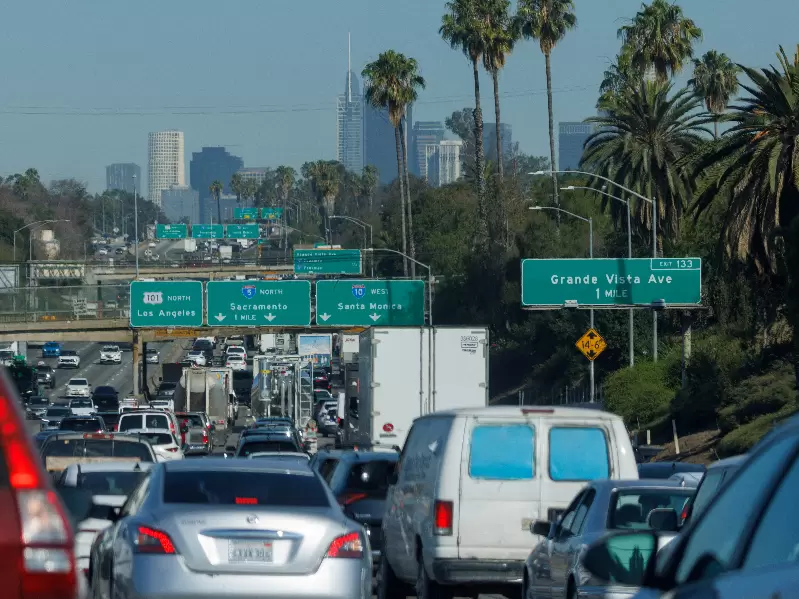 FILE PHOTO: Cars ride in traffic along the I5 freeway is shown in Los Angeles, California, U.S., July 12, 2023. / REUTERS/Mike Blake/File Photo
A record early heat wave striking the west of the United States on March 20 is a one-in-500-years type event and all but certainly the result of human-caused climate change, experts say.
The heat has been toppling records this week and was set to continue into the weekend across western cities, expanding eastward.
Also Read: Senior CA Democrat endorses Ethan Agarwal for Congress
One spot in the desert area at Martinez Lake, Arizona registered 43°C—a US national record for March. Already, 65 cities have seen new March highs, ranging from Arizona and California to Idaho, weather.com reported.
Death Valley on March 19 scorched in 40C degrees while the often cool and foggy San Francisco tied its historic March record at 29°C, and skiers in Colorado were hitting the slopes shirtless.
The National Weather Service issued extreme heat warnings March 20 for much of the southwest, ranging from Los Angeles and coastal southern California to the desert gambling capital of Las Vegas.
Warnings were issued against leaving children or pets in cars.
The phenomenal heat when winter is only just ending alarmed climate watchers, who saw evidence of dire change.
"This heatwave would be virtually impossible for the time of year in a world without human-induced climate change," World Weather Attribution scientists said in a report.
They called the event so rare that despite overall rising temperatures something this serious is only "expected to occur about once every 500 years."
"These findings leave no room for doubt. Climate change is pushing weather into extremes that would have been unthinkable in a pre-industrial world," said one of the study's authors, Friederike Otto, a climate science professor at Imperial College London.
"In the US West, the seasons that people and nature were used to for centuries are disappearing, putting many, including outdoor workers and those without air conditioning in danger," she said. "The threat isn't distant -- it is here, it is worsening, and our policy must catch up with reality."
Global warming
Scientists say there is overwhelming evidence that today's heat waves are a clear marker of global warming, a process driven chiefly by humanity's unchecked burning of fossil fuels.
With the northern hemisphere only exiting official winter on March 20—the first day of astronomical spring—the soaring temperatures were wreaking havoc on wildlife in the West.
Many plants and trees are already blooming, and vegetation is growing at a fantastic clip, fuelled by heavy rains in December and January.
Terry Salas, who was out and about in Los Angeles on March 19, told AFP the climate across the United States in recent weeks had been crazy.
"This is very unusual. We're still in winter," she said. "But this is global warming. The East Coast is just tornadoes and snow, and here we are, we're sizzling."
"We're having summer temperatures that we never, ever had in March."
Discover more at New India Abroad.
Related








.jpg)


ADVERTISEMENT

ADVERTISEMENT
E Paper
Video

Comments
Start the conversation
Become a member of New India Abroad to start commenting.
Sign Up Now
Already have an account? Login