ADVERTISEMENT
ADVERTISEMENT



One year on, Pahalgam signals emboldened Pakistan terror machinery
One year later, the memory of those victims stands as a stark indictment of a global failure.
-
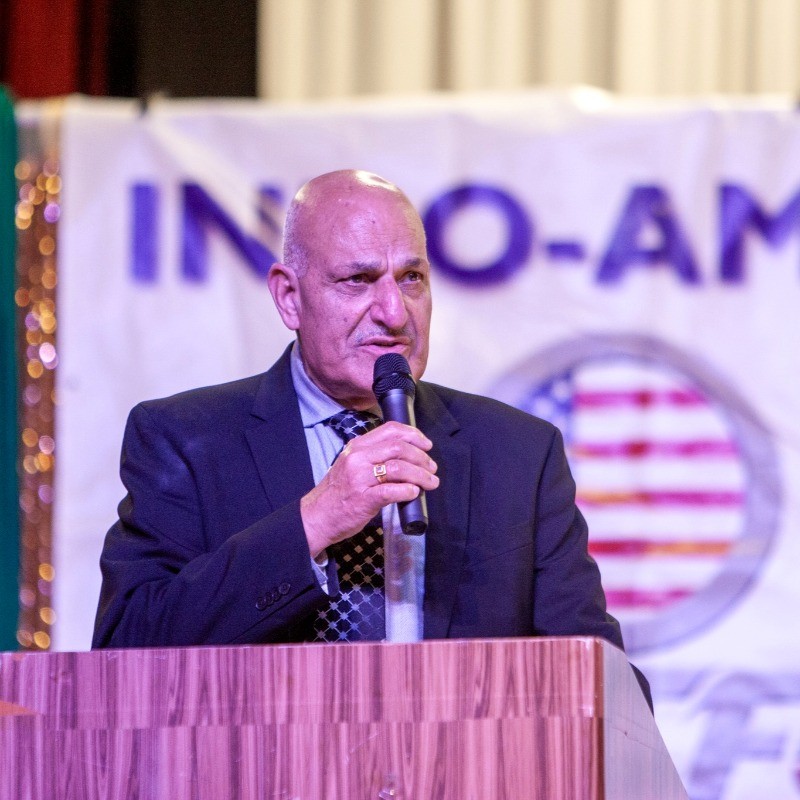 Jeevan Zutshi
 - Wed, 22, Apr 2026
- 00:01 EDT
- 15
.jpg) File photo of an Indian Army soldier in Kashmir after the Pahalgam attack. / Reuters
File photo of an Indian Army soldier in Kashmir after the Pahalgam attack. / Reuters
The serenity of Baisaran meadow in Pahalgam was shattered on April 22, 2025, by a brutality that defied the landscape’s peace. Twenty-six Hindu tourists, singled out for their faith, were executed by gunmen emerging from the thick pine forests. The world watched as the hallmarks of a state-sponsored enterprise became undeniable: the precision of the equipment, handlers traced back to Pakistan-occupied Kashmir (PoK), and the swift digital claim of responsibility by the Resistance Front (TRF).
One year later, the memory of those victims stands as a stark indictment of a global failure. Pahalgam was not a freak occurrence; it was a lethal demonstration of a terror network that continues to evolve, diversify and expand despite international scrutiny and India’s assertive military response through Operation Sindoor.
ALSO READ: Tourists trickle back to Kashmir
The argument over whether Pakistan harbors transnational terrorist infrastructure is no longer a matter of debate; it is a matter of record. In July 2025, the U.S. State Department formally designated the TRF as a Foreign Terrorist Organization (FTO), identifying it as a proxy for Lashkar-e-Taiba (LeT) created to provide a veneer of “indigenous resistance” to Pakistani-led operations.
Instead of prompting a crackdown by Islamabad, this designation preceded a brazen expansion of jihadist activities. While the world focused on traditional warfare, these groups decentralized and diversified.
Moving on to gender-based radicalization, in October 2025, Jaish-e-Mohammad (JeM) launched a women’s wing in Bahawalpur. Within weeks, 5,000 women have been reported to be enrolled in an online curriculum, signaling a shift toward radicalizing entire family units.
Reflecting on the maritime capabilities, LeT has been reported to formalize a 135-member maritime unit. Training across Islamabad, Karachi and Muzaffarabad involves scuba and high-speed boat drills, an ominous echo of the 2008 Mumbai attacks.
The line between the state and the militant has blurred further. In May 2025, a public conference in Lahore featured a designated terrorist sharing the stage with Pakistan’s chief of army staff, providing a visual confirmation of state patronage.
Following the disruption caused by Operation Sindoor, the financial veins of these organizations adapted with sophisticated agility. JeM’s recent campaign to raise PKR 3.91 billion for the construction of 313 mosques serves as a front for militant funding.
The mechanism of moving money has shifted from monitored banking channels to a fragmented digital ecosystem. Terrorist entities are now reportedly utilizing:
- Peer-to-peer (P2P) exchanges: Using Bitcoin and Tether to bypass central oversight.
- Mobile wallets: Exploiting family-linked accounts to move smaller, less detectable sums.
- Opacity in regulation: Paradoxically, Pakistan’s establishment of a national crypto council in early 2025 has been reported to provide a layer of institutional opacity that complicates international tracking efforts.
The fallout of this infrastructure is no longer confined to the valleys of Kashmir. The Global Terrorism Index 2026 now ranks Pakistan as the world’s most terrorism-affected country, with more than 1,100 fatalities in 2025 alone. However, the export of this ideology is perhaps more alarming for the international community.
Recent legal proceedings reveal a network with a truly global reach:
A Pakistani national was convicted in March 2026 for a murder-for-hire plot targeting U.S. political figures. Weeks later, another citizen pleaded guilty to planning a mass shooting at a Jewish center.
For the first time, an LeT operative was arrested in Seoul last August, proving that no region is immune to the recruitment and deployment cycles originating in training camps in Mangla or Bahawalpur.
The narrative often presented by Islamabad is that Pakistan is merely a victim of terrorism. While it is true that the country suffers from internal blowback, the reality is a symbiotic relationship. Pakistan is simultaneously a host and a target; the proxies cultivated to strike India or Afghanistan do not remain contained. They recruit in the heartland, train in the mountains and eventually surface as defendants in American or Korean courtrooms.
A Congressional Research Service brief from March 2026 identifies at least 15 active terrorist groups operating within Pakistan. Twelve of these are U.S.-designated FTOs. The survival of these groups through every “counterterrorism” initiative since 2014 suggests that the state’s efforts are performative rather than preventive.
In conclusion, a year after the Pahalgam massacre, the international community faces a credibility test. When institutions like the FATF, the U.N. Sanctions Committee and Western bilateral partners fail to impose tangible costs for documented state-sponsored terror, they send a dangerous signal to Pakistan’s military establishment: Exporting terrorism is a low-risk, high-reward strategy.
The victims who fell near the Baisaran meadow deserve more than commemorative statements. They deserve a global policy shift that recognizes the Pakistani terror network not as a regional nuisance, but as a global security threat that requires immediate, punitive and coordinated action. Anything less is a betrayal of the memory of those 26 lives lost in the pines.
Jeevan Zutshi is the Chairman of the Kashmir Task Force (U.S.)
(The views and opinions expressed in this article are those of the author and do not necessarily reflect the official policy or position of New India Abroad.)
Discover more at New India Abroad.
Related





ADVERTISEMENT

ADVERTISEMENT
E Paper
Video

Comments
Start the conversation
Become a member of New India Abroad to start commenting.
Sign Up Now
Already have an account? Login