ADVERTISEMENT
ADVERTISEMENT



New Era of Strategic Maturity in India-US Relations: A Reset in Motion
What is happening is the development of a partnership intended for a world order that is changing quickly, not just a diplomatic reset.
-
 Badri Narayanan Gopalakrishnan
 -
 Manpreet Singh
 - Wed, 27, May 2026
- 16:49 EDT
- 18
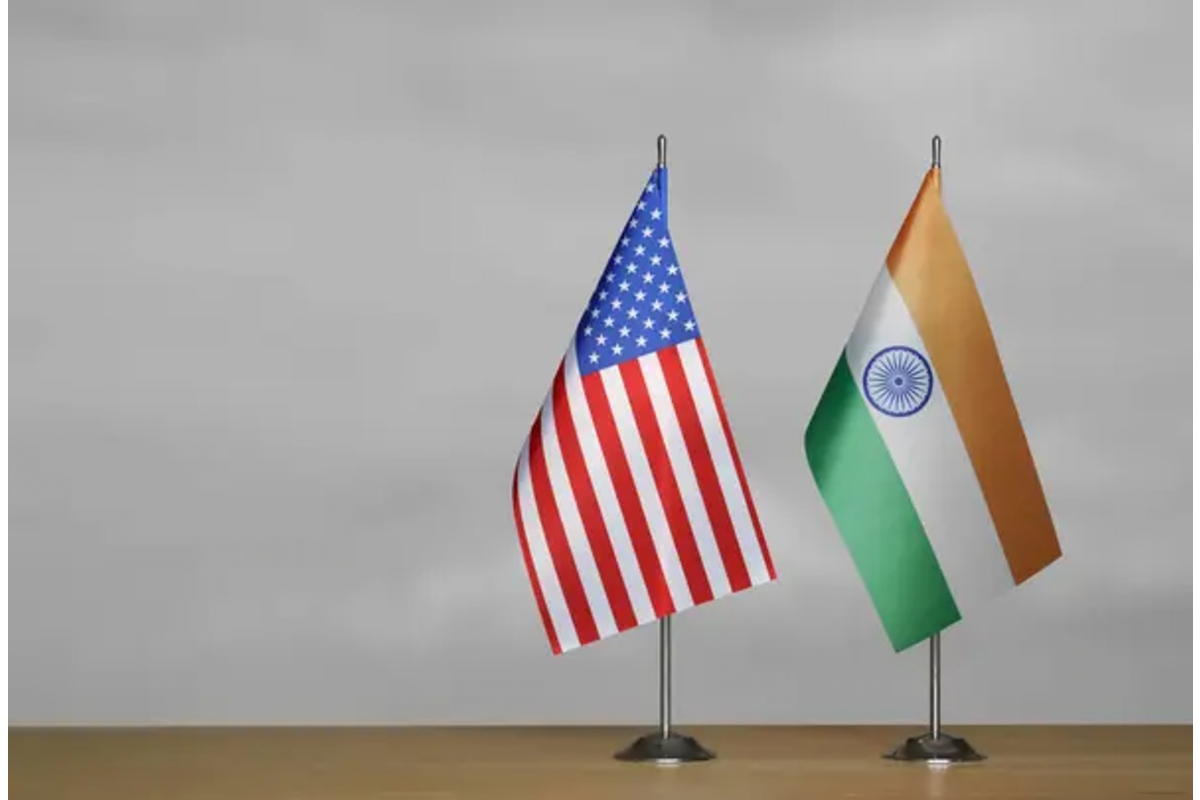 Representative Image / iStock photo
The most recent talks between U.S. Secretary of State Marco Rubio and India's External Affairs Minister S. Jaishankar demonstrate the recent diplomatic engagement between the two countries, which goes beyond simple diplomacy. It marks the beginning of a partnership between two of the biggest democracies in the world that is more developed, resilient, and strategically based.
Analysts characterized India-US relations as "promising but cautious" for many years. These days, strategic confidence is gradually taking the place of such caution. The tone of recent discussions indicates that both nations clearly understand that the greater geopolitical logic of collaboration is just too significant to overlook, notwithstanding sporadic conflicts.
What is happening is the development of a partnership intended for a world order that is changing quickly, not just a diplomatic reset.
Also Read: USIBC welcomes India-US critical minerals pact
Due to divergent worldviews and foreign policy traditions, India and the US have always found it difficult to completely align. While the US approached partnerships through formal alliance institutions, India spent decades pursuing strategic autonomy and non-alignment. But this equation has been drastically changed by the current geopolitical landscape.
Indian and American interests are increasingly overlapping due to the emergence of China, unpredictability in vital marine routes, disruptions in global supply chains, technology competition, and energy insecurity. The fact that both nations are no longer attempting to impose total alignment is what distinguishes the current phase. Rather, they are constructing a pragmatic convergence-based paradigm.
This was seen in the latest talks, where both sides emphasized defense cooperation, maritime security, and technology partnerships while openly acknowledging disagreements on trade, tariffs, immigration, and energy sourcing. The ability to keep arguments from harming the bigger strategic relationship is what defines mature partnerships, not the lack of disagreements. The United States and India seem to have arrived at that point more and more.
The Indo-Pacific area, which has emerged as the relationship's primary strategic driver, is where this increasing convergence is most apparent. India is seen by the US as a democratic and growing regional force that can support the preservation of Asia's strategic equilibrium. Cooperation with the US gives India access to cutting-edge defense technologies, intelligence sharing, marine coordination, and geopolitical clout in a region that is becoming more and more contentious.
For this reason, one of the most significant pillars of the relationship is now the Quad, which consists of Australia, Japan, India, and the United States. In contrast to conventional military alliances, the Quad functions as an adaptable strategic platform with an emphasis on essential technologies, disaster response, resilient supply chains, maritime security, and regional stability.
This alignment is significant for reasons other than military ones. Today, the Indo-Pacific region is at the heart of energy flows, digital infrastructure, semiconductor supply chains, and international trade. Any volatility in this area has an impact on the global economy. Maintaining openness and stability in these waterways is now both strategically and economically necessary, as both India and the US are realizing.
India is essential in this framework due to its location in the Indian Ocean and its expanding naval capabilities. This explains why over the past ten years, U.S.-India defense collaboration has grown significantly, moving from symbolic military drills to more in-depth operational coordination, intelligence sharing, and defense industrial partnerships.
However, the relationship is no longer defined solely by security collaboration. The increasing significance of energy security as a strategic pillar of India-U.S. ties is one of the most important developments arising from recent diplomatic negotiations.
The Middle East's unpredictability, shipping channel interruptions, and geopolitical crises have all contributed to the volatility of the world's energy markets. One of the biggest energy consumers in the world, India must strike a balance between strategic independence, affordability, and energy access. In the meanwhile, the US sees India as a significant market for a variety of energy exports as well as a vital long-term energy partner.
Also read: India plays an 'important role', at cornerstone of US approach to Indo-Pacific: Rubio
A more comprehensive energy cooperation that goes beyond crude oil is gradually being formed as a result of this convergence. Liquified natural gas supply chains, nuclear energy collaboration, renewable technology, and vital minerals needed for batteries, electric vehicles, and semiconductor production are all areas in which India and the US are working together more and more.
Today, energy is not only seen from an economic perspective. It is becoming more closely linked to national security, supply chain resilience, and industrial competitiveness. As a result, the energy collaboration between the United States and India is developing into a more comprehensive strategic alliance that has the potential to impact the future global energy architecture.
The growing technology partnership between the two nations is closely linked to this change and could end up being the most significant feature of the partnership in the long run.
Leadership in artificial intelligence, semiconductors, quantum computing, advanced manufacturing, cybersecurity, biotechnology, and space technologies will increasingly decide economic and geopolitical dominance as the globe enters a new era. India and the US have very complimentary strengths in these areas.
In terms of venture capital networks, sophisticated research ecosystems, and frontier innovation, the United States continues to lead the world. India, on the other hand, provides a rapidly expanding startup ecosystem, digital public infrastructure, software competence, and a wealth of engineering talent. When combined, these advantages form the basis of one of the most potent innovation alliances in the world.
Semiconductor initiatives, AI cooperation frameworks, cooperative research programs, and defense technology alliances are already demonstrating this cooperation. American businesses are increasingly seeing India as a strategic manufacturing and technology partner that can support global innovation ecosystems rather than just as a consumer market.
Diversification of the supply chain is another significant aspect influencing this change. India is becoming a crucial location for reliable technology and cutting-edge manufacturing ecosystems as businesses look for alternatives to concentrated industrial regions. The development of more robust global supply chains is a strategic priority for the United States, which is closely aligned with this trend.
The remarkable depth of interpersonal relationships between the two societies, however, is what really sets the India-US relationship apart from many simply geopolitical alliances.
In the fields of technology, health, academia, entrepreneurship, and public policy, the Indian-American community has emerged as one of the most prosperous and significant diaspora communities in the US. Every year, thousands of Indian students continue to attend American colleges, strengthening long-term social and professional links while also contributing to innovation ecosystems.
These interpersonal linkages are important from a strategic standpoint because connections fostered by talent flows, academic institutions, corporations, research networks, and diaspora groups are significantly more resilient than those based only on governmental or military collaboration.
In both nations, this human bridge establishes continuity that surpasses political shifts and election cycles. Additionally, it strengthens a more general democratic bond between two countries that, in spite of their differences, are becoming more aware of their common goals in upholding an open, stable, and rule-based international order.
Naturally, this does not imply that disputes have vanished. Conflict is still caused by trade disputes, immigration challenges, tariff problems, and divergent views on nations like Iran or Russia. Tensions are also occasionally caused by domestic political goals in both nations.
However, the current era is notable for the fact that these differences no longer seem existential. They are increasingly being managed within a stable and formalized strategy framework rather than upsetting the larger collaboration.
This illustrates how structural stability has emerged in the partnership. India-U.S. relations have grown throughout time under several American governments with wildly divergent political philosophies. This longevity implies that the cooperation is no longer based on short-term political alignment or personality. It is becoming more and more based on long-term strategic goals.
In light of the fast evolving global order, the significance of this change becomes even more apparent. Instead of being concentrated in a single superpower, the international order is shifting toward multipolarity, where economic influence, technological might, military prowess, and diplomatic leverage are dispersed across several centers.
Flexible and resilient partnerships become crucial in such a world. The United States and India are not required to join formal treaty alliances, and they may never do so. Their collaboration, which is based on overlapping strategic interests while maintaining sovereign decision-making and strategic autonomy, is becoming increasingly flexible.
Compared to inflexible alliance structures created for a previous geopolitical era, that paradigm might ultimately prove more viable for the twenty-first century.
In the end, the importance of the current stage of India-US ties is not found in bold declarations or agreements that make headlines. Its significance stems from the increasing trust that both nations currently have in the relationship's long-term course.
Despite tactical disputes, there is optimism that strategic cooperation will continue. assurance that both democracies can work together while maintaining their independence in terms of policy. and assurance that the collaboration has transitioned from fragility to institutional maturity.
Thus, the most recent diplomatic exchanges indicate a broader reality: India and the United States are no longer only considering potential collaboration. In a world that is uncertain and changing quickly, they are increasingly taking on the role of co-architects of a common strategic future.
Manpreet Singh is an economist and Assistant Vice President, GENPACT. Badri Narayanan Gopalakrishnan is a senior economist and affiliate faculty member at the University of Washington Seattle.
(The views and opinions expressed in this article are those of the author and do not necessarily reflect the official policy or position of New India Abroad.)
Discover more at New India Abroad.
Related
.jpg)





ADVERTISEMENT

ADVERTISEMENT
E Paper
Video

Comments
Start the conversation
Become a member of New India Abroad to start commenting.
Sign Up Now
Already have an account? Login