ADVERTISEMENT
ADVERTISEMENT



NASA astronaut Menon shares trickiest part of being in space
A week into his first spaceflight, Menon reflects on the lighter side of living aboard the ISS.
-
 Malvika Choudhary
 - Thu, 23, Jul 2026
- 18:02 EDT
- 22
 Anil Menon / NASA
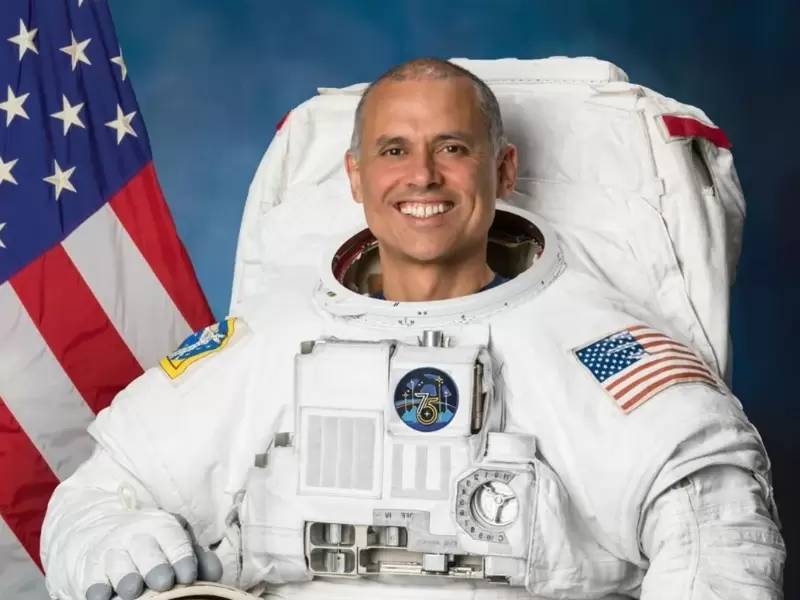
Indian-American NASA astronaut Anil Menon discovered that one of the trickiest parts of living in space isn't conducting experiments or adapting to weightlessness—it's keeping track of his belongings.
A week into his first mission aboard the International Space Station (ISS), Menon took to X to share a humorous account of life in orbit, where pens, shirts, tools, and even a Rubik's Cube seem to vanish without warning.
Also Read: Anil Menon demonstrates IV fluid production in space
"I've been in space for one week. There are so many awe-inspiring and amazing sights, emotions, and work," he wrote. "One part of the experience that I find truly amazing is the uncanny ability of an inanimate object to lose itself on the International Space Station."
For Menon, the mystery begins the moment an object is left unattended. In the absence of gravity, a gentle push–or even air circulating through the station–can quietly send it drifting away.
"Without a tether, any force imparted into the object, by ventilation or a slight touch, will carry it away in any direction, and far," he explained.
— Anil Menon (@astro_anil) July 22, 2026
That means astronauts have to rethink even the simplest habits. Let go of a pen for a few seconds, and it may not be where you left it. Open a storage bag too quickly, and its contents might silently float away before you even notice.
Menon quickly learned to embrace one of the ISS's most valuable tools: Velcro. He stuck a pen to his pants with it, only to find the pen gone hours later. A crewmate's advice? Tie it to his clothing with a string instead.
Also Read: Indian-origin NASA astronaut Anil Menon reaches International Space Station safely
The same strategy didn't work quite as well for a Rubik's Cube. Menon said he Velcroed it to the ceiling of his sleeping quarters, only to wake up and find that most of the cube had somehow disappeared overnight.
Even the station's layout adds to the confusion. With no up or down in orbit, a couple of turns can completely change one's perspective, making a tool left in plain sight feel as though it has vanished.
His crew quarters, despite being "smaller than a telephone booth," have offered little protection from the phenomenon. One morning, he spent several minutes looking for a shirt before settling on another. The missing one, he said, found its way back later that day.
The disappearing act isn't unique to Menon's mission. He recalled hearing stories from fellow astronauts about a lost water bag that reportedly resurfaced a decade later. According to him, the station even has "wanted posters" for important items that have gone missing.
Menon, who arrived at the ISS aboard Soyuz MS-29 on July 14 for an approximately eight-month mission, said the solution to the problem is the same one astronauts use for many challenges in space: work together.
"The best way to tackle this problem so far is common to much of our work on space station: tell a crewmate you lost your item, ask for help, and wait for it to show up…hopefully soon," he wrote.
Discover more at New India Abroad.
Leave A Comment
Related










ADVERTISEMENT

ADVERTISEMENT
E Paper
Video

Comments
Start the conversation
Become a member of New India Abroad to start commenting.
Sign Up Now
Already have an account? Login