ADVERTISEMENT
ADVERTISEMENT



Indian theoretical physicist awarded prestigious 2026 Dirac Medal
Dhar received his PhD at the California Institute of Technology.
-
1759953093.png) Staff Reporter
Staff Reporter - Mon, 10, Aug 2026
- 00:48 EDT
- 29
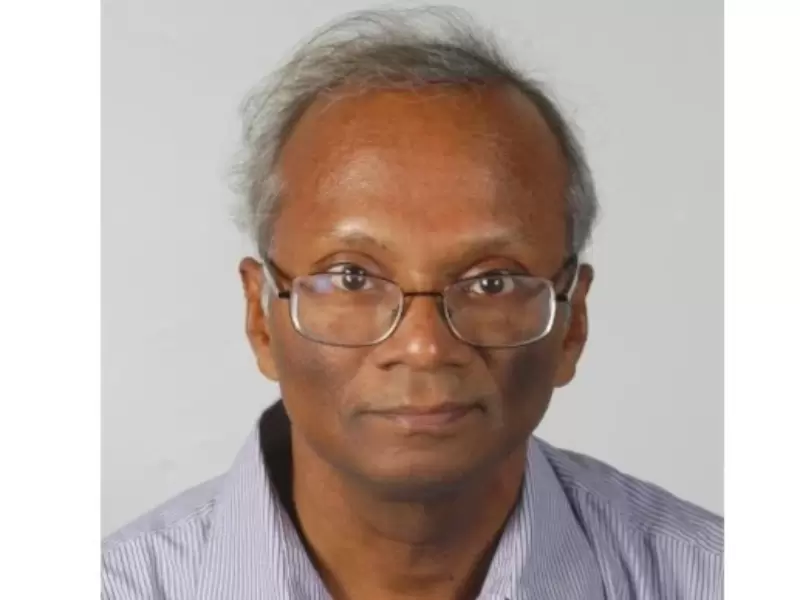 Deepak Dhar / ICTP
Indian theoretical physicist Deepak Dhar has been awarded the prestigious 2026 Dirac Medal by the International Centre for Theoretical Physics (ICTP), recognizing his pioneering contributions to statistical mechanics, particularly his seminal work on complex systems, self-organized criticality and stochastic processes.
Dhar, INSA Distinguished Professor, International Centre for Theoretical Sciences of the Tata Institute of Fundamental Research, India, shares this year's award with three other distinguished global scientists: Bernard Derrida, Honorary Professor, Collège de France, France; Marc Mézard, Professor of Theoretical Physics, Bocconi University, Italy; and Haim Sompolinsky, Professor of Neuroscience and Physics, Hebrew University of Jerusalem, Israel, and Visiting Professor, Harvard University, USA.
Considered one of the highest honors in theoretical physics, the medal recognized the four physicists for their pioneering contributions to equilibrium statistical mechanics and for extending its concepts and methods into nonequilibrium statistical mechanics, optimization problems, theoretical neuroscience and, finally, artificial intelligence.
Dhar and the three other physicists have made important contributions to statistical mechanics, a framework used by physicists to describe the collective behavior of systems with many constituents, and have used it to explore far-ranging concepts in theoretical physics with implications for real-world advancements, from the study of biological systems to that of financial markets and artificial intelligence, ICTP said in a statement.
“The work of the 2026 Dirac Medallists has contributed to establishing theoretical physics, and particularly statistical mechanics, as a powerful framework to tackle a very broad range of questions that go far beyond its traditional domain of interest to encompass biology, computer science and artificial intelligence,” said ICTP Director Atish Dabholkar, who chairs the prize committee.
“I am particularly happy that this year’s Medal recognizes a research field that has had a long tradition here at ICTP, rooted in part in the work of former ICTP Director Miguel Virasoro, and I warmly congratulate the four winners.”
The 2026 Dirac Medallists contributed to understanding different aspects of complex systems using statistical mechanics, with far-ranging applications.
Also Read: Indian-origin researcher awarded for prostate cancer study
Dhar showed how simple interactions can lead to complex and sometimes unpredictable behavior in large systems. Through his pioneering work on the sandpile model, for example, he described a familiar phenomenon: as grains are added to a sandpile, most result in no change or only small avalanches, while occasionally a single grain can cause a much larger collapse.
The theory shows that the sandpile, like many other complex systems, spontaneously places itself in a critical regime where small effects can sometimes trigger large abrupt events and has been used to model systems as apparently different as earthquakes, traffic jams and fluctuations in financial markets.
Dhar received his Ph.D. from the California Institute of Technology. For decades he worked at the Tata Institute for Fundamental Research in Mumbai before joining the Indian Institute of Science Education and Research in 2016.
He has been INSA Distinguished Professor at the International Centre for Theoretical Sciences of the Tata Institute of Fundamental Research since 2024. His research focuses on statistical physics and stochastic processes.
He received the Padma Bhushan (2023), one of the highest civilian awards of India, as well as the Boltzmann Medal (2022, jointly with John Hopfield) and the Shanti Swarup Bhatnagar Prize (1991).
Discover more at New India Abroad.
Leave A Comment
Related





ADVERTISEMENT

ADVERTISEMENT
E Paper
Video

Comments
Start the conversation
Become a member of New India Abroad to start commenting.
Sign Up Now
Already have an account? Login