ADVERTISEMENT
ADVERTISEMENT



Hastinapur hunt continues 75 years after first excavation
The first scientific excavation of the notified mound at Hastinapur was carried out between 1950 and 1952
-
 S. Raju
 - Mon, 27, Apr 2026
- 02:21 EDT
- 19
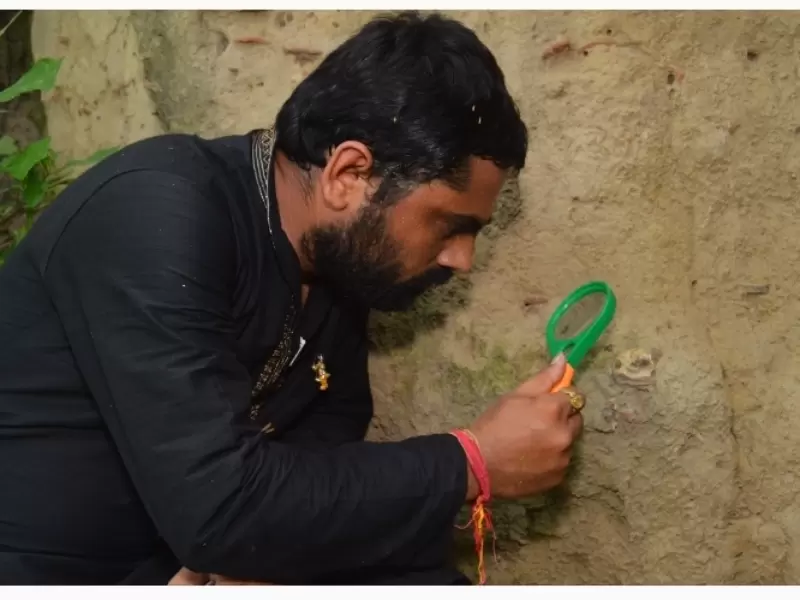 Seventy-five years after the first excavation, Hastinapur is still calling. / S. Raju
Hastinapur, the legendary capital of the Kuru dynasty and one of the most significant cities described in the Mahabharata, still stands wrapped in history, faith, and unanswered questions. Situated around 90 kilometres from Delhi in Meerut district of Uttar Pradesh, Hastinapur is not only associated with the Mahabharata but is also an important centre of Jainism and the land of one of Sikhism’s Panj Pyaras, Bhai Dharam Singh.
Yet, despite its immense civilisational importance, 75 years after the first major archaeological excavation, the mystery of connecting present-day Hastinapur with the epic Mahabharata remains largely unresolved.
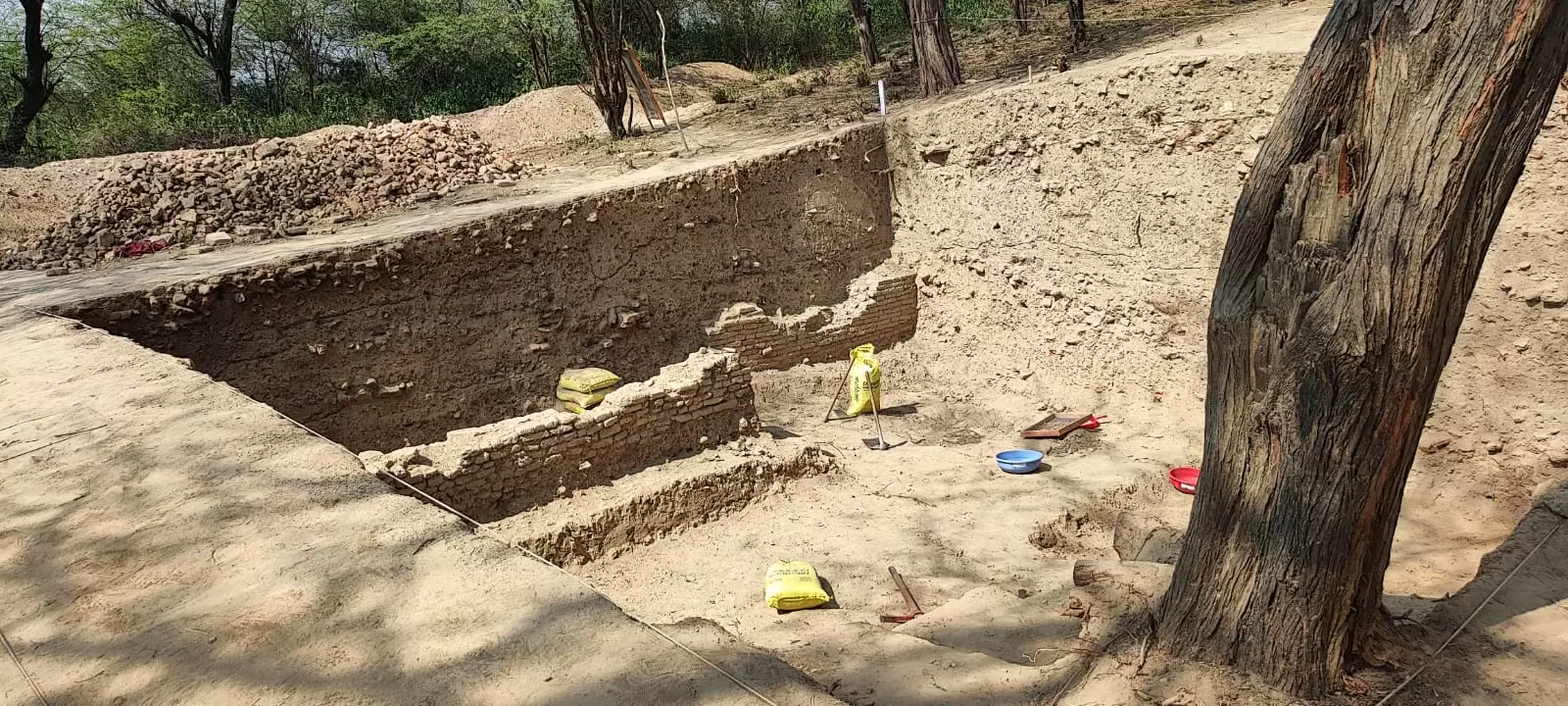
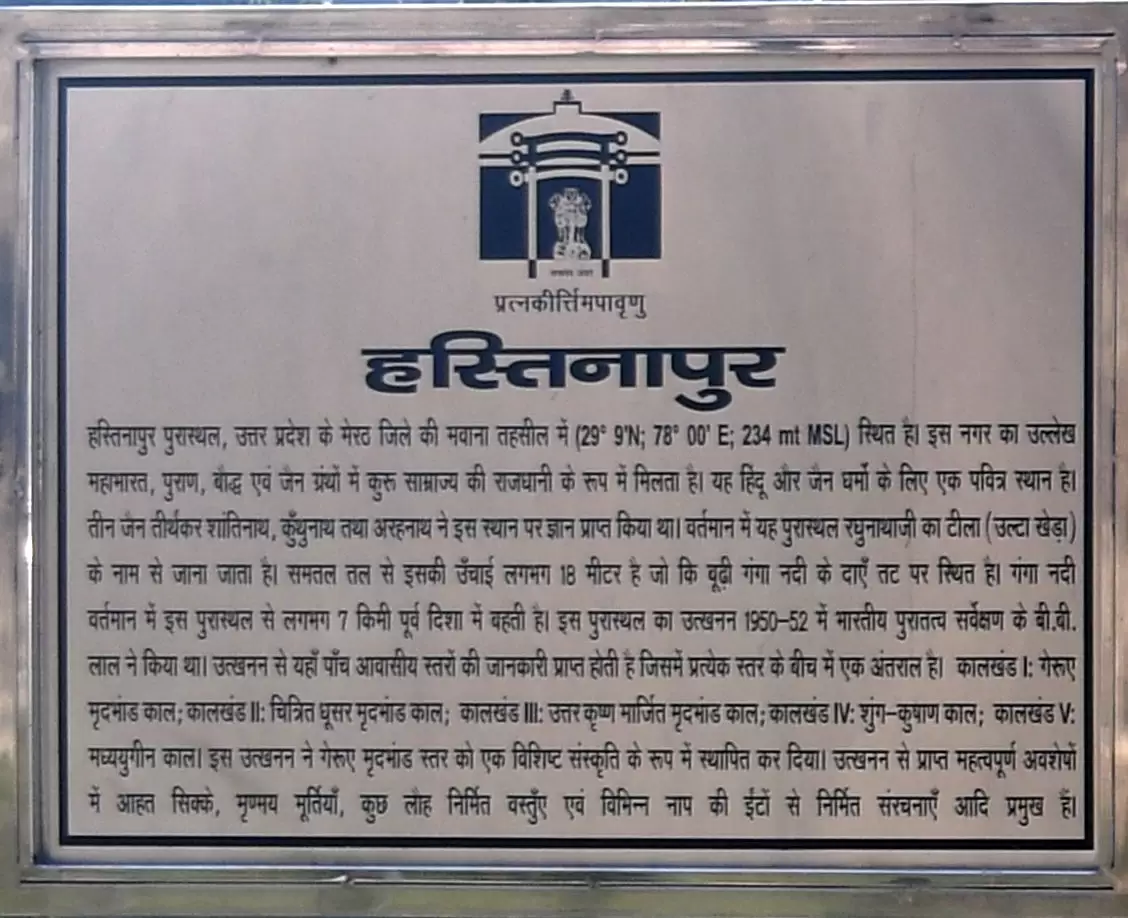
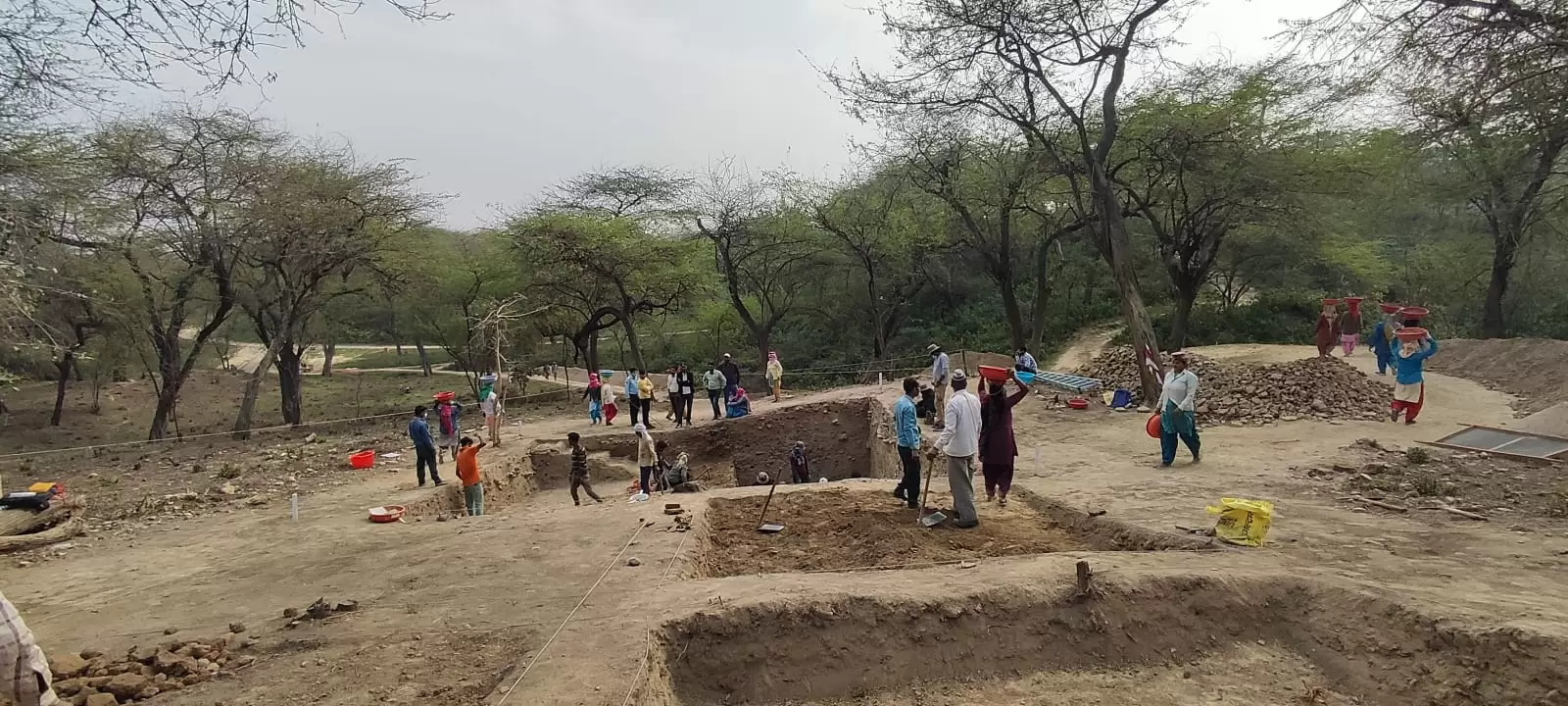
The first scientific excavation of the notified mound at Hastinapur was carried out between 1950 and 1952 by renowned archaeologist B. B. Lal, one of India’s most respected names in archaeology and thereafter a second excavation was carried out in 2022. His findings were groundbreaking. He discovered Ochre Coloured Pottery (OCP), considered equivalent to the Harappan period, and Painted Grey Ware (PGW), widely associated with the Mahabharata period.
Similar Painted Grey Ware pottery was also found at other sites mentioned in the Mahabharata, including Indraprastha, identified with Purana Qila in Delhi.
These discoveries strengthened the belief that Hastinapur was indeed linked to the Mahabharata era. However, critics continued to question the historical authenticity of the epic, arguing that no concrete material evidence such as weapons, chariots, or royal settlements had been found to fully support the literary descriptions.
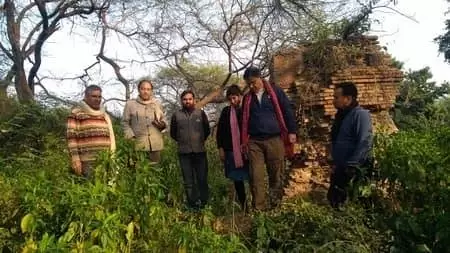
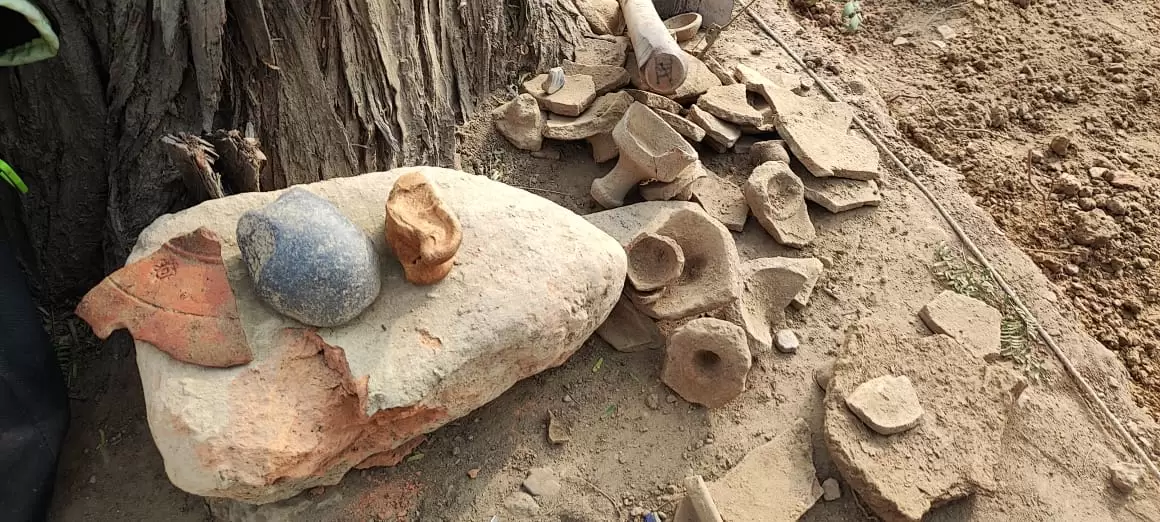
That debate found a major turning point in recent years with the discoveries at Sinauli in Baghpat district, barely 90 kilometres from Hastinapur. Archaeologists unearthed a chariot, antenna swords, gold ornaments, and earlier, a burial site containing around 120 skeletons. Crucially, Sinauli lies within the same geographical arc — western Uttar Pradesh and the Doab — that ancient texts consistently associate with the Kuru heartland, lending the discoveries a spatial coherence that earlier finds had lacked.
For many historians, Sinauli changed the conversation.
Historian Prof K. K. Sharma of CCS University, Meerut believes these discoveries offer strong indications of a Mahabharata-era settlement.
“If such a large graveyard, a chariot, swords, and ornaments have been found, then there must have existed a major settlement or basti connected with that civilisation,” he says.
He adds, “Even after 75 years of the first excavation, we are still unable to lift the veil from the Mahabharata. We do not know the exact locations of many sites associated with it. What is needed is an extensive village-to-village survey to identify potential locations where excavation can establish what is described in the Mahabharata literature.”
According to him, the discovery of a chariot in Sinauli is one of the strongest indicators yet.
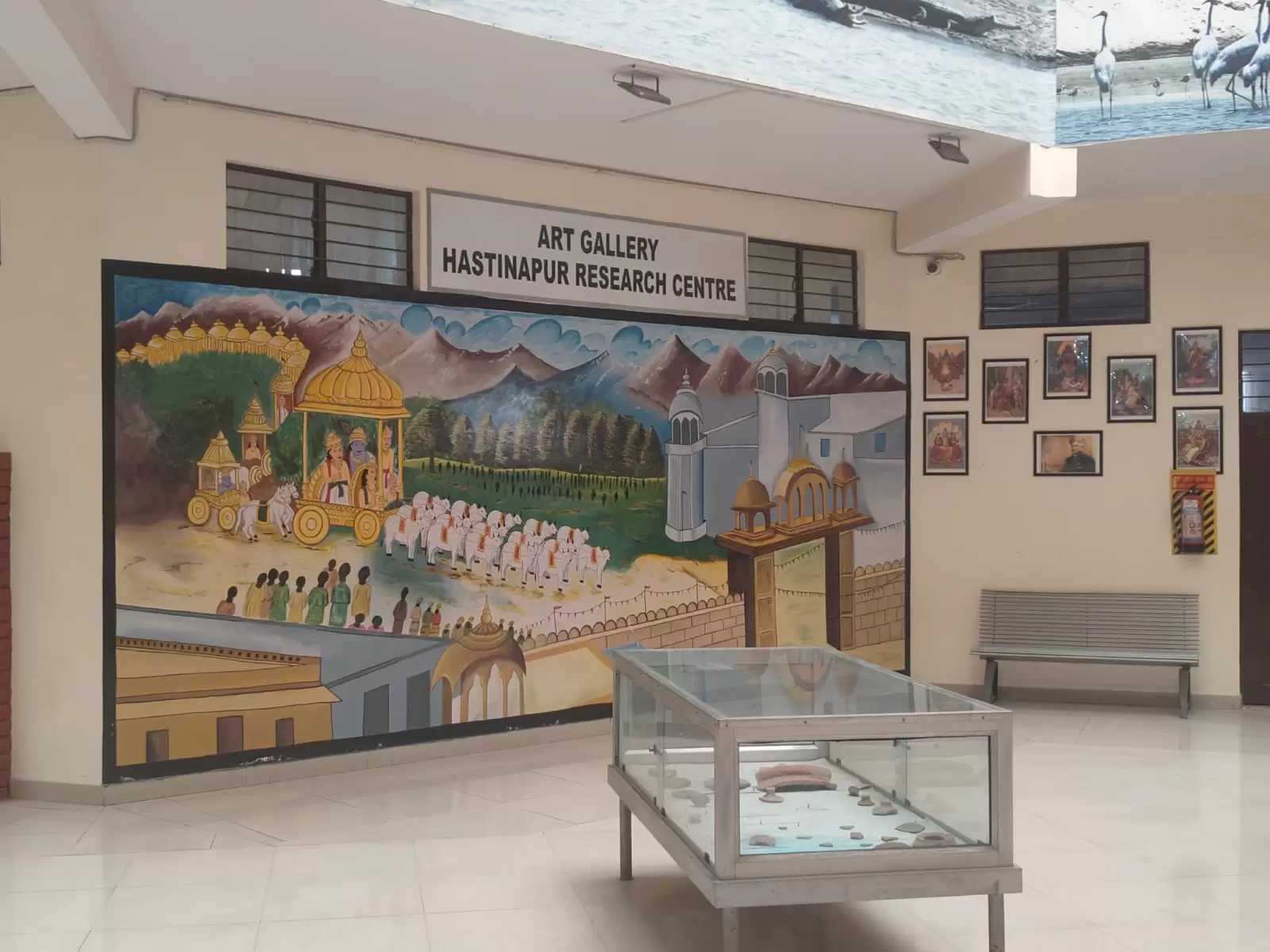
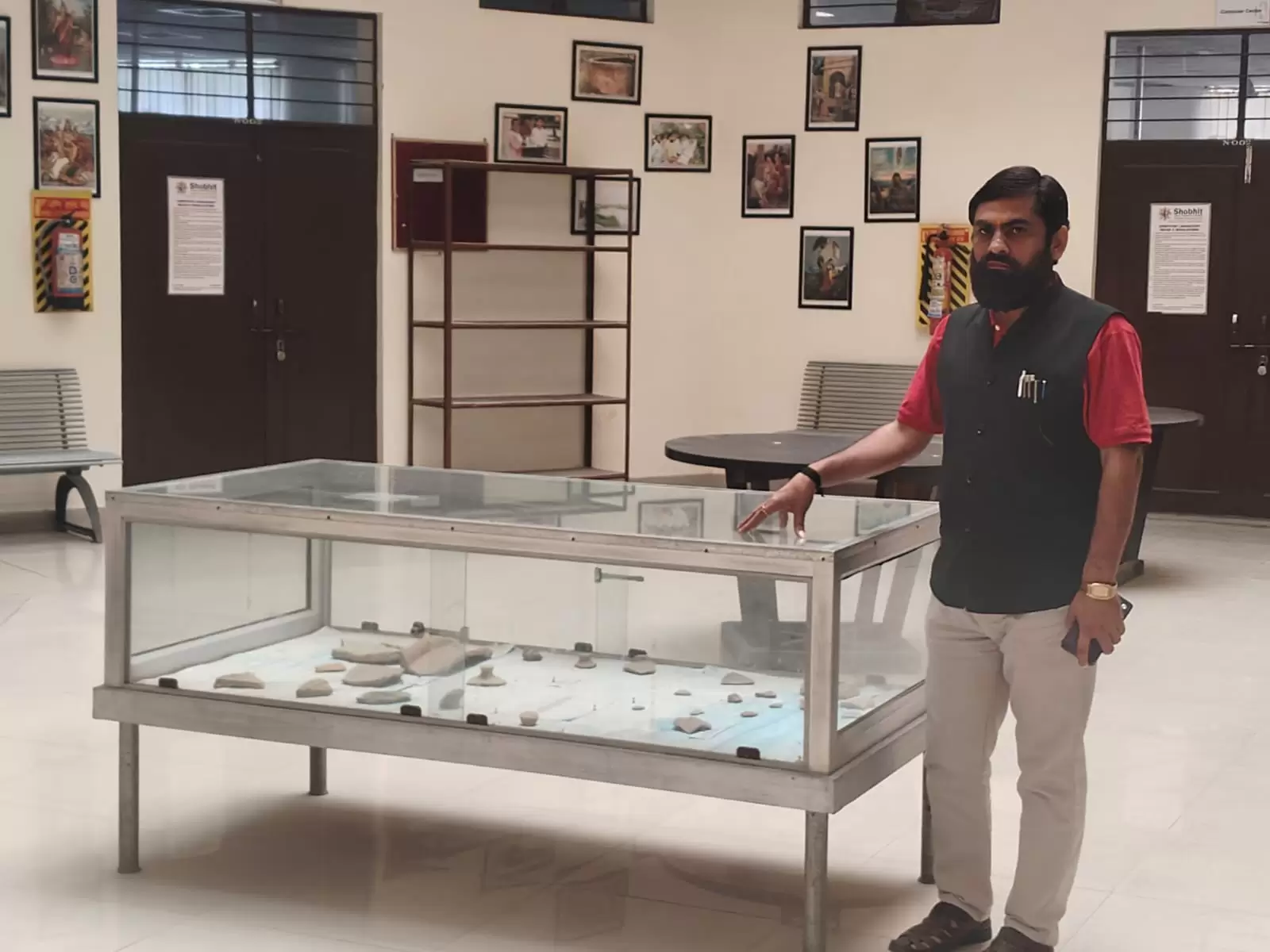
At Shobhit University, Assistant Professor Priyank Bharti has been working on Hastinapur research since 2007. The university even established a “Hastinapur Research Centre” displaying pottery, excavation material, and archaeological findings related to the site.
Bharti says the initiative began with the vision of the university’s Chancellor Kunwar Shekhar Vijendra, who wanted Hastinapur to gain recognition as a UNESCO-protected heritage site. That effort remains ongoing; the university has formally engaged with heritage bodies and continues to build a scholarly case for international recognition of the site’s civilisational significance.
"Hastinapur is not a subject we study from a distance, it is the land we stand on. That is why we established the Research Centre, invited Dr. B. B. Lal, and have continued pushing for UNESCO recognition. The Budget announcement is welcome; what matters now is what follows." Said Kunwar Shekhar Vijendra, Chancellor, Shobhit University
Bharti’s own journey is telling: trained originally as a biotechnologist, he returned to academia in 2018 to complete a Master’s degree in Ancient History — a reminder that Hastinapur’s pull is not confined to professional historians but reaches across disciplines and generations.
Bharti`s frustration is evident.
“Not enough encouraging work has been done in the past 76 years regarding Hastinapur. We are unable to connect the dots between Hastinapur and the Mahabharata because of this lackadaisical attitude toward such a historically significant site,” he says.
He believes the currently excavated mound may not be the most convincing location.
“The present excavation site appears to have been formed by silt deposition from the Ganga, which has now shifted kilometres away. The ancient expanse of the river — now known as Budhi Ganga — was much deeper inside present-day Hastinapur. We must search even deeper along that ancient course because forts and palaces were not built directly on riverbanks.”
He points to the Mahabharata itself, where Bhishma is described as watching the Ganga from his palace, suggesting elevated habitation zones rather than riverside settlements.
Whether ground-penetrating radar or satellite-based remote sensing has been applied along the Budhi Ganga’s ancient course remains an open question — and one that the newly formed Meerut Circle of the Archaeological Survey of India may be well-placed to answer.
Excavations by Dr. B. B. Lal and later archaeologists have already established that ancient Hastinapur was washed away in a massive flood. Lal described it as a multi-cultural site with five occupational stages dating back to OCP and PGW periods.
Those five stages trace a continuity stretching from the late Harappan horizon to the early historical period, suggesting Hastinapur was not a single-moment settlement but a living city across centuries. Around it lie several locations deeply connected with Mahabharata traditions — Barnawa (Varnavrat), Behsuma (believed to be associated with Bhishma), Baghpat, Indraprastha, and Kurukshetra — creating a powerful geographical and cultural chain that demands deeper exploration.
There is now fresh hope.
The formation of the Meerut Circle of the Archaeological Survey of India, carved out from the larger Agra Circle, is expected to bring sharper focus to western Uttar Pradesh’s rich historical landscape.
Superintending Archaeologist Vinod Kumar Rawat says serious efforts are underway.
“A lot of work is being carried out after the creation of the Meerut Circle, which now covers 16 districts of western Uttar Pradesh,” he says.
He points to a major announcement in the Union Budget 2026–27, where the Finance Minister included Hastinapur among 15 archaeological sites across India to be developed into vibrant and experiential cultural destinations.
The list includes Lothal, Adichanallur, Dholavira, Rakhigarhi, Sarnath, Agroha, Udayagiri, Sannati, Leh Palace, Chittorgarh Fort, Eran and Sivasagar, Purana Qila, Jhansi Fort — and Hastinapur.
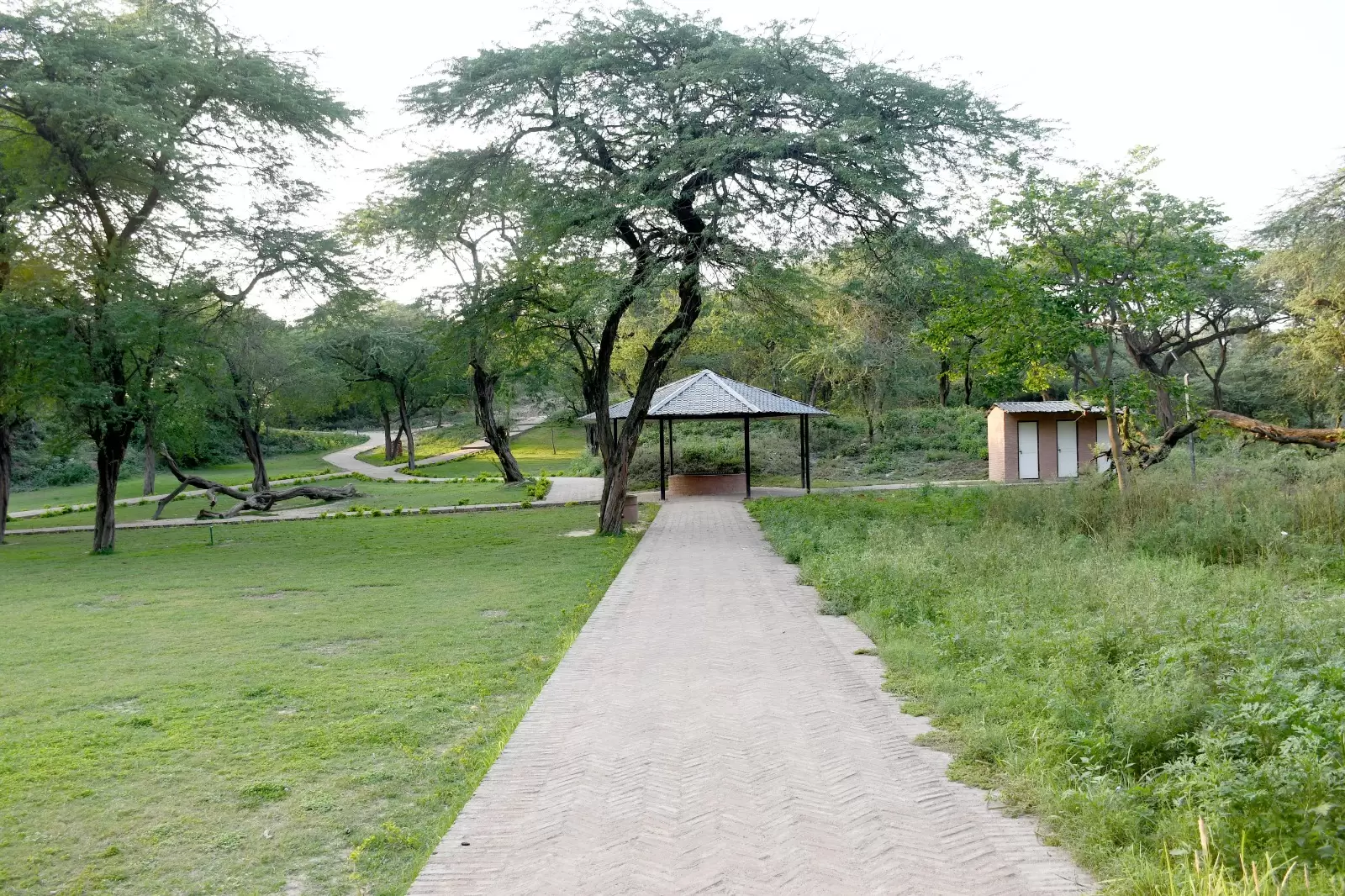
“Encroachment has been removed from the excavation mound in Hastinapur, and the site is being developed to attract tourists and visitors. A museum will also be established here to depict Hastinapur and the outcomes of its excavations,” Rawat says.
He agrees that more sites need to be excavated.
“To connect the dots of the Mahabharata, further excavation is essential. There are proper mechanisms and scientific methods for selecting and excavating new sites.”
That may be the key.
For decades, Hastinapur has lived between mythology and archaeology — revered by faith, yet waiting for stronger historical validation. The discoveries at Sinauli have shown that buried truths still exist beneath the soil of western Uttar Pradesh.
Perhaps the next breakthrough lies in an unassuming village, a forgotten mound, or beneath the silent banks of the Budhi Ganga.
Seventy-five years after the first excavation, Hastinapur is still calling.
The question is whether India is finally ready to listen.
Discover more at New India Abroad.
Related




ADVERTISEMENT

ADVERTISEMENT
E Paper
Video

Comments
Start the conversation
Become a member of New India Abroad to start commenting.
Sign Up Now
Already have an account? Login