ADVERTISEMENT

ADVERTISEMENT

The thinking behind India's Prime Minister Research Chair scheme

An government official explains the scheme’s origins, global inspirations, and how it aims to reverse decades of scientific brain drain by making the case for returning home more competitive than ever.
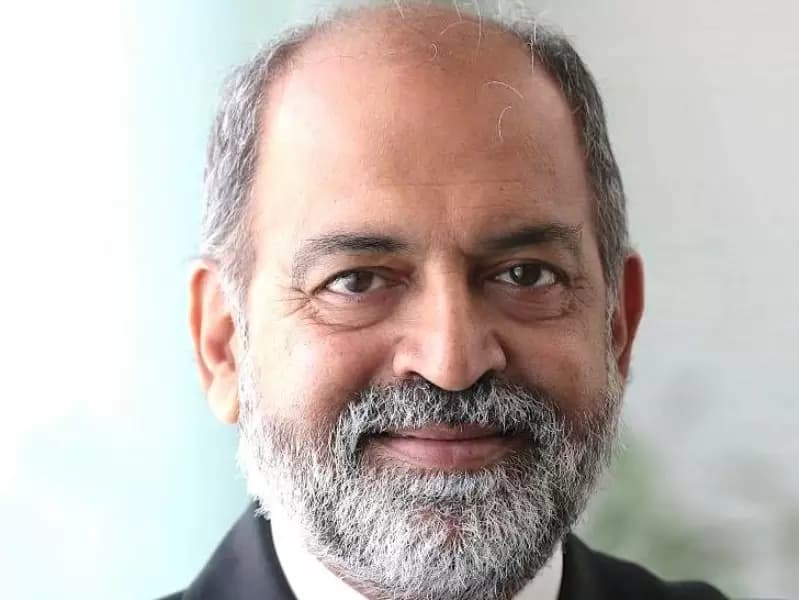
 Adil Zainulbhai Member, Empowered Committee on PMRC Adil Zainulbhai Member, Empowered Committee on PMRC / Handout

PART 1 — ORIGIN AND RATIONALE   

Q1. As a member of the Empowered Committee, you were there from the start. What was the original problem the scheme was trying to solve?

India has never had a shortage of scientific talent. What it has had is a leakage problem. We train extraordinary researchers at the IITs and IISc, they go abroad for their PhDs and postdocs, and a large share of them simply never come back, not because they don't want to, but because the practical case for returning was weak. The salary gap was real. The research infrastructure gap was real. So the starting question for the Committee was not "how do we convince people to be patriotic," it was "how do we remove the practical reasons people say no."

Q2. Was there a particular moment or piece of data that made the case for this scheme urgent?

Two things converged. First, India's own research output had genuinely improved, more publications, more funding, real institutional capacity at places like the IITs and IISc. Second, the environment abroad, particularly in the US, had become less certain for early and mid-career researchers, funding cuts, visa friction, slower academic hiring. Neither of those alone would have been enough. Together, they created a moment where the pitch to come to India stopped being aspirational and started being competitive.

Also Read: U.S.-India TRUST fellowship invites applications from postdocs

Q3. Other countries have tried similar diaspora-return schemes. What did the Committee study before designing PMRC?

We looked closely at Israel's Returning Scientist programme, South Korea's Brain Pool, and China's Thousand Talents Plan. The lesson the Committee took from all three was that money alone doesn't work if the institutional environment can't absorb the person properly. China's programme, for instance, ran into real friction when returnees found themselves managing administrative expectations rather than doing research. We designed PMRC so the host institution gets resources too, not just the fellow, specifically so that absorption capacity isn't the bottleneck.

  PART 2 — STRUCTURE, ECONOMICS, AND WHO IT'S FOR   

Q4. Walk us through the three fellowship tracks. Why three, and why these particular career stages?

Young Research Fellows, Senior Fellows, and Research Chairs map onto genuinely different motivations. An early-career researcher within five years of their PhD is thinking about where to build a lab and a reputation. A mid-career researcher with five to ten years out is thinking about scale and impact. A senior researcher past ten years is thinking about legacy, what they leave behind. If the Committee had tried to address all three with one undifferentiated offer, we would have ended up speaking to none of them effectively. We wanted each track to feel like it was actually designed for that person's stage of life and career.

Q5. There's a perception that government fellowships in India pay less than what researchers earn abroad. How does PMRC address that?

This is probably the most important design decision the Committee made, and I want to be precise about it. PMRC is not meant to replace what a researcher currently earns or any grant they hold. We structured it as a top-up. Many researchers we consulted during the design process said something similar: if their US grant gets cancelled or their visa situation becomes difficult, an amount that would have felt insufficient as a straight salary replacement becomes genuinely attractive as additional support layered on top of what they already have, or as a bridge while they reestablish themselves. We built the fee structure with that framing in mind from the start.

Q6. What does a Research Chair actually receive, beyond the headline fellowship amount?

The fellowship fee is really just one part. There's a one-time research grant for project initiation, which for a Research Chair can run into several crores, specifically so they can set up a lab properly from day one rather than spend their first year writing grant applications. There's residential and medical allowance. Relocation support that covers the real cost of moving a family across continents. And critically, the ability to visit their parent institution twice a year, so accepting this isn't an all-or-nothing break from their international career.

Q7. Spouse employment and children's schooling are often the unspoken dealbreakers in these conversations. Does PMRC address that directly?

It does, and I'd argue it's one of the more underrated parts of the design. The Committee spent a fair amount of time on this because frankly, the research literature on return migration is clear that family logistics, not salary, is usually the actual blocker. IIT campuses and the surrounding cities have good schools. The scheme includes support for spouse employment and OCI card facilitation. None of that gets the same airtime as the financial numbers, but in our consultations with prospective fellows, it came up just as often.

 PART 3 — PRIORITY SECTORS AND WHAT SUCCESS LOOKS LIKE    

Q8. The scheme covers 13 sectors. How were these chosen, and were any sectors debated or left out?

The sectors map directly onto national missions that already have funding and institutional commitment, semiconductors, quantum computing, AI, clean energy, biotechnology, healthcare, space, critical minerals, and others. The Committee didn't want to invent a wish list. Every sector on that list corresponds to something India is already building, so a fellow walking into one of these areas finds an active programme, not a blank page. There was real debate about how granular to get, whether to split out sub-areas like battery storage from clean energy more broadly, but we ultimately kept the list at a level that gives institutions flexibility in how they define specific projects.

Q9. How does PMRC connect a fellow's individual research to something at national scale?

This, to me, is the actual differentiator versus a standard visiting fellowship abroad. A clean energy researcher in PMRC isn't running a small grant-funded project in isolation, they're working inside a country deploying renewable energy at a scale most nations can't match. A health researcher has access to a healthcare system serving 1.4 billion people. That scale is not something you can manufacture by writing a bigger check. It's structural, and it's genuinely unique to India right now.

Q10. What would you consider genuine success for this scheme three to five years from now?

Honestly, the numbers, 120 fellows, 75-plus prototypes, the patent and industry partnership targets, those matter, but they're not what I'd point to first. What I'd want to see is a handful of Research Chairs who've built something durable, a lab, a research group, a programme that outlives their own three-year term and becomes part of an institution's permanent capability. If PMRC produces five or six of those over its first cohort, I'd call that a real success, separate from whether every quantitative target is hit exactly.

Q11. Final question. What would you say to a researcher reading this interview who is on the fence?

I'd say the honest case for PMRC isn't that it's risk-free, it's a genuine three-year commitment and it asks something real of the people who take it. But the conditions that used to make returning to India a sacrifice have changed faster than most people outside the system have noticed. The funding is real, the infrastructure is real, and the scale of problems worth solving is bigger here than almost anywhere else. If someone has been carrying that question about contributing to India in the back of their mind, this is a genuinely good moment to stop carrying it and actually look into it. The portal is at pmrc.education.gov.in, and the application window is open for 45 days from June 1.

pmrc.education.gov.in  |  contact.pmrc@gov.in


Discover more at New India Abroad.


Comments

Related