ADVERTISEMENT

ADVERTISEMENT



Billionaire tax good for innovation: Ro Khanna
According to him, Silicon Valley’s advantages stem from talent, research institutions, and funding rather than low taxes.
-
 Malvika Choudhary
 - Sat, 27, Dec 2025
- 15:01 EST
- 27
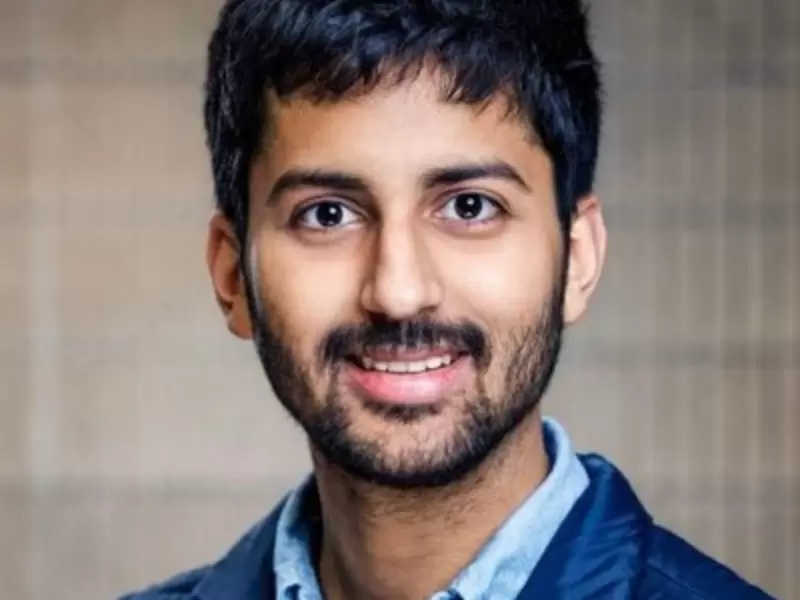
 Ro Khanna / Image - khanna.house.gov
Indian American Congressman Ro Khanna said a proposed billionaire wealth tax would strengthen American innovation and help address rising inequality, rejecting claims that such a measure would drive investment out of Silicon Valley.
In a series of posts on X, Khanna wrote, “My district is $18 trillion, nearly one-third of the U.S. stock market in a 50-mile radius. We have five companies with a market cap over a trillion dollars. If I can stand up for a billionaire tax, this is not a hard position for 434 other members or 100 Senators.”
Also Read: Ro Khanna: Fuentes’ racist remarks on Ramaswamy ‘chilling’
Khanna pushed back against arguments that a wealth tax would discourage entrepreneurship or prevent the emergence of future technology giants, citing the origins of NVIDIA. He said its founder Jensen Huang started the company in the Bay Area because of its concentration of semiconductor talent, research universities, innovation networks, and access to venture capital—not because of tax considerations.
My district is $18 trillion, nearly 1/3 of US stock market in a 50 mile radius. We have 5 companies with a market cap over a trillion dollar companies. If I can stand up for a billionaire tax, this is not a hard position for 434 other members or 100 Senators.
— Ro Khanna (@RoKhanna) December 27, 2025
Those saying that… https://t.co/k7j4TvJARK
“Jensen wasn’t thinking, ‘I won’t start this company because I may one day have to pay a 1 percent tax on my billions,’” Khanna said, adding that Silicon Valley’s advantages stem from talent, research institutions, and funding rather than low taxes.
He said the region’s dominance is rooted in its broader innovation ecosystem, pointing to institutions such as Stanford University and public universities across California. Khanna argued that fears of innovation leaving the region over a modest wealth tax ignore these structural advantages, noting that Silicon Valley attracts far more venture capital than competing hubs such as Austin.
Khanna also stressed that many foundational advances in artificial intelligence were developed with public funding. He cited research supported by the National Science Foundation and the Defense Advanced Research Projects Agency, as well as work carried out at public universities across California.
“The seminal innovation in tech is done by thousands, often with public funds,” he wrote, adding that the University of California system has produced multiple Nobel Prize–winning contributions.
While acknowledging the role of entrepreneurs in commercializing research, Khanna dismissed the argument that a 1–2 percent tax on extreme wealth would deter company formation. He cited Google’s origins as a Stanford research project known as BackRub and said entrepreneurs would continue to build companies and reap rewards within strong innovation clusters.
Khanna framed the wealth tax debate within a broader social and political context, warning that extreme concentration of wealth alongside unaffordable health care, child care, housing, and education risks political dysfunction and social unrest.
The democrat also responded to reports that technology investor Peter Thiel may leave California if a temporary 1 percent billionaire tax is enacted to help fund health care for working-class Americans.
Echoing a remark by former President Franklin D. Roosevelt when wealthy industrialists threatened to leave the country, Khanna wrote sarcastically, “I will miss them very much.”
“So yes,” Khanna said, “a billionaire tax is good for American innovation, which depends on a strong and thriving American democracy.”
Related






ADVERTISEMENT
ADVERTISEMENT
E Paper
Video

Comments
Start the conversation
Become a member of New India Abroad to start commenting.
Sign Up Now
Already have an account? Login