ADVERTISEMENT
ADVERTISEMENT



Climate change falls off the political radar even as climate disasters intensify
For many low-income and immigrant communities, climate change is already an everyday reality rather than a distant threat.
-
 Ritu Marwah
 - Thu, 30, Jul 2026
- 17:59 EDT
- 19
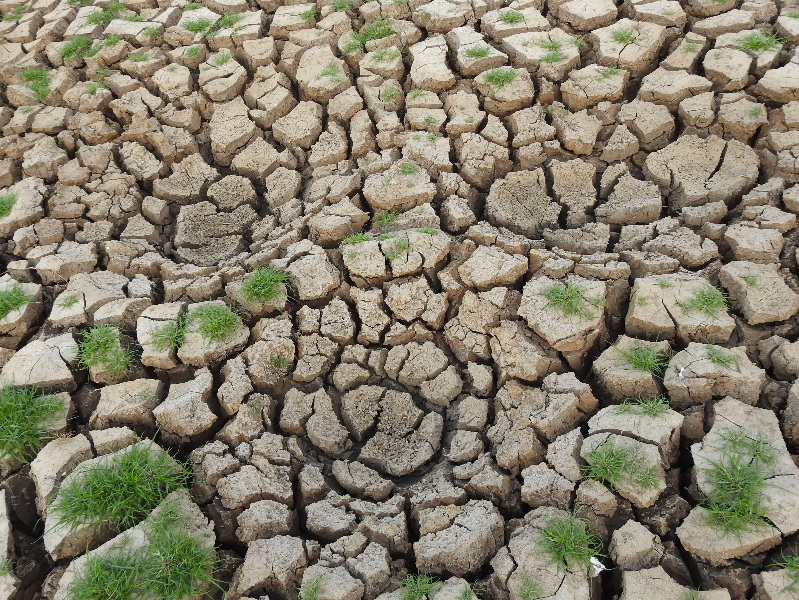 Representative Image / Pexels
Federal funding cuts, political polarization and diminishing public discourse are threatening America’s ability to prepare for a rapidly warming world, climate experts warn.
Climate change may have slipped from the center of America’s political conversation, but the consequences of a warming planet are becoming increasingly impossible to ignore.
From deadly heat waves sweeping Europe and the United States to smoke-filled skies from Canadian wildfires and increasingly destructive storms, climate-related disasters continue to grow in frequency and intensity. Yet experts say public discussion of climate change has diminished even as communities face escalating risks.
That warning came during an American Community Media (ACoM) ethnic media briefing, where climate scientists, resilience experts and community organizers discussed what they described as a troubling disconnect between worsening climate impacts and declining political attention.
The politicization of climate funding followed reports that the Trump administration canceled approximately $7.5 billion in federal clean energy funding designated for projects in Democratic-leaning states. Argentina, which has a Trump ally in power, voted to weaken a seminal law that protected glaciers in Argentina in order to open up mining for rare earth minerals. Activism is challenging in India where interest in deep community input is little said Mark Valentine, Senior Advisor, Omega Resilience Awards and Founder, ReFrame It.
“We are having reduced discourse on climate change at the very same time that people around the world are experiencing its impacts more acutely than ever,” said Prof. Karen McKinnon, Associate Professor of Statistics and the Environment at UCLA.
She pointed to record-breaking temperatures across Europe, where infrastructure is often ill-equipped for prolonged extreme heat, as well as similar heat waves affecting the eastern United States. Fourth of July celebrations in several communities were canceled because of dangerous weather conditions, while smoke from Canadian wildfires spread across large parts of North America, degrading air quality thousands of miles away.
The consequences extend beyond inconvenience, she said.
“Human livelihoods and mortality are directly affected.”
Can climate change be reversed?
Asked whether current climate trends can be reversed, McKinnon explained that rising global temperatures closely track the accumulation of carbon dioxide in the atmosphere.
“Global temperatures increase with carbon emissions,” she said. “Ultimately, we need to reach negative emissions.”
Achieving that goal, she noted, will require sweeping structural changes to economies worldwide, including rapid reductions in fossil fuel use alongside technological advances capable of removing carbon from the atmosphere and reducing emissions.
While scientific tools already exist to begin addressing climate change, implementing them at the necessary scale remains a major political and economic challenge.
Climate injustice hits vulnerable communities hardest
For many low-income and immigrant communities, climate change is already an everyday reality rather than a distant threat.
Shina Robinson, Resilience Projects Director at the Asian Pacific Environmental Network (APEN), described how environmental hazards disproportionately affect working-class neighborhoods.
Communities located near diesel transportation corridors endure chronic air pollution, while wildfire smoke often becomes trapped inside older housing with poor ventilation. Many renters cannot afford expensive home improvements such as solar panels, battery storage or high-quality air filtration systems.
“The people most affected often have the fewest resources available to protect themselves,” Robinson said.
Oakland’s Chinatown offers a model for climate resilience
Robinson highlighted Oakland’s Lincoln Recreation Center in Chinatown as an example of how trusted neighborhood institutions can strengthen community resilience before, during and after disasters.
Serving nearly 1,000 people every day, the center functions as an intergenerational community hub. Seniors attend morning tai chi classes, children participate in daycare and language programs during the day, while teenagers use its sports facilities in the evenings. It also serves newly arrived immigrant families seeking community support.
The facility has become one of the nation’s first municipal resilience hubs.
Staff educate residents about clean energy technologies, battery backup systems and air filtration while providing practical services during emergencies, including cooling during extreme heat, backup electricity and refrigeration for medications during power outages.
“Communities like renters who may not have the means to invest in solar panels or purchase air filters can rely on these shared community spaces during climate emergencies,” Robinson said.
She emphasized that resilience depends not simply on physical infrastructure but on social connections.
“Resilient communities are organized communities. They’re connected communities. They provide collective responses before, during and after disasters.”
Lessons from communities already living with climate stress?
Mark Valentine, Senior Advisor to the Omega Resilience Awards and founder of ReFrame It, urged policymakers to reconsider how they talk about resilience.
“There is a lot of bristling at the term ‘resilience’ itself,” he said. “Resilience implies the necessity to survive a crisis not of one’s own making.”
Drawing on his work with communities in rural India, North Africa and Latin America, Valentine said many local residents reject being praised simply for enduring environmental hardship they neither caused nor benefited from.
He cautioned that even well-intentioned climate solutions can create new problems if local communities are excluded from decision-making.
Large solar farms, wind projects and mining operations to extract minerals essential for clean energy technologies can disrupt ecosystems and displace vulnerable populations.
“We need to be careful about how we pursue these global goals when they have very real local consequences,” he said.
Science cannot answer every question
Despite growing scientific certainty that human activities are driving global warming, McKinnon acknowledged the limitations of climate science.
“We cannot prove that every specific weather event happened because of climate change,” she said. “Science can’t answer every question.”
Instead, scientists examine long-term patterns and probabilities to understand how climate change increases the likelihood and severity of extreme weather.
Robinson added that while personal experiences are important, anecdotal evidence alone cannot replace large-scale scientific research.
“Anecdotal data does not make up for real data at scale,” she said.
Moving beyond simple solutions
One of the greatest obstacles to climate action is the public desire for simple answers to an extraordinarily complex problem.
“We live in times when people are averse to complexity,” Valentine said. “People want simple answers to complex problems.”
Climate change, he argued, cannot be solved by “flipping a switch.” It requires sustained investment, community engagement, technological innovation and policy reforms across multiple sectors.
Despite the magnitude of the challenge, the panel ended on a note of cautious optimism.
We have all the tools to fix it. We just have to change how we do things said Robinson.
“To begin with we have to save what we have.”
Discover more at New India Abroad.
Leave A Comment
Related








ADVERTISEMENT

ADVERTISEMENT
E Paper
Video

Comments
Start the conversation
Become a member of New India Abroad to start commenting.
Sign Up Now
Already have an account? Login