ADVERTISEMENT
ADVERTISEMENT



Association by Design—or Guilt by Association?
The writer argues attacks on Hindu Americans mask prejudice under the guise of political critique.
-
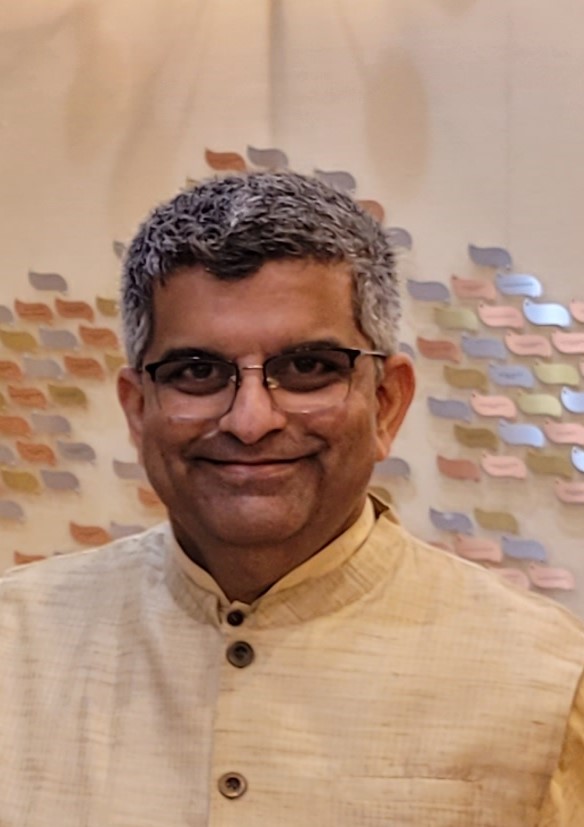 Vikas Deshpande
 - Wed, 03, Jun 2026
- 23:59 EDT
- 1635
 Rakhi Israni / Handout
Reading "Association by Design: The Network Backing Rakhi Israni Named Its Goal" by Pieter Friedrich in New India Abroad (June 2, 2026) prompted me to wonder whether the newspaper's "Opinion" section might more accurately be renamed "Opinionated." In a charged political climate, personal opinions about candidates are entirely understandable — and for some, support for a particular candidate may even serve personal interests. But when negativity is fueled by recycled conspiracy theories that neither the author nor anyone else has ever substantiated, it reveals something more troubling: a sustained campaign of mudslinging that venomously brands the American Hindu community and its organizations as something other than what they are.
One of the most consistent targets of these attacks — appearing repeatedly across the author's social media posts and writings on partisan web portals — is Hindu Swayamsevak Sangh USA (HSS). HSS is a nonprofit, volunteer-driven educational and cultural independent organization registered in the United States as a tax-exempt 501(c)(3) entity. Through more than 270 local chapters nationwide, HSS works to preserve and promote Hindu values, culture, yoga, leadership development, and community service among Americans of Hindu heritage, while encouraging civic engagement and social responsibility. Over the years, HSS volunteers have contributed thousands of hours to food drives, disaster relief, environmental initiatives, blood donation campaigns, educational programs, and interfaith outreach. They embody values of selfless service (sewa), respect for diversity, family cohesion, and active citizenship — contributions that have earned recognition from educators, academics, business leaders, and elected officials alike. Yet the portrait this author consistently paints bears little resemblance to that reality.
The same distortion applies to other Hindu organizations he targets. What is especially concerning is that his attacks have increasingly crossed a line — now targeting and defaming specific individuals and their family members simply because they exercise their civic rights within the bounds of the law. Even Mahatma Gandhi, probably being Hindu, couldn’t escape this author’s hogwash comments calling Gandhiji racist and casteist.
This pattern extends well beyond Hindu organizations. It reaches American-born and American-raised politicians on both sides of the aisle. The author famously directed "death to…" at Congressman Raja Krishnamoorthi. Even late Rev. Jesse Jackson couldn’t tolerate it and unequivocally denounced his remarks. Others in his crosshairs have included Ro Khanna, Shree Thanedar, Suhas Subramanyam, Tulsi Gabbard, Bhavini Patel, Sri Kulkarni, Vivek Ramaswamy — and now, the newest addition to this list: Rakhi Israni, candidate in California's 14th Congressional District primary.
The pattern in this author's work speaks for itself. The words "love" and "respect" appear beside "Hindu" just often enough to offer cover — but nowhere in his writing does genuine appreciation for Hindu Dharma or Hindu Americans take root. If one were to plot his writings on a graph, the trajectory would point in only one direction — rising Hindu animus.
This brand of Hindu hate — however it may disguise itself as critique of organizations or ideologies rooted in Hindu Dharma — does not remain contained. Its impact ripples outward, from individual Hindu Americans to the broader Hindu-American community as a whole. That alone makes it a matter of concern for every responsible American and every civic institution that takes seriously its commitment to equality and inclusion. Hatred directed at any group — including a micro-minority community like Hindu Americans, who have contributed enormously to this nation's social, professional, and civic fabric — demands to be named, challenged, and opposed.
And so, the call to Hindu Americans is clear: do not remain silent. Engage your elected officials, your academic institutions, your local media, and the broader public square. The Hindu-American community has earned its place in American life through decades of quiet contribution and good faith citizenship. It is time to claim that place openly and confidently — not by mirroring the hostility directed at you, but by rising above it with clarity, dignity, and an unwavering commitment to contribute to American society.
The author is engaged in writing articles on social and political issues, covering both the US and India, in English and his native Marathi.
(The views and opinions expressed in this article are those of the author and do not necessarily reflect the official policy or position of New India Abroad.)
Discover more at New India Abroad.
Leave A Comment
Related








ADVERTISEMENT

ADVERTISEMENT
E Paper
Video

Comments
Start the conversation
Become a member of New India Abroad to start commenting.
Sign Up Now
Already have an account? Login