ADVERTISEMENT
ADVERTISEMENT



US eyes India in shipbuilding push against China
Witnesses repeatedly argued that the United States should not attempt to compete with China on its own.
-
 IANS
IANS - Fri, 24, Jul 2026
- 03:56 EDT
- 17
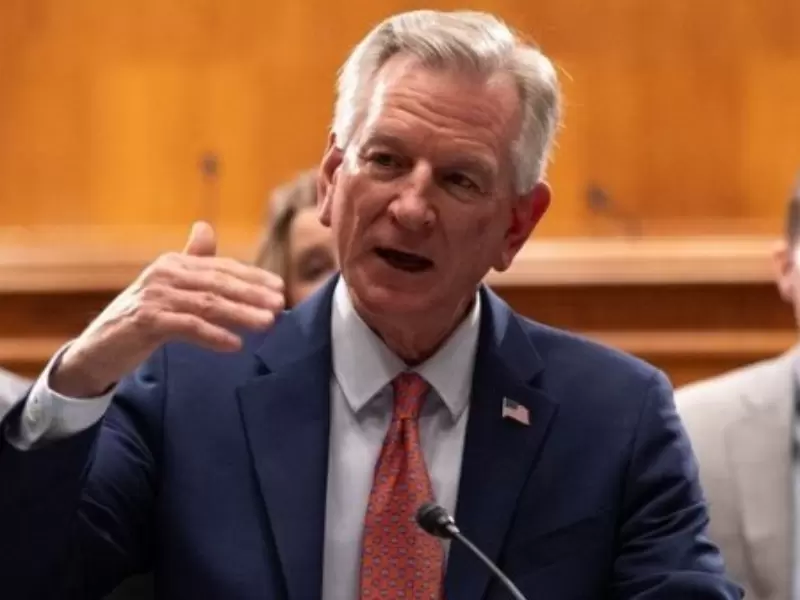
 Congressman Ami Bera / X/@RepBera
India has emerged as a potential strategic partner in the United States' effort to counter China's dominance in global shipbuilding, with congressional witnesses identifying New Delhi alongside Japan and South Korea as part of a long-term allied strategy to diversify maritime industrial capacity away from Beijing.
The issue came into focus during a hearing of the House Foreign Affairs Subcommittee on East Asia and the Pacific, where lawmakers and experts warned that China's overwhelming control of commercial shipbuilding has become both an economic and national security challenge for the United States and its allies.
Japan and South Korea were repeatedly described as America's principal partners because of their established shipbuilding industries. At the same time, India was singled out as an emerging player capable of contributing to a broader allied maritime network.
Matthew Funaiole, vice president at the Center for Strategic and International Studies (CSIS), said the United States should work "with allies and partners like South Korea and Japan as well as others -- India is a new entry into the shipbuilding game as well -- to both align on long-term objectives and then also to build up allied capacity at scale outside of China."
The hearing, titled Charting a New Course: Countering China's Dominance in Global Shipbuilding, examined what lawmakers described as Beijing's state-backed expansion of commercial shipbuilding and its implications for global supply chains, military logistics, and Indo-Pacific security.
Opening the hearing, Subcommittee Chair Young Kim said China now controls more than half of the world's commercial shipbuilding capacity, while the United States accounts for less than one-tenth of 1%.
She argued that China's commercial success directly strengthens its naval capabilities because commercial and military shipbuilding operate together under Beijing's industrial strategy.
"Our domestic shipyards are backlogged, understaffed, and structurally fragile," Kim said. "Every dollar a Western company spends to build a commercial vessel in a Chinese shipyard directly subsidizes the People's Liberation Army Navy."
Ranking Democrat Ami Bera agreed that rebuilding American shipbuilding capacity would require close cooperation with allies.
"The beauty is though; China is doing this alone," Bera said. "We have allies that we can do this with." He specifically referred to Japan and South Korea while discussing investments, technology, and workforce cooperation.
Witnesses repeatedly argued that the United States should not attempt to compete with China on its own.
Funaiole cautioned that matching China ship for ship was unrealistic. Instead, he recommended greater transparency into China's maritime industry, investment in high-value maritime technologies, and coordinated industrial planning with allies over several decades.
He noted that replacing China's dominance "is not something that's going to be easily replaced, and it's not something the US can address overnight."
Brent Sadler of the Heritage Foundation called for creating a "maritime group of nations" bringing together countries including Japan, South Korea, the Philippines, Greece, and potentially Taiwan to coordinate shipbuilding, trade, and technology policies.
Lawmakers also discussed using tariffs, port fees, sanctions, and export controls to reduce dependence on Chinese shipyards while encouraging investment by allied companies in American shipbuilding facilities.
China currently produces more than half of the world's commercial shipbuilding output, while the United States accounts for only a tiny fraction of global production, according to testimony presented during the hearing. Witnesses warned that China's commercial shipbuilding base also supports its rapidly expanding naval fleet through what they described as a military-civil fusion model.
Discover more at New India Abroad.
Leave A Comment
Related









ADVERTISEMENT

ADVERTISEMENT
E Paper
Video

Comments
Start the conversation
Become a member of New India Abroad to start commenting.
Sign Up Now
Already have an account? Login