ADVERTISEMENT
ADVERTISEMENT



A New Year on the edge of transition where policy meets pragmatism
The defense and technology agreements between India and the United States are beginning to take shape in 2026, particularly in semiconductor manufacturing, cybersecurity, and clean energy collaboration.
-
 Jeevan Zutshi
 - Sun, 04, Jan 2026
- 02:10 EST
- 207
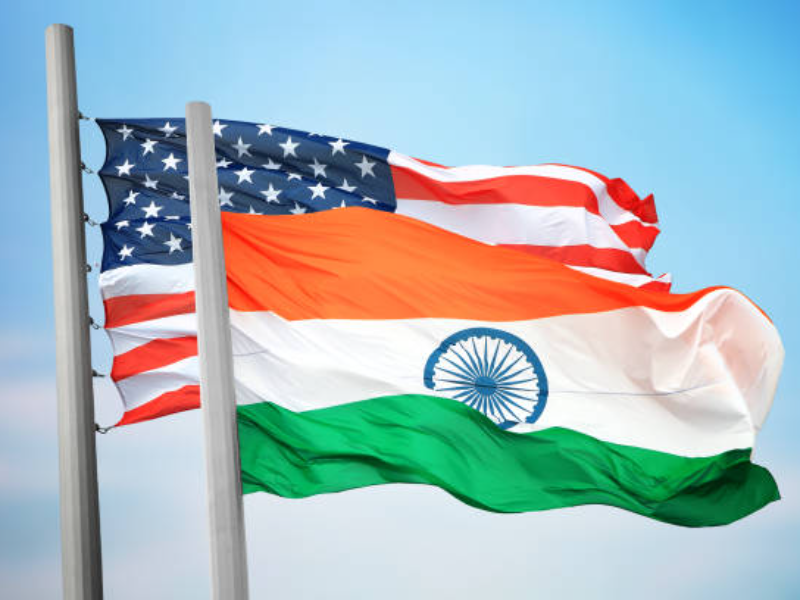 Indian and American flags / Courtesy Photo
For all the turbulence of the mid-2020s, the new year may mark a subtle but significant shift, less about sweeping change and more about recalibration. Between the U.S. economy’s resilience, evolving global alliances, and a world still testing the limits of security and migration, 2026 looks set to blur the line between uncertainty and adaptation.
The U.S. Economy could be slowing but for sure, not Stopping!
By 2026, the American economy seems likely to settle into a slower yet steadier rhythm. After several years of post-pandemic adjustments, policymakers appear to have finally steered inflation closer to the Federal Reserve’s comfort zone. Yet, the new challenge lies in sustaining growth without reigniting price pressures. Businesses that aggressively hired during the recovery phase are now recalibrating, with productivity gains from artificial intelligence and automation cushioning the effects of tighter labor markets.
ALSO READ: 2026: The dawn of Q2 in the 21st century
Consumer sentiment, meanwhile, continues its seesaw behavior. The average American household still feels the pinch from higher living costs, even as job opportunities remain comparatively strong. Economic optimism in 2026 depends less on data points and more on confidence — in wages keeping pace with prices, in the housing market cracking open for first-time buyers, and in the Fed’s ability to execute a “soft landing” that doesn’t quietly turn into stagnation.
On the global stage, the India–U.S. Partnership Matures! One of the most consequential partnerships continues to deepen. India and the United States have quietly moved from mutual curiosity to practical cooperation. The defense and technology agreements signed over the past few years are beginning to take shape in 2026, particularly in semiconductor manufacturing, cybersecurity, and clean energy collaboration. The symbolic gestures of friendship are giving way to joint ventures, research hubs, and a shared push toward economic self-reliance without isolationism.
Still, the partnership is not without friction. U.S. policymakers are watching India’s domestic policies, particularly around digitization and press freedom, with cautious interest. Yet geopolitical pragmatism tends to outweigh value-based unease. Both countries recognize a common objective, maintaining strategic stability in the Indo-Pacific amid China’s continued assertiveness and Russia’s unpredictable pivot. The stakes feel very real in 2026, but so does the desire to manage competition through cooperation.
On immigration it is more of a shifting Conversation. The politics of immigration remain raw, but the narrative in 2026 feels more nuanced than it did a few years ago. Economic necessity has forced a pragmatic tone. With many industries like health care, agriculture, and technology especially, still struggling to fill essential roles, both lawmakers and business coalitions are pressing for modernized visa programs. Some reforms earlier laid the groundwork for faster processing and better oversight, though implementation remains uneven.
Public sentiment is equally complex. Americans are divided between security concerns and economic realism. The arrival of climate-driven migration from Latin America and beyond is reshaping demographics across the southern states. Cities like Phoenix, Austin, and Atlanta are adapting by investing in integration services and community-led initiatives rather than relying solely on federal interventions. The broader question is no longer whether the U.S. can absorb immigration, but how it can do so without reigniting cultural polarization.
Is the Global Security in Flux? The world’s security architecture enters 2026 under immense strain — not because it is collapsing, but because it is overstretched. The wars in Ukraine and Gaza have entered grinding phases, testing Western cohesion and exhausting public patience. At the same time, cyber warfare and disinformation campaigns continue to redefine how conflicts unfold, often without a single shot being fired.
In Asia, Taiwan remains the eye of a geopolitical storm, though diplomatic deterrence has so far held. Meanwhile, global defense spending is climbing, but it’s increasingly directed toward technology, drones, AI surveillance, and missile interception rather than traditional troop buildups. The uneasy peace of 2026 rests on deterrence as much as on diplomacy. Every major power seems aware that a hot conflict would disrupt not only economies but also the AI-dependent digital infrastructure linking them all.
If 2025 was about recalibration, 2026 is shaping up as a test of adaptation. The global economy is learning to live with moderated growth and moderated expectations. Alliances like India–U.S. show how strategic patience can yield genuine partnership. Migration pressures are prompting overdue policy pragmatism. And while security flashpoints remain, there’s also a dawning realization that unilateralism has become self-defeating in an interconnected world.
The policy question for 2026 is not whether challenges persist. They do but whether governments can institutionalize adaptability as a core function of governance. The year ahead will test not only economic resilience but policy endurance, the ability to sustain stability amid low-intensity uncertainty.
The future, in other words, isn’t breaking with the past but it’s negotiating with it. The choices made in 2026 may not make headlines for their drama, but they could well define the quiet architecture of what follows.
Jeevan Zutshi, based in Fremont, California, is the Founder of Indo-American Community Federation, an author and a community leader.
(The views and opinions expressed in this article are those of the author and do not necessarily reflect the official policy or position of New India Abroad.)
Leave A Comment
Related








ADVERTISEMENT

ADVERTISEMENT
E Paper
Video

Comments
Start the conversation
Become a member of New India Abroad to start commenting.
Sign Up Now
Already have an account? Login