ADVERTISEMENT
ADVERTISEMENT



Trump calls for one-year cap on credit card interest rates at 10%
Lawmakers from both the Democratic and Republican parties have raised concerns about high rates and have called for those to be addressed.
-
 Reuters
 - Sat, 10, Jan 2026
- 15:23 EST
- 96
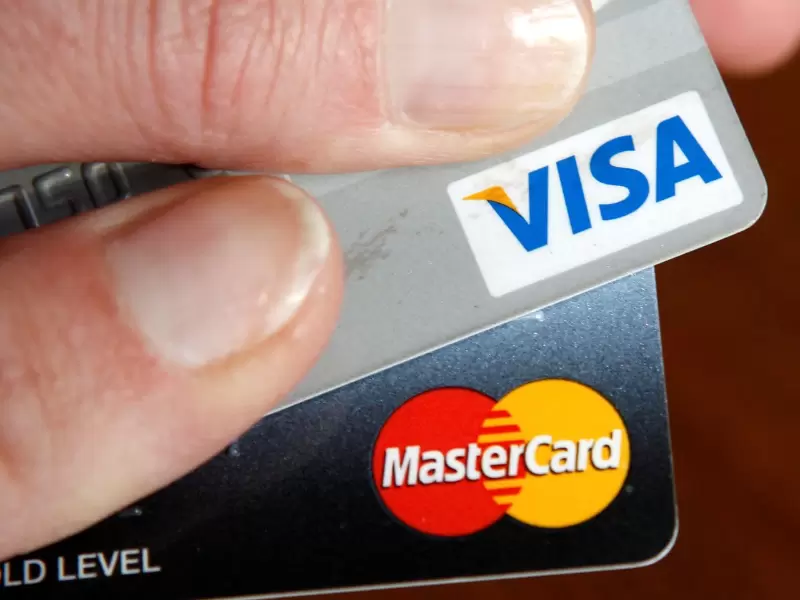 FILE PHOTO: A credit card user displays her cards in Washington February 22, 2010. This logo has been updated and is no longer in use. / REUTERS/Kevin Lamarque (UNITED STATES)/File Photo
U.S. President Donald Trump said on Jan. 9 he was calling for a one-year cap on credit card interest rates at 10 percent starting on Jan. 20, but he did not provide details on how his plan will come to fruition or how he planned to make companies comply.
Trump also made the pledge during the campaign for the 2024 election that he won, but analysts dismissed it at the time, saying that such a step required congressional approval.
Lawmakers from both the Democratic and Republican parties have raised concerns about high rates and have called for those to be addressed. Republicans currently hold a narrow majority in both the Senate and the House of Representatives.
ALSO READ: Trump to House Republicans: If we don't win midterms, I will get impeached
There have been some legislative efforts in Congress to pursue such a proposal, but they are yet to become law, and in his post, Trump did not offer explicit support to any specific bill.
Opposition lawmakers have criticized Trump, a Republican, for not having delivered on his campaign pledge.
"Effective Jan. 20, 2026, I, as President of the United States, am calling for a one-year cap on credit card interest rates of 10 percent," Trump wrote on Truth Social, without providing more details.
"Please be informed that we will no longer let the American public be 'ripped off' by credit card companies," Trump added.
U.S. Senator Elizabeth Warren, a Democrat in the Senate Banking Committee, said Trump's call was meaningless without a bill being passed by Congress.
"Begging credit card companies to play nice is a joke. I said a year ago if Trump was serious, I'd work to pass a bill to cap rates," Warren said, while criticizing Trump's attempts to gut the U.S. Consumer Financial Protection Bureau.
The White House did not immediately respond to a request for comment on details of the call from Trump but said on social media without elaborating that the president was capping the rates.
Some major U.S. banks and credit card issuers like American Express, Capital One Financial Corp., JPMorgan, Citigroup, and Bank of America did not respond to a request for comment.
Some banking advocacy groups said in a joint statement that a 10 percent interest rate cap would "reduce credit availability" and "only drive consumers toward less regulated, more costly alternatives."
The statement came from the Consumer Bankers Association, Bank Policy Institute, American Bankers Association, Financial Services Forum, and Independent Community Bankers of America.
Rates reflect the risk that issuers take, said Brian Jacobsen, chief economic strategist at Annex Wealth Management, noting that credit card lines are "unsecured loans."
"When companies can’t price the risk properly, they’ll just reduce credit lines or cut off access to credit entirely," Jacobsen wrote in an email. "Buy now, pay later firms and payday lenders might love this proposal" to cap rates.
Lawmakers have raised concerns about rates
U.S. Senator Bernie Sanders, a fierce Trump critic, and Senator Josh Hawley, who belongs to Trump's Republican Party, have previously introduced bipartisan legislation aimed at capping credit card interest rates at 10 percent for five years. This bill explicitly directs credit card companies to limit rates as part of broader consumer relief legislation.
Democratic U.S. Representative Alexandria Ocasio-Cortez and Republican Congresswoman Anna Paulina Luna have also introduced a House of Representatives bill to cap credit card interest rates at 10 percent, reflecting cross-aisle interest in addressing high rates.
Billionaire fund manager Bill Ackman, who endorsed Trump in the last elections, said on X the U.S. president's call was a "mistake."
Last year, the Trump administration moved to scrap a credit card late fee rule from the era of former President Joe Biden.
The Trump administration had asked a federal court to throw out a regulation capping credit card late fees at $8, saying it agreed with business and banking groups that alleged the rule was illegal. A federal judge subsequently threw out the rule.
Discover more at New India Abroad.
Leave A Comment
Related









ADVERTISEMENT

ADVERTISEMENT
E Paper
Video

Comments
Start the conversation
Become a member of New India Abroad to start commenting.
Sign Up Now
Already have an account? Login