ADVERTISEMENT

ADVERTISEMENT

From Hukou system to ethnic assimilation: Hidden hierarchies behind China's equality narrative

Beneath China’s narrative of equality lies a layered system of social and ethnic hierarchies that continues to shape the lives of millions.

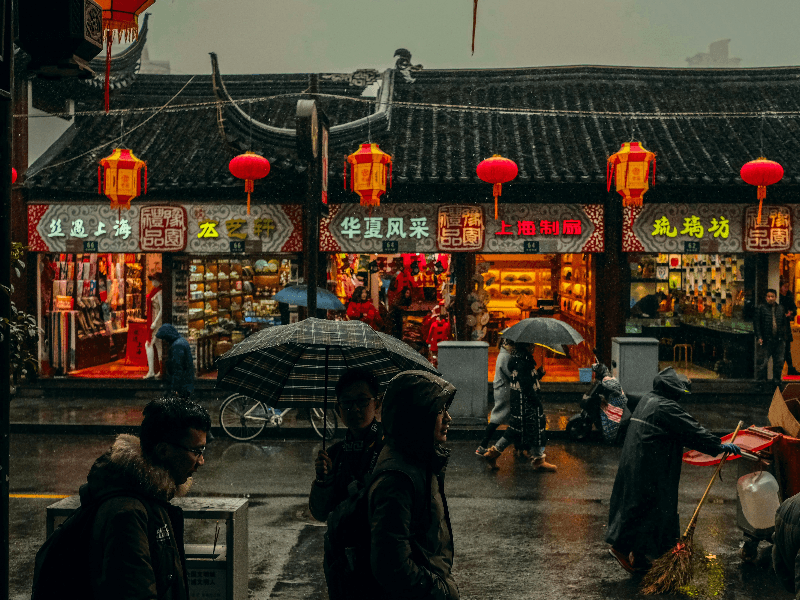
 Representative image Representative image / Unsplash

Somewhere in a Chinese city tonight a man is sweeping a factory floor or laying brick on a high-rise he will never be allowed to live in, and his daughter is back in a village six hundred miles away being raised by her grandparents because the city that takes his labour will not school his child. He is not an illegal immigrant.

He was born in China, he is a Chinese citizen, and he is working in his own country. What stands between him and the ordinary life of the city around him is a single inherited classification, the hukou, the household registration stamped on him at birth, which marks him as rural and agricultural and follows him for the rest of his days no matter where his body actually goes. Hundreds of millions of people live inside this division, the "floating population" who build, clean, cook and assemble for the urban economy while being shut out of its schools, its hospitals, its housing and its pensions, and the line that excludes them is not one they crossed but one they were born behind.

Also Read: Post-election Bangladesh and the rise of China’s influence architecture

This is hierarchy not as an old idea in a Confucian text but as a thing with a registry, an address and a consequence, sorting a fifth of humanity into those who belong where they live and those who merely work there.

Hierarchy in China did not begin with the hukou, though, and it helps to be honest about what came before it. The classical scheme everyone reaches for, the four ranks or simin, belongs mostly to old China and was always more an ideal caste order, a Confucian picture of how a well-run society ought to sort its functions, with the shi, the scholar-gentry who sat the examinations and ran the bureaucracy, at the top; then the nong, the farmers, honoured on paper as the productive base of the realm; below them the gong, the artisans; and at the bottom the shang, the merchants, kept there for all their money because trade was read as parasitic rather than productive.

The ladder was at least in principle climbable; a farmer's son who could memorise the classics might in theory end up a magistrate. But that neat ranking of occupations was never the whole of Chinese hierarchy, because running underneath it was a second and older line, the one between hua and yi, the civilised centre and the barbarian edge, between those who counted as properly Chinese and those who lived at the rim of the known world, and it is this axis, not the tidy four ranks, that survived the fall of the empire and walked into the People's Republic.

The Communist state announces itself as a family of fifty-six equal nationalities, grants its minorities autonomous regions on paper and a line of script on the banknotes, and yet the commanding heights stay almost entirely Han, the Politburo Standing Committee has never once seated a minority member, the autonomous regions are in practice run by Han party secretaries, and the very story the nation tells about where it comes from, the Yanhuang zisun, the children of the Yellow Emperor, quietly codes the whole people as Han by descent and leaves the Tibetan, the Uyghur and the Mongol standing slightly outside the bloodline.

Also Read: Quad’s Key Challenges: Chinese Aggression, Strategic Incoherence, Leadership Vacuum

Is it any wonder, then, that the recent turn in policy, the drive to forge one tight national consciousness above the separate identities of the minorities, looks less like the building of equality and more like the old civilising centre absorbing its edges by another name?

What that absorbing of the edges costs stops being abstract the moment you look at where it has been pressed hardest. In Xinjiang from around 2017 the state ran a network of what it called vocational training centres, which independent researchers and a string of leaked official documents described instead as camps holding perhaps a million or more Uyghurs and other Muslims at their peak, and around them a wider apparatus of mosque demolition, mass surveillance, the replacement of Uyghur-medium schooling with Mandarin, and labour transfer schemes that moved minority workers into factories far from home.

In Tibet a parallel and quieter machinery has grown, above all a system of residential boarding schools that researchers estimate enrols the great majority of Tibetan children, some put the figure near a million, drawing them away from their families and their language into a Mandarin-medium upbringing at an age when identity sets. The official word for all of this is unity, the forging of a single national consciousness, but unity here flows one way, towards the Han centre and away from the languages, the scripts, the faiths and the family structures that made a Tibetan a Tibetan or a Uyghur a Uyghur, and a researcher has to ask whether a programme that dissolves a people's distinctness while calling it integration is describing equality or its opposite.

Set the two hierarchies side by side and they stop looking like separate stories. The hukou sorts by birthplace and the hua-yi line sorts by descent, but they bear down on overlapping bodies and reinforce one another, because the minority regions are also among the poorest and most rural, which means a Tibetan herder's child or a Uyghur villager who moves to Shenzhen or Chengdu to work arrives carrying both an agricultural registration that bars him from the city's schools and hospitals and an ethnic and linguistic mark that sets him apart on the factory floor, two exclusions stacked on one person.

China, in other words, runs not one hierarchy but a layered system of them, a registration order that decides where you may build a life and an older civilisational order that decides whose life counts as fully Chinese, and the people pressed lowest are very often those caught by both at once.

The classical four ranks are a museum piece and the talk of fifty-six equal nationalities is mostly a banknote, but the man sweeping the factory floor and the child in the boarding school are not abstractions, they are what the hierarchy actually feels like from underneath, and any honest account of how China orders its people has to begin and end with them rather than with the flattering picture the order tells about itself. So when there is social media buzz about an alternate China, which is removed from all glory and glitter and has a dark side as well, it needs to be contextualised.

There also needs to be questioning from the Communist Party of China, which is punching above its weight to show China as a utopia for the working-class people, and paradoxically also provides cheap labour by exploiting its rural populace and ethnic minorities. 

The writer is an author and a columnist. He has authored more than 15 books including 'Taliban: War and Religion in Afghanistan'.

(The views and opinions expressed in this article are those of the author and do not necessarily reflect the official policy or position of New India Abroad.)

Discover more at New India Abroad.


Comments

Related