ADVERTISEMENT
ADVERTISEMENT



The Remark That Put a Nation-Builder in the Spotlight
Priyanka Gandhi Vadra’s “gaumutra expert” jibe diminished parliamentary debate - but inadvertently introduced India to Prof. V. Kamakoti
-
 Subbarayan R Pochi
 - Thu, 06, Aug 2026
- 04:34 EDT
- 18
 Priyanka Gandhi Vadra / Wikipedia
Political disagreement is indispensable to democracy. Personal derision is not.
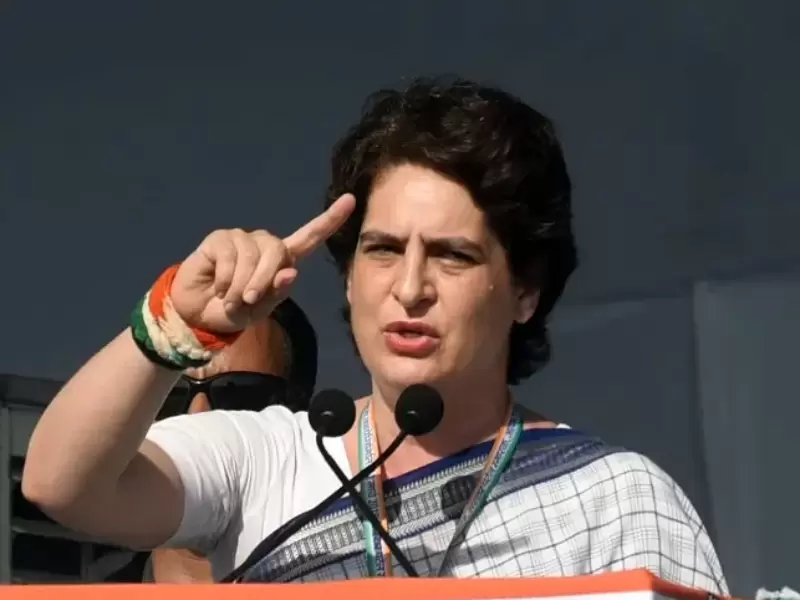
On July 28, 2026, during a Lok Sabha debate on reforming India’s public examination system, Congress MP Priyanka Gandhi Vadra questioned the composition of a new high-powered task force led by Infosys co-founder Mr. Nandan Nilekani. Referring to its members, she said it included a former Intelligence Bureau chief, an IT company owner and a “gaumutra expert,” before asking: “What do they know about education?” The last description was widely understood to refer to Prof. V. Kamakoti, Director of the Indian Institute of Technology Madras.
There were serious questions available to her. To what extent had the recommendations of the 2024 High-Level Committee of Experts, chaired by former ISRO Chairman Dr. K. Radhakrishnan, been implemented - and why did significant gaps remain? What specific measures would the government take to prevent future question-paper leaks? Would a computer-based NEET examination deepen the digital divide? How would cybersecurity, database protection, accessibility and regional disparities be addressed? Were students, teachers and examination specialists adequately represented?
Those questions deserved answers. Reducing an accomplished scientist to a mocking label did not advance any of them.
Ironically, the jibe may have achieved the opposite of what was intended. It sent many Indians - including me - looking beyond Prof. Kamakoti’s title. What emerged was not a caricature, but the record of an engineer, teacher and institution-builder whose work has contributed to India’s technological self-reliance.
The scientist behind the label
Like many members of the public, I knew Prof. Kamakoti principally as the Director of IIT Madras. I was also generally aware of IIT Madras’s remarkable startup ecosystem. I did not fully appreciate his role in one of India’s most consequential technology projects: the development of the SHAKTI family of indigenous microprocessors.
Prof. Kamakoti is a computer scientist whose areas of work include computer architecture, very-large-scale integration design, reconfigurable systems, high-performance computing and cybersecurity. He earned his master’s and doctoral degrees at IIT Madras and joined its faculty in 2001. IIT Madras credits him with leading the team that designed SHAKTI, India’s first indigenously developed microprocessor technology with potential applications in computing, communications, strategic systems and defense.
This is not merely a laboratory talking point. In collaboration with the Indian Space Research Organisation, IIT Madras developed and successfully booted an aerospace-grade controller based on the SHAKTI processor. According to IIT Madras, the chain - from conception and chip design to fabrication, packaging, motherboard production, assembly, software development and booting - was completed in India. The project brought together ISRO’s Inertial Systems Unit, IIT Madras, Semiconductor Laboratory in Chandigarh, Tata Advanced Systems and other Indian partners.
At a time when semiconductors influence economic strength, national security and strategic autonomy, that is nation-building in its most practical form.
Prof. Kamakoti also chaired a national task force on artificial intelligence and served as a member of the National Security Advisory Board. Whether one agrees with every public statement he has ever made is irrelevant to acknowledging the expertise he brings to questions involving secure, technology-enabled examinations.
The Supreme Court’s 2024 NEET judgment emphasized the need for reforms to the examination process and improvements in data-security protocols. A specialist in computer architecture and cybersecurity is hardly an inexplicable choice for a task force considering secure, technology-enabled examinations.
Cow urine: neither sacred exemption nor comic disqualification
The controversy arose from remarks Prof. Kamakoti made in January 2025 concerning the antibacterial, antifungal, anti-inflammatory and other purported medicinal properties of cow urine. After his comments were criticized, he reportedly referred to five scientific papers and a United States patent in support of his position.
If Prof. Kamakoti had merely stated that cow urine has demonstrated antimicrobial activity under certain experimental conditions, that would be a limited and scientifically testable assertion. Recommending cow urine as a cure for a particular illness would be an entirely different proposition, requiring evidence appropriate to that therapeutic claim. We need not defend such a recommendation - and should not imply that the available evidence establishes one.
Prof. Kamakoti’s medicinal assertions are open to scientific scrutiny and criticism. But reducing an eminent computer scientist and institution-builder to the sneering label “cow-urine expert”- particularly while questioning his competence to help reform a national examination system - is neither scientific evaluation nor substantive political criticism.
Thus, one may legitimately challenge the strength of Prof. Kamakoti’s medical claims. Scientific temper requires that freedom. But scientific temper also requires us to resist the opposite error: treating a subject as inherently ridiculous because it involves urine, cattle or a practice associated with Indian tradition.
As a biologist by training and a former cancer researcher, I find the reflexive disgust scientifically shallow. Urine is routinely analyzed because it contains measurable biological information. For decades, glucose in urine was used to monitor diabetes, although blood-glucose measurement is now preferred for diagnosis and management. Home pregnancy tests still detect human chorionic gonadotropin in urine. Premarin, a brand of conjugated estrogens, takes its name from “pregnant mares’ urine” and has historically been produced from it.
Urea, first identified in urine, became foundational to the history of organic chemistry. Today’s fertilizer urea, however, is not generally collected from urine; it is manufactured industrially from ammonia and carbon dioxide. That distinction matters. It illustrates the very principle at stake: science neither recoils from a substance because of its origin nor grants it medicinal value because tradition esteems it. Science investigates.
The COVID-19 pandemic supplied a striking contemporary example. Scientists analyzed wastewater and sewage samples for genetic traces of SARS-CoV-2 to monitor the spread of the virus across entire communities. Wastewater - containing human urine, feces and countless other discarded materials - became an epidemiological early-warning system capable of revealing changing infection trends without testing every individual. What might provoke disgust at the level of ordinary perception became, under scientific examination, a valuable source of public-health intelligence.
Animal dung, sewage and other biological by-products can likewise become sources of fertilizer, biogas, nutrients or useful molecules when treated safely. Human beings have always learned to turn unappealing materials into valuable resources. The proper question is not, “Does this subject offend my sensibilities?” It is, “What does reliable scientific evidence show?”
Mockery is not peer review.
Challenge the argument, not the human being
Mrs. Gandhi Vadra is fully entitled to question Prof. Kamakoti’s statements about cow urine. She could have asked whether his claims exceeded the available clinical evidence. She could have demanded that public officials distinguish carefully between preliminary laboratory findings, traditional use and proven medical treatment. Such criticism would have served both science and public health.
Instead, the phrase “gaumutra expert” collapsed a long academic career into a single sneer. It did not rebut his claim; it attempted to make the claimant socially untouchable. Worse, it implied that one set of remarks outside the central subject of the task force erased expertise in computer architecture, cybersecurity, artificial intelligence, education and institutional leadership.
Applied consistently, that standard would disqualify nearly every eminent person who has ever expressed a debatable view beyond his or her principal discipline.
There is a striking irony in Mrs. Gandhi Vadra’s own political inheritance. Her great-grandfather, Jawaharlal Nehru, understood the importance of distinguishing individuals from the system or idea one opposed. Writing in An Autobiography, he observed:
“I do not find any anger against England or the English people. I dislike British imperialism and I resent its imposition on India; I dislike the capitalist system; I dislike exceedingly and resent the way India is exploited by the ruling classes of Britain. But I do not hold England or the English people as a whole responsible for this, and even if I did, I do not think it would make much difference, for it is a little foolish to lose one’s temper at or to condemn a whole people.”
Nehru then expressed the distinction in unmistakable terms: “It is that rule, that domination, to which we object, and with which we cannot compromise willingly - not the English people.”
The principle transcends that historical context: oppose the system, interrogate the claim, criticize the decision - but do not substitute a label for an argument or reduce an individual to a stereotype.
The Nilekani irony
There is another irony in dismissing the panel as containing merely “an IT company owner.” Nandan Nilekani was appointed by the Congress-led UPA government in 2009 to chair the Unique Identification Authority of India. Aadhaar would become one of the foundational components of India’s digital public infrastructure. The program has attracted legitimate debates over privacy, exclusion and implementation, but its transformative scale cannot seriously be denied.
Mr. Nilekani’s presence does not place the task force beyond scrutiny. No committee should be. But describing him merely as an IT company owner is as reductive as defining Prof. Kamakoti solely by one set of remarks unrelated to his expertise in examination reform. The task force also draws upon experience in intelligence, space, public administration and education. Such a multidisciplinary panel is particularly defensible when examination reform involves logistics, security, technology, administration and public trust.
Rather than criticizing the panel for drawing members from diverse fields, the more pertinent question is whether its expertise adequately encompasses classroom experience, testing science, disability access, rural education and the lived realities of students.
An unearned insult, an earned spotlight
There can be no doubt that India urgently needs a credible examination system. Students cannot be asked to stake years of preparation and their families’ savings on processes vulnerable to leaks, opaque decisions or technological failure. The government must answer for past shortcomings, act on sound recommendations and build safeguards before undertaking a massive transition.
The Opposition has both the right and the duty to press those questions relentlessly.
But Parliament should elevate public reasoning, not reward the cleverest insult. Mrs. Gandhi Vadra’s remark was ill-advised because it displaced the issue, diminished an accomplished academic and made cultural contempt masquerade as scientific criticism.
Yet it produced an unintended public service. Many Indians who knew only the office of the IIT Madras Director discovered the man and his work: an academic who built his career in India, helped create an indigenous microprocessor, contributed to strategic technological capacity and guided one of the country’s premier institutions.
There is a final irony. In the Hindu civilizational vocabulary, Shakti signifies feminine power - the creative energy that animates and transforms. Yet Mrs. Priyanka Gandhi Vadra, a prominent woman in Indian public life, chose ridicule over recognition when speaking of a scientist who helped translate SHAKTI into indigenous technological capability.
The jibe lasted only seconds. But the SHAKTI processor, the engineers trained, the institutions strengthened and the technological confidence it fostered will endure far longer. One remark tried to brand Prof. Kamakoti a “cow urine expert.” His body of work shows him to be a nation-builder. That is the difference between a label and a legacy.
(The views and opinions expressed in this article are those of the author and do not necessarily reflect the official policy or position of New India Abroad.)
Discover more at New India Abroad
Leave A Comment
Related









ADVERTISEMENT

ADVERTISEMENT
E Paper
Video

Comments
Start the conversation
Become a member of New India Abroad to start commenting.
Sign Up Now
Already have an account? Login