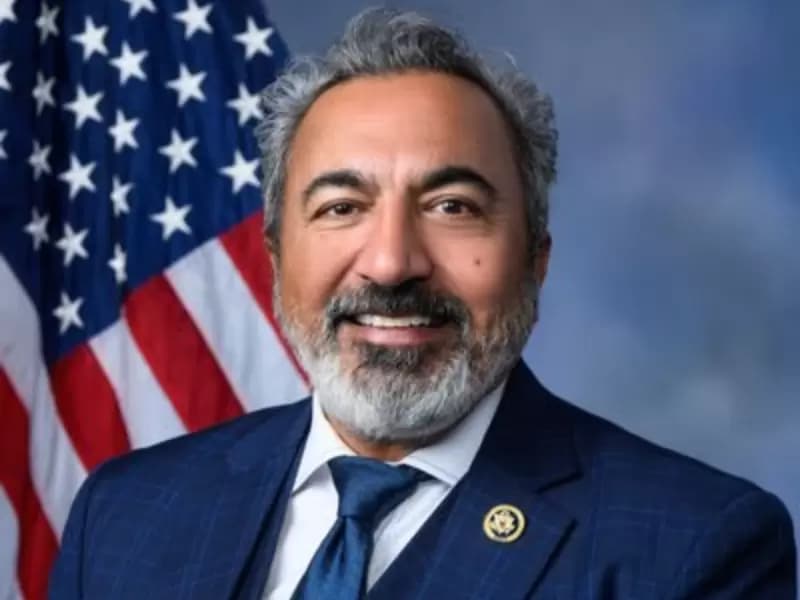
Congressman Ami Bera / X/@RepBera
Indian-American Democratic Congressman Ami Bera, a co-chair of the bipartisan Congressional Primary Care Caucus, introduced an act to mandate the federal government to better track and report spending on primary care, helping policymakers improve access to care, patient outcomes, and the overall healthcare system.
Called 'Prioritizing Primary Care Act of 2026, the bipartisan act is co-presented by Republicans David Rouzer and Jen Kiggans, along with Democrats Bera and Joe Courtney, the four co-chairs of the Congressional Primary Care Caucus.
The Act would require federal agencies to submit annual reports to Congress detailing the share of healthcare spending dedicated to primary care.
The legislation would also create a federal working group tasked with developing recommendations to strengthen and expand the primary care workforce, particularly in rural and medically underserved communities.
ALSO READ: Indian American doctor Tina Shah joins New Jersey Democratic primary race
Bera argues a research backed position which he claims consistently shows that access to primary care is associated with better health outcomes, lower health care costs, and improved quality of care.
However, he accused the government and said, the United States dedicates only about five percent of total health care spending to primary care.
H.R. 8765 would require the federal government to report on primary care spending across federal health programs and establish a working group to identify opportunities to strengthen and expand primary care nationwide.
“As a doctor, I know that primary care is the foundation of a healthier, more affordable health care system,” said Representative Bera.
Before entering politics, Bera worked as a doctor and healthcare administrator. He earned his medical degree from the University of California, Irvine School of Medicine and later served as chief medical officer for the Sacramento County Department of Health and Human Services.
The Congressman continued, “Investing in primary care helps prevent disease, improve patient outcomes, and lower costs over the long term. This bipartisan bill will help us better understand how federal health care dollars are being spent and identify ways to expand access to care, especially in rural and underserved communities."
The bill also directs the Secretary of Health and Human Services to establish a working group within one year of it coming to force to study ways federal health programs can prioritize primary care spending.
The group would also recommend strategies to expand access to primary care providers and improve the availability and quality of primary care services, particularly in rural and medically underserved communities.
Discover more at New India Abroad.
ADVERTISEMENT
ADVERTISEMENT
Comments
Start the conversation
Become a member of New India Abroad to start commenting.
Sign Up Now
Already have an account? Login