ADVERTISEMENT

ADVERTISEMENT

Record Char Dham rush puts Uttarakhand on alert as monsoons loom

The Char Dham Yatra, one of Hinduism's most revered pilgrimages, attracts millions of devotees annually to the shrines of Kedarnath, Badrinath, Gangotri and Yamunotri in Uttarakhand.

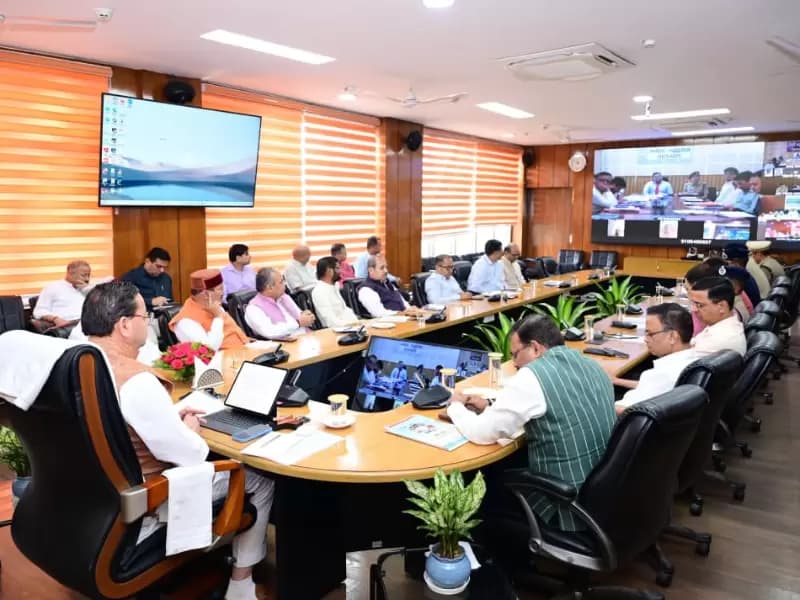
 Uttarakhand CM Pushkar Singh Dhami Chaired Review meeting of ongoing Chardhan Yatra in Dehradun   Uttarakhand CM Pushkar Singh Dhami Chaired Review meeting of ongoing Chardhan Yatra in Dehradun / Handout

Facing an unprecedented influx of pilgrims during this year's Char Dham Yatra, the Uttarakhand government has intensified safety, crowd-management and disaster-preparedness measures as the pilgrimage enters its more challenging monsoon phase.

Chairing a high-level review meeting in Dehradun on June 2, Chief Minister Pushkar Singh Dhami directed officials to make "Safe Pilgrimage, Smooth Darshan and Continuous Communication" the guiding principle of Char Dham Yatra management. He stressed that the safety of pilgrims remains the government's top priority and called for heightened vigilance across all departments during the monsoon season.

The government's renewed focus comes amid growing concerns over the management of the pilgrimage and a record surge in the number of devotees visiting the Himalayan shrines. Official figures show that nearly 2.985 million pilgrims visited the Char Dham shrines during the first 44 days of the yatra this year, compared with about 2.634 million during the corresponding period last year—an increase of more than 300,000 devotees.

Also Read: Record Char Dham rush tests Uttarakhand's capacity, sparks debate on scientific crowd management

The latest review also follows concerns highlighted earlier by India Abroad, which reported hours-long traffic jams on key pilgrimage routes, significant delays in darshan, and a number of deaths linked to high-altitude ailments, health complications and adverse weather conditions. Pilgrims had also raised concerns about overcrowding and logistical challenges at several points along the route, particularly during peak travel days.

With the yatra now entering the monsoon season—traditionally marked by heavy rainfall, landslides and weather-related disruptions—the state government has ordered tighter regulation of pilgrim movement and enhanced emergency preparedness. Dhami directed officials to prepare detailed Standard Operating Procedures (SOPs) for darshan management based on the carrying capacity of each shrine and to strictly enforce restrictions on vehicular movement along pilgrimage routes between 10 p.m. and 4 a.m.

The Chief Minister instructed authorities to activate holding areas and checkpoints whenever crowds exceed prescribed limits and to adopt a phased approach to crowd management to prevent congestion at the shrines. He emphasized that pilgrims should be regularly informed about waiting times, route conditions and traffic diversions to avoid confusion and inconvenience.

"As the Char Dham Yatra enters its more challenging second phase with the onset of the monsoon and increasingly unpredictable weather conditions, we are fully committed to implementing all the directions issued by Chief Minister Pushkar Singh Dhami. The Badrinath-Kedarnath Temple Committee, along with the administration and other stakeholders, is working in close coordination to strengthen safety measures, improve pilgrim facilities and ensure effective crowd management. Our collective objective is to make the yatra safe, convenient and hassle-free for every devotee," said Hemant Dwivedi, chairman of the Badrinath-Kedarnath Temple Committee (BKTC).

Recognizing the risks posed by the monsoon, the government has also ordered the advance deployment of emergency equipment, including earth-moving machinery, ambulances, satellite phones and rescue resources at vulnerable locations. District administrations have been directed to remain on high alert and ensure swift response to landslides, road blockages or other emergencies.

Officials have been asked to provide adequate facilities such as food, drinking water, parking areas, toilets and resting spaces at locations where pilgrims may be temporarily halted because of crowd-control measures or weather-related disruptions. Continuous dissemination of information through LED displays, social media platforms, WhatsApp channels and FM radio has also been mandated.

Special emphasis has been placed on cleanliness and healthcare facilities along the pilgrimage routes. Dhami directed officials to ensure adequate sanitation facilities, improve shelter arrangements for devotees on trekking routes, particularly the Kedarnath trek, and strengthen emergency medical services. He also ordered the appointment of a state-level nodal officer to coordinate helicopter ambulance services for critically ill pilgrims requiring rapid evacuation to advanced medical facilities.

"The first phase of the yatra has been managed successfully through coordinated efforts of the administration, police and disaster-management agencies. The coming phase will be more challenging because of the monsoon and adverse weather conditions," the Chief Minister said while directing officials to maintain constant monitoring of the pilgrimage.

The Char Dham Yatra, one of Hinduism's most revered pilgrimages, attracts millions of devotees annually to the shrines of Kedarnath, Badrinath, Gangotri and Yamunotri in Uttarakhand. This year's record turnout has brought substantial economic activity to the region but has also tested the state's infrastructure and management capabilities, prompting authorities to tighten safety protocols as the pilgrimage season progresses.


Discover more at New India Abroad

Comments

Related