ADVERTISEMENT
ADVERTISEMENT



Yoga Is Now Worth $127 Billion. What Did We Lose Along the Way?
The teacher training market alone is worth $2.5 billion, with over 12,000 yoga teacher training programs registered in the U.S. in a single year.
-
 Ankita Baidya
 - Sun, 21, Jun 2026
- 00:00 EDT
- 19
 Representative image / Pexels
Every June 21, the world celebrates International Yoga Day with synchronized sun salutations, government campaigns, and social media floods of people in Warrior II. But behind the global enthusiasm is a question worth sitting with: when an ancient Indian practice becomes a multi-billion dollar industry, what gets left on the mat?
The global yoga market stood at $127 billion in 2025 and is projected to nearly double to $269 billion by 2033. The teacher training market alone is worth $2.5 billion, with over 12,000 yoga teacher training programs registered in the U.S. in a single year. There are now an estimated 300,000 yoga teachers worldwide, more certified instructors than there are serious students of classical Indian traditions.
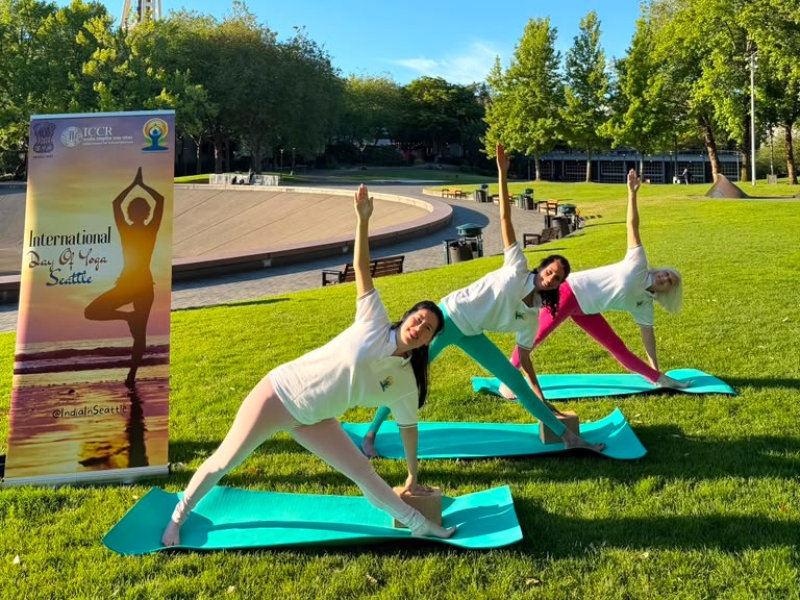
ALSO READ: Yoga Day draws large crowd in Washington
The numbers are staggering. So is the gap they reveal.
Scholars Shreena Gandhi and Lillie Wolff have argued that when Western yoga teachers train practitioners to relate to yoga only on a physical level, without exploring its history, roots, and philosophy, they are "perpetuating the re-colonization of it by diluting its true depth and meaning."
This is not a fringe view. Academic research published on ResearchGate examines how yoga has been reconstructed through globalization and capitalism as a commodity, a product of what scholars call "symbolic displacement," where a practice is lifted from its cultural context and repackaged for new markets.
Yoga's original purpose, that is cultivating self-awareness, compassion, and personal growth, has been progressively overshadowed by an emphasis on physical fitness, flexibility, and appearance. The result is beer yoga, goat yoga, and $200 athleisure sets stamped with Sanskrit script that most buyers cannot read.
For the Indian diaspora, this sits in an uncomfortable place. Many watched their parents' daily practice, humble, unglamorous, deeply personal, get rebranded into something aspirational and sold back to the world at a premium. Even industry analysts now list "cultural misappropriation" as a major challenge facing the yoga market, alongside the need for standardized regulations for instructors.
Scholars from India have largely argued that the answer is not for the West to stop practicing yoga but to learn something of its history, and to practice it responsibly in a genuine cultural exchange.
That is perhaps the most honest way to mark International Yoga Day: not with a perfect pose, but with a genuine question: what are we actually practicing, and do we know where it comes from?
Discover more at New India Abroad.
Related









ADVERTISEMENT

ADVERTISEMENT
E Paper
Video

Comments
Start the conversation
Become a member of New India Abroad to start commenting.
Sign Up Now
Already have an account? Login