ADVERTISEMENT
ADVERTISEMENT



What the New York Times archive reveals about how the world's press wrote Pakistan's Kargil script
A narrative war is lost right there, in the copy desk's choice of a single word, repeated daily until it becomes the furniture of the reader's mind.
-
 Dr. Vinay Nalwa
 - Wed, 15, Jul 2026
- 14:04 EDT
- 27
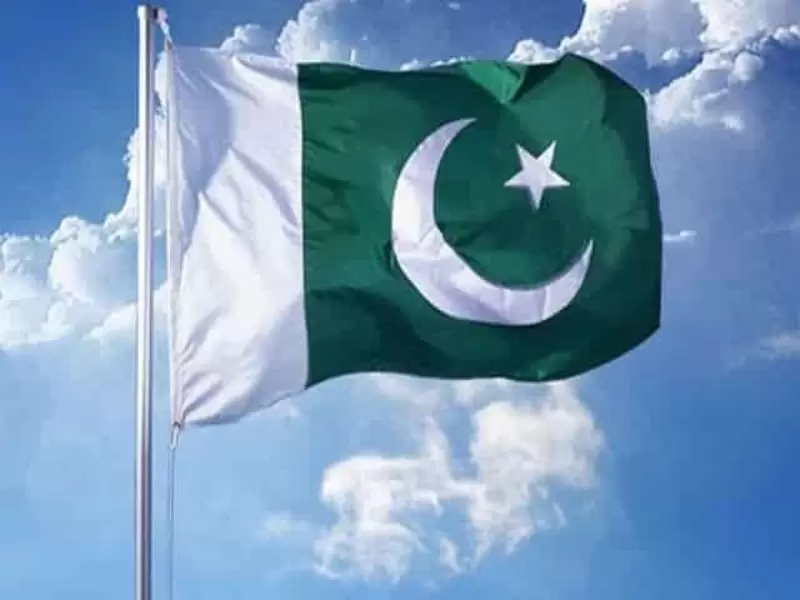 Pakistan flag / IANS
There is a small, forgotten pair of dispatches in the archives of the New York Times that every Indian student of the 1999 Kargil war should read first, because they were filed thirty-four years before it.
On June 18, 1965, the paper's Delhi correspondent J. Anthony Lukas reported that the United States was pressing India to withdraw from two posts its troops had seized a month earlier across the Kashmir ceasefire line, near a town called Kargil, after Pakistani interference with the Srinagar-Leh highway. Washington had urged the Indian embassy and made its representations.
The next day Lukas reported the sequel: India agreed to hand the two posts to United Nations observers, asking only for a guarantee that its road to Ladakh would not be cut again.
Imagine that. In 1965 India crossed the line at Kargil in battalion strength under provocation. Within a month the US used its good offices and requested a withdrawal and India accepted the UN.
In the summer of 1999, Pakistan's Northern Light Infantry crossed the same line at the same town, held roughly 132 posts across a front of over 100 kilometres for nearly three months, and the response of the international financial system, as Selig Harrison recorded with disbelief in the International Herald Tribune pages of the same newspaper, was that On May 24, the IMF, backed by the United States, disbursed $51 million to Islamabad.
This was the latest instalment of a $1.56 billion bailout with another $100 million due the following month. Interestingly, the invasion had already been underway for three weeks when the cheque cleared. This double standard wasn’t a momentary lapse; it was structural and the archive itself demonstrates this in the paper’s own ink.
The work a word does
But the deeper story in these clippings is not about money. It is about vocabulary, and about what a single noun can do to a war.
Open the paper's first major report on the conflict, Barry Bearak's front-page dispatch of May 27, 1999.
The headline reads "India Jets Strike Guerrilla Force Now in Kashmir". Guerrilla force. Inside the copy, the Indian military spokesman is quoted stating that the intruders consisted of Afghan mercenaries and Pakistani regular army troops, and even a retired Indian corps commander, Lt Gen V.R. Raghavan, is given space to warn that some Pakistanis felt "emboldened by the great equalizer" of nuclear weapons. The story presented the facts, but the headline, which described them as guerrillas, shaped the reader’s understanding.
Follow the word through the summer. On May 31, Bearak's report on Pakistan's offer of talks speaks of militants in the peaks, and dutifully records Pakistan's position that the fighters were indigenous "freedom fighters" over whom Islamabad had no control. On June 14, when Indian infantry took back the most important height of the war after ten hours of artillery preparation and a night assault, the agency headline the paper carried was "Indian Troops Capture Crucial Peak From Guerrillas in Kashmir".
Tololing, a battle fought by the 2nd Rajputana Rifles against dug-in soldiers of a uniformed regiment of the Pakistan Army, entered the world's newspaper of record as a skirmish with guerrillas. And as late as July 02, with the war nearly decided, Celia Dugger's beautifully written mood piece from the Pakistani side of the line, "At the Kashmir Line: Toe to Toe and Gun to Gun", still described Muslim freedom fighters and "holy warriors" battling Indian troops, gave a Pakistani colonel several paragraphs to deny, with an army public relations officer standing at his elbow, that his guns were supporting the mujahideen at all, and framed the whole affair as a conflict "embroiling" two hostile neighbours, as though the occupation of one country's territory by another's army were a weather system that had settled impartially over both.
Consider what this vocabulary purchased for Rawalpindi. A guerrilla is, by definition, an irregular; the word carries the romance of insurgency, of a people in arms, of Che on a mountainside. To call the Kargil intruders guerrillas was to accept, in the very grammar of the sentence, Pakistan's cover story that this was an indigenous Kashmiri uprising rather than a planned operation of a nuclear-armed state's regular army. India's factual assertion that these were NLI regulars was rendered as a claim, forever qualified by "India says" and "New Delhi accuses", while Pakistan's fiction was rendered as a noun, sitting in headlines without quotation marks, needing no attribution at all. A narrative war is lost right there, in the copy desk's choice of a single word, repeated daily until it becomes the furniture of the reader's mind.
What was knowable, and when
The defence often offered for such coverage is the fog of war, reporters couldn’t verify the information, so they were cautious. However, the archive itself undermines this defence as the truth was published in the same pages and sometimes even the same editions throughout June.
On June 04, Brahma Chellaney wrote in the IHT that the precision and backup support on display meant the intrusion had been plotted in Pakistan at the very time the two prime ministers were signing the Lahore Declaration.
On 16 June, Harrison went further: the evidence was overwhelming that the intruders were organised and equipped by Pakistani intelligence under the command of Pakistani military personnel, and American officials privately acknowledged the authenticity of the intercepted May 29 telephone conversation in which Lt Gen Mohammad Aziz assured General Musharraf that the civilians were no obstacle because "we have them by the scruff of the neck".
On June 19, Gerald Segal of the IISS noted that Western intelligence sources admitted their former friends in Pakistan had provoked and sustained the clashes, and added the most damning sentence in the entire archive: Western governments, with Kosovo on their minds, had "gone out of their way to minimize the conflict". Two days later, Joseph Fitchett reported Western officials confirming that the Pakistani armed forces had infiltrated Afghan veterans into Indian Kashmir and appeared to be subverting their own government's peace initiative.
So by the third week of June 1999, readers of the New York Times and its international edition had been told, by American officials, by Western intelligence, by an intercepted call between Pakistan's two most senior generals, that this was a Pakistan Army operation.
And still, on 2 July, the news pages gave them holy warriors. The paper's opinion columns knew what its headlines refused to say. That gap, between what the institution had established and what its daily vocabulary conceded, is exactly how the international press helped Pakistan build its narrative against India even as the facts accumulated against Pakistan.
The subsequent record removed whatever doubt remained, from Pakistani pens. Brigadier Shaukat Qadir's insider account in the RUSI Journal in 2002 established that the operation was approved by Musharraf and three other generals in November 1998, executed by roughly a thousand NLI soldiers holding 132 posts, with local mujahideen present only as porters. Shireen Mazari’s official account, later dismantled by A.G. Noorani in Frontline, admitted the army’s involvement.
Furthermore, in a self-incriminating act during the war, Pakistan awarded gallantry medals including its highest to soldiers it had claimed were not fighting that summer. Captain Karnal Sher Khan of the NLI received the Nishan-e-Haider posthumously, on the recommendation, as it happens, of the Indian brigadier who recovered his body. The guerrillas, it turned out, had service numbers.
The tilt of neutrality
Two further features of the coverage deserve notice, because they recur in every India-Pakistan crisis since.
The first is the symmetry reflex. Dugger's dispatch is its perfect specimen: the shells fly both ways, both armies shout across the ridgeline, both nations claim the beautiful valley, and the reader is invited to mourn a tragedy without an author. Bearak’s May 31 report presents the entire episode as a struggle for India to decide whether to accept talks.
It frames the invaded party’s reluctance to negotiate under occupation as the central puzzle. However, the tortured bodies of Lt Saurabh Kalia’s six-man patrol, returned on the eve of those talks with gouged eyes and mutilated limbs, appear only once in a single paragraph of Sunanda Datta-Ray’s op-ed. This atrocity against uniformed prisoners would have dominated front pages for a week in any European theatre.
The second is the internationalisation dividend. Bearak quoted M.J. Akbar's shrewd observation that the bomb had not deterred Pakistan's cross-border terrorism in Kashmir, and may even have persuaded Islamabad to step up its involvement, on the calculation that the world would now have to take notice. This was Pakistan's actual war aim, stated by its own planners: to internationalise Kashmir.
Every headline favouring guerrillas over the Pakistan Army and every report beginning with nuclear peril rather than aggression pushed that agenda without costing Rawalpindi a penny. This coverage didn’t merely fail India; it performed an unpaid service for Pakistan’s information ministry, effectively laundering a state invasion into a people’s uprising for the world’s most influential readership.
The lesson India drew
When you compare the two halves of the archive, the moral is inescapable. In 1965, India respected the international community and ceded the area under Pakistani control, hoping for a better sense to prevail. However, similar tactics were employed by Pakistan later that year, and the events of 1999 are a grim reminder.
In 1999, Pakistan crossed the same line in the same town with a regular army dressed in revolutionary garb. The system responded by sending money in May, reducing it in June and only briefly acknowledging the summer as a nuclear scare defused by a Fourth of July meeting in Washington. Vajpayee’s remark to villagers near the front on June 14, “We wanted friendship with Pakistan, but we got enmity”, was reported and quickly forgotten.
India, however, did not forget. The conviction that its case would never receive an understanding abroad, that its facts would be attributed while its adversary's fictions were assumed, is not paranoia; it was learned, dispatch by dispatch, from summers like this one.
When Indians today respond with weary scepticism to Western media coverage of Uri, Balakot, or Operation Sindoor, and when New Delhi refuses to submit its security to international arbitration of any kind, the explanation lies partly in a yellowing pile of clippings in which the soldiers who mutilated its prisoners and occupied its mountains were called, until the day they withdrew, guerrillas.
Pakistani generals and Pakistani scholars eventually corrected the record of 1999, in journals and official versions that few of the paper's readers will ever open, but nobody goes back to correct a headline, and it is the headline, repeated through one long summer, that settled into the world's memory of the war.
(The views and opinions expressed in this article are those of the author and do not necessarily reflect the official policy or position of New India Abroad.)
Discover more at New India Abroad.
Leave A Comment
Related
.jpg)




.JPG)
ADVERTISEMENT

ADVERTISEMENT
E Paper
Video

Comments
Start the conversation
Become a member of New India Abroad to start commenting.
Sign Up Now
Already have an account? Login