ADVERTISEMENT
ADVERTISEMENT



US Senate advances bill to counter foreign influence, hidden lobbying
Senator John Cornyn, one of the bill's lead sponsors, said the measure was intended to shield U.S. policymaking from foreign manipulation.
-
 IANS
IANS - Tue, 23, Jun 2026
- 01:13 EDT
- 26
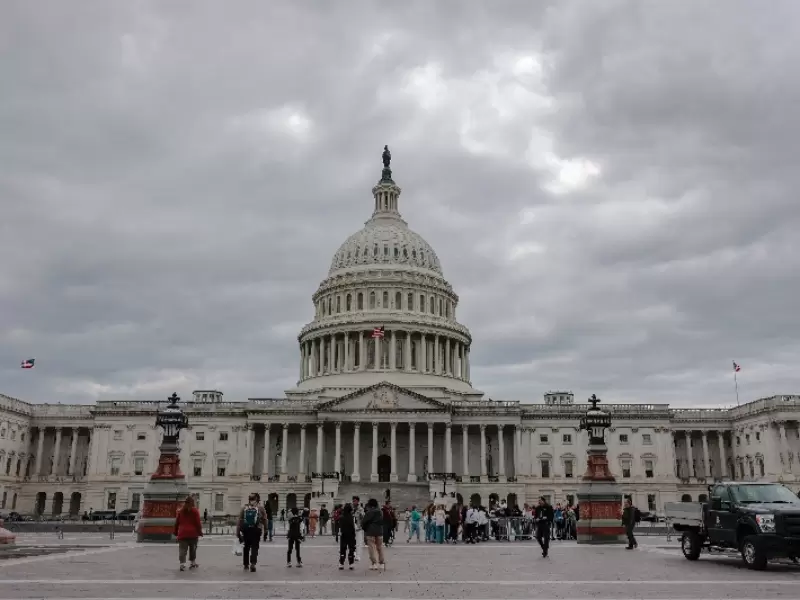 People stand near the U.S. Capitol building on a cloudy day in Washington, D.C., U.S., May 14, 2026. / REUTERS/Kylie Cooper
A bipartisan bill aimed at tightening U.S. transparency rules for foreign lobbying and influence operations advanced in the Senate Foreign Relations Committee, with lawmakers arguing that adversaries such as China, Russia and Iran have exploited loopholes in existing laws to shape American policy.
The legislation, known as the Preventing Adversary Influence, Disinformation and Obscured Foreign Financing (PAID OFF) Act, would amend provisions related to the Foreign Agents Registration Act (FARA) and require greater disclosure from individuals and entities working on behalf of designated foreign governments and commercial organisations.
Announcing the committee's approval, Senate Foreign Relations Committee Chairman Jim Risch said foreign adversaries had taken advantage of weaknesses in U.S. lobbying laws for years.
“For years, the United States’ biggest adversaries have exploited loopholes in U.S. lobbying laws to influence senior government officials and advance their geopolitical goals,” Risch said.
He cited “Russia’s efforts to prevent sanctions against its Nord Stream 2 pipeline and Chinese surveillance firm Hikvision’s attempts to avoid sanctions” as examples of such activity.
ALSO READ: Indian American doctor Tina Shah joins New Jersey Democratic primary race
“This provision will close key loopholes to ensure transparency and accountability of malign foreign lobbying efforts in the United States,” he added.
Senator John Cornyn, one of the bill's lead sponsors, said the measure was intended to shield U.S. policymaking from foreign manipulation.
“American policy should not in any way reflect the handiwork of foreign adversaries who are actively working to tip the scales in their favor and undermine our interests,” Cornyn said.
“By exposing the efforts of countries of concern like China or Russia to exert malign influence, this legislation would better safeguard U.S. decision making.”
The legislation drew support from both Republicans and Democrats on the committee.
Senator Sheldon Whitehouse said, “When foreign adversaries skirt loopholes to lobby Congress, they directly threaten our democracy.”
Senator Thom Tillis warned that “Foreign adversaries like China and Russia should never be allowed to covertly influence American policy or public opinion.”
Senator Chuck Grassley said Americans deserved transparency regarding attempts by foreign governments to shape policy debates.
“Americans ought to know if a foreign government is attempting to sway policy decisions in the United States,” he said.
Senator Peter Welch argued that misinformation and disinformation had contributed to declining public trust in institutions and said foreign adversaries had worsened the problem by exploiting gaps in U.S. lobbying laws.
Meanwhile, Senator John Kennedy said, “Foreign agents working for our adversaries like China and Iran shouldn’t be able to hide in the shadows while they try to bend American policy to their will.”
According to the bill's sponsors, FARA has not been substantially updated since the 1990s and has failed to keep pace with modern influence campaigns. Current exemptions allow some foreign-linked agents to avoid registration by claiming commercial activity, domestic interest or Lobbying Disclosure Act exemptions.
The proposed legislation would require agents working on behalf of Chinese, Russian, Iranian, North Korean or Cuban governments, as well as related commercial entities, to register under FARA. Supporters say this would provide greater transparency into foreign influence campaigns operating in the United States. The measure would expire after five years unless renewed.
The bill also creates a mechanism allowing the U.S. Secretary of State to recommend additions or removals from the list of countries of concern, subject to congressional approval through a joint resolution.
Discover more at New India Abroad.
Related






ADVERTISEMENT

ADVERTISEMENT
E Paper
Video

Comments
Start the conversation
Become a member of New India Abroad to start commenting.
Sign Up Now
Already have an account? Login