ADVERTISEMENT
ADVERTISEMENT



U.S.–Bangladesh trade pact raises concerns among Indian farmers over possible backdoor impact
Indian policymakers and farm groups are examining whether it could create indirect trade flows into India through existing regional arrangements.
-
 R Suryamurthy
 - Fri, 13, Feb 2026
- 03:34 EST
- 94
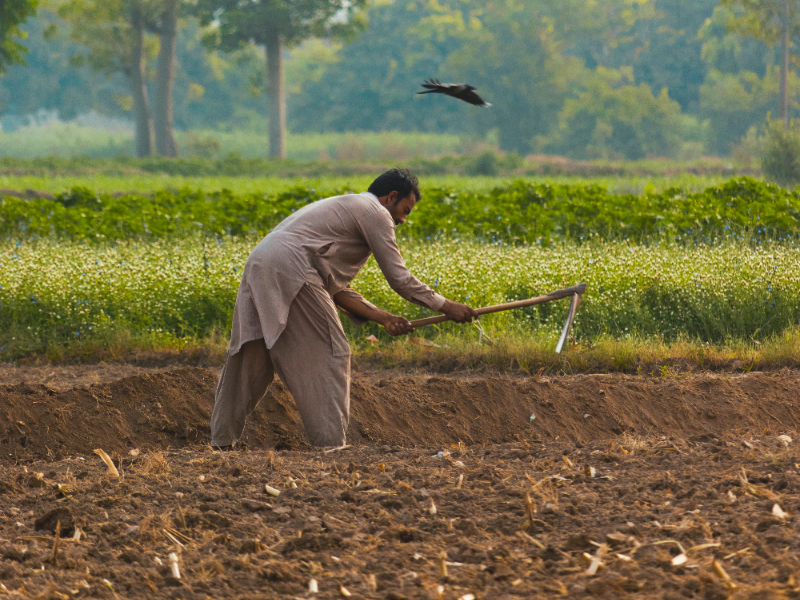 Representative image / pexels
A newly signed trade agreement between the United States and Bangladesh is beginning to draw scrutiny in India’s farm sector, where growers and trade analysts warn that the deal could indirectly pressure domestic agricultural prices if enforcement mechanisms are not tightened.
The Agreement Between the United States of America and the People’s Republic of Bangladesh on Reciprocal Trade, signed on Feb. 9, grants American exporters expanded access to Bangladesh’s 175-million-strong market, particularly in agricultural commodities such as wheat, soybeans, soy oil, dairy products, poultry and cotton. Bangladesh has agreed to reduce non-tariff barriers and recognise U.S. sanitary and phytosanitary certifications, a move Washington says will ease entry for American farm goods.
While the agreement is formally bilateral, Indian policymakers and farm groups are examining whether it could create indirect trade flows into India through existing regional arrangements.
ALSO READ: Trade deal unlocks $30 trillion U.S. market for India’s exports
India and Bangladesh are members of the South Asian Free Trade Area, under which Bangladesh, as a least-developed country, enjoys preferential tariff access to the Indian market, provided goods meet rules-of-origin requirements. Those rules typically mandate 30–40 percent value addition or substantial transformation within the exporting country.
Trade experts say agro-processing — such as crushing soybeans into oil or milling wheat into flour — can qualify as substantial transformation if value thresholds are met.
That possibility has prompted concern among oilseed and cotton farmers in India.
Edible oil vulnerability
India imports roughly 14–15 million tonnes of edible oil annually, accounting for more than 60 percent of its domestic consumption. Soy oil and palm oil dominate those imports, while domestic oilseed production remains vulnerable to price swings.
“If competitively priced U.S. soybeans enter Bangladesh in larger volumes and are processed there into oil, the product could potentially access India at concessional rates under SAFTA, subject to origin rules,” said a senior trade official who declined to be named.
Even moderate volumes could affect price stability, analysts said. A few hundred thousand tonnes of soy oil entering at lower tariff rates could exert downward pressure on mandi prices in key oilseed-producing states such as Madhya Pradesh, Maharashtra and Rajasthan.
Oilseed farmers have repeatedly faced price volatility linked to import policy shifts. Government efforts to encourage domestic production have been offset at times by cheaper global supplies.
Cotton sector watching closely
Cotton growers are also monitoring developments. Bangladesh imports nearly 8–9 million bales of cotton annually for its garment industry, the world’s second-largest exporter of ready-made apparel. India and the United States are among its primary suppliers.
If the trade pact strengthens the competitiveness of U.S. cotton in Bangladesh, Indian exporters could lose market share, potentially affecting domestic cotton prices.
“Any shift in sourcing patterns by Bangladeshi mills will be closely watched,” said a Mumbai-based cotton trader. “Even incremental changes can influence domestic availability and price sentiment.”
Cotton farmers in Gujarat, Maharashtra and Telangana are already grappling with fluctuating global demand and climate-related production risks.
Enforcement concerns
The central issue, economists say, lies in enforcement of rules of origin.
Prof. Biswajit Dhar, a trade economist, cautioned that India must ensure stricter compliance checks at ports.
“India needs to strengthen rules of origin and strict vigil be kept at the ports, which is lax at the moment. If not there is a possibility of American agri products entering the country,” he said.
Customs authorities verify value-addition claims through documentation and audits, but monitoring agro-processing supply chains can be complex. Officials note that repackaging alone does not qualify under SAFTA rules, but substantial transformation may.
A senior agriculture ministry official said the government is reviewing potential implications but declined to comment on specific enforcement measures.
Trade balances and political sensitivity
Bangladesh exports roughly $1.8–2 billion worth of goods annually to India, including processed foods, fish and jute products. India maintains a trade surplus in the bilateral relationship.
However, agriculture remains politically sensitive. Even small shifts in commodity prices can trigger policy responses, including adjustments in import duties or minimum support prices.
Farmer unions have not yet issued formal statements on the U.S.–Bangladesh deal, but leaders in oilseed-producing regions said they expect clarity from New Delhi on how the agreement may intersect with regional trade rules.
“We are not against trade,” said an oilseed farmer leader in Indore. “But if cheaper products come indirectly and hurt domestic prices, the government must act.”
Broader strategic context
The trade agreement also includes provisions aimed at strengthening economic security cooperation between Washington and Dhaka, reflecting broader geopolitical alignment. Analysts say closer U.S.–Bangladesh ties may reduce China’s economic leverage in the region but could alter competitive dynamics within South Asia.
For India, the challenge lies in balancing regional trade commitments with domestic agricultural stability.
Officials emphasise that no immediate surge of imports is expected and that safeguards remain in place. But analysts say vigilance will be key.
“Trade agreements reshape incentives gradually,” said a New Delhi-based policy analyst. “The impact, if any, will emerge over time through price signals and sourcing patterns rather than sudden shocks.”
For Indian farmers, those price signals will be the first indicator.
Whether the U.S.–Bangladesh pact remains a bilateral adjustment or evolves into a regional trade variable may ultimately depend less on its text — and more on how effectively existing rules are enforced at India’s ports.
Discover more at New India Abroad.
Related







.jpg)



ADVERTISEMENT

ADVERTISEMENT
E Paper
Video

Comments
Start the conversation
Become a member of New India Abroad to start commenting.
Sign Up Now
Already have an account? Login