ADVERTISEMENT
ADVERTISEMENT


"Things need to play out," India's Jaishankar on Mecca pact
The EAM's comment resonates with the broader picture in which India is currently viewing the pact.
-
 Shikha Salaria
 - Sat, 22, Aug 2026
- 14:27 EDT
- 36
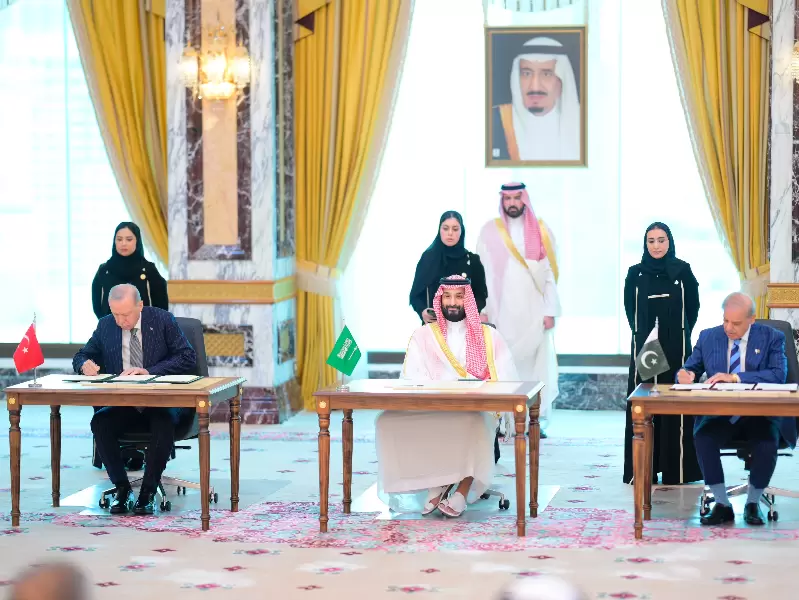 Signing of the Makkah Joint Defence Agreement / X/PakPMO
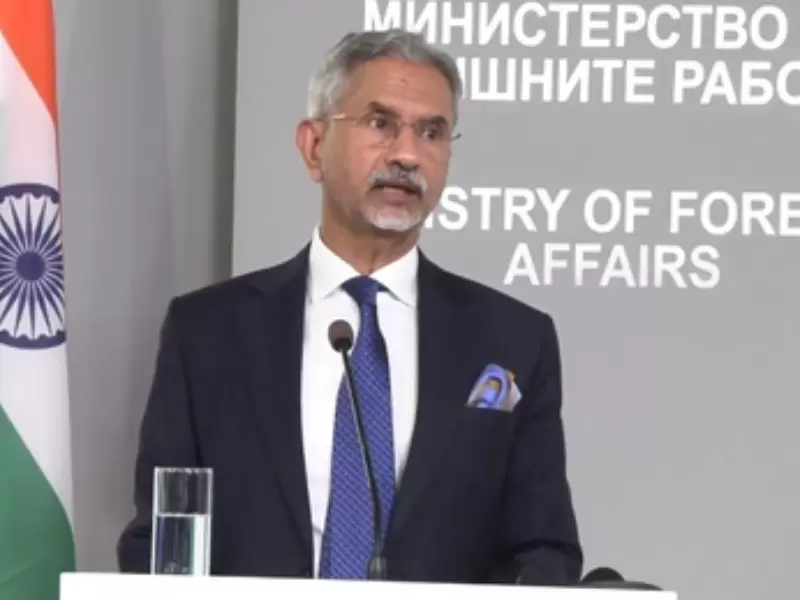
India's Minister of External Affairs S. Jaishankar on Aug. 22 hinted why the South Asian major is in a wait-and-watch mode in terms of how it views the much-discussed Mecca defense pact between Pakistan, Turkiye and Saudi Arabia which even Bangladesh has expressed interest in, asking "what it has done" during live military situations faced by each of the countries presently. The EAM further remarked that "sometimes, things needed to play out."
The pact was signed between the three countries on August 7, in what is a major defense framework which has been agreed upon by the three Sunni Muslim-majority countries which have been alarmed at a regional conflict that has seen the Iranians fire at the Gulf nations.
Also Read: Makkah Pact: Alliance or Strategic Hedging?
While Pakistan and Saudi Arabia signed a mutual defense pact last year, the three countries decided to come together in what they say is a "defensive" arrangement intended to strengthen collective deterrence against any act of aggression against any of the three countries.
Although the pact stipulates that an armed attack against any of the three nations involved would be considered as an attack on all of them, the deal doesn't give specifics on the commitments each of the nations had accepted and there is no clarity over how far the agreement binds them to any particular military action if any of the countries involved is attacked.
India has so far been restrained in its response to the Mecca pact.
In fact, India's Ministry of External Affairs (MEA) said on August 11 that it is examining its implications both from the perspective of India's national security and considerations of regional peace and stability.
"India remains fully committed to safeguarding its national interests and will take all necessary measures in this regard," MEA spokesperson Randhir Jaiswal had said while commenting on how India viewed the pact.
When asked about Bangladesh's inclination to join the Mecca pact, Jaiswal had on Friday said that India was "closely following developments in West Asia."
EAM Jaishankar however hinted why India was resorting to restraint and nuance when it came to its reaction to the Mecca pact.
Jaishankar who was speaking at the World Leaders Forum organized by the Economic Times on Saturday remarked that there were "live military situations" which each of the signatory (of the pact) faced and asked "what the Mecca pact had done in response to that."
When asked whether the Mecca pact worried him in any way because it was a "defense pact and since India had a military conflict with Pakistan just recently," the EAM responded:
"You think about it,you refer to it as a defense pact, there are live military situations which each of the signatory faces. What has the Mecca pact done in response to that," he questioned.
After the interviewer asked him if the pact was a "policy or sloganeering" on the side of the three nations, the EAM said that the very fact that he was being asked this question was "interesting."
Further when the interviewer asked the EAM if he was not worried about the pact, Jaishankar said that "sometimes, things need to play out."
"In my calculus, everything counts, everything will have weight. You know.....it's not something which is.... and sometimes things need to play out as well....," Jaishankar said.
Further, when asked about the defense cooperation that the pact can enable between Pakistan and Turkey and even China and if hee was concerned over all of those possibilities, Jaishankar chose not to give any direct statement.
"Everything which happens on the part of every player which is not well disposed towards me .... of course, counts in my calculation. When such players... if they are more than one, of course, I take that into account but would I then proceed to bare my soul to you and everybody else. Of course I will not," he said.
The EAM's comment resonates with the broader picture in which India is currently viewing the pact.
Sources in the government of India say that the country is currently in wait-and-watch mode and is cautiously studying how the pact plays out in the Middle East.
A source pointed out that while Yemen's Iran-backed Houthi rebels had targeted an airport in Saudi Arabia and a facility belonging to state-owned oil giant Aramco in the gulf country's southern Najran region, near the Yemeni border, neither Turkiye nor Pakistan had responded militarily
"Both Turkiye and Pakistan have avoided direct military intervention in Yemen, instead offering political alignment and regional maritime security support. it shows a lot about the Mecca pact," the source said.
The source added that as of now, the pact seems to be more as a "declaratory service" rather than as an "actionable military cooperation," adding that the contours of the military cooperation during times of an attack on any of the signatories are yet to be clearly stated.
The attack on Saudi infrastructure by Houthis was the first immediate test that the pact had to face and geopolitical and defense watchers across the world have pointed out that while at present, Turkiye and Pakistan have supported Saudi Arabia, neither of the countries have stepped in militarily to help Saudi Arabia.
Iran and its allies have been firing at Saudi Arabia and other Gulf nations, along with blocking their energy shipments, ever since the killing of the former's supreme leader Ayatollah Ali Khamenei by US-Israel dragged West Asia into a major crisis.
Pakistan and Saudi Arabia signed a bilateral defence pact last year but the former has not responded to Iran's attacks on the Gulf major militarily. Furthermore, Pakistan has also downplayed suggestions that its nuclear deterrent might be shared with Saudi Arabia.
While Pakistan - the only nuclear armed nation of the grouping- has been training Saudi defense forces for decades, Turkey and Pakistan have traded warships and training aircraft in the past.
Turkey also supplies drones to Saudi Arabia.
However, as part of their mutual defense pact, Pakistan had deployed about 8000 troops, fighter jets, drones and an air-defence system in Saudi Arabia during the West Asia conflict this year, Reuters had reported in May.
Although Turkiye and Pakistan have not been at the receiving end of any direct attacks from Iran, both are worried about the conflict that has threatened regional security and caused economic hardships for both countries.
Saudi Arabia's economy has been majorly hit with the crisis reducing oil exports and with the Kingdom realising that it could no longer rely solely on the US' security umbrella for safety of its infrastructure.
(The views and opinions expressed in this article are those of the author and do not necessarily reflect the official policy or position of New India Abroad.)
Discover more at New India Abroad.
Leave A Comment
Related




ADVERTISEMENT

ADVERTISEMENT
E Paper
Video

Comments
Start the conversation
Become a member of New India Abroad to start commenting.
Sign Up Now
Already have an account? Login