ADVERTISEMENT
ADVERTISEMENT



The U.S. India trade deal: Historic opportunity meets geopolitical complexity
The U.S.-India trade reset opens vast market access but demands disciplined geopolitical and regulatory navigation from businesses.
-
 Rajesh Mehta
 -
 Chuck Melley
 - Mon, 16, Feb 2026
- 09:32 EST
- 207
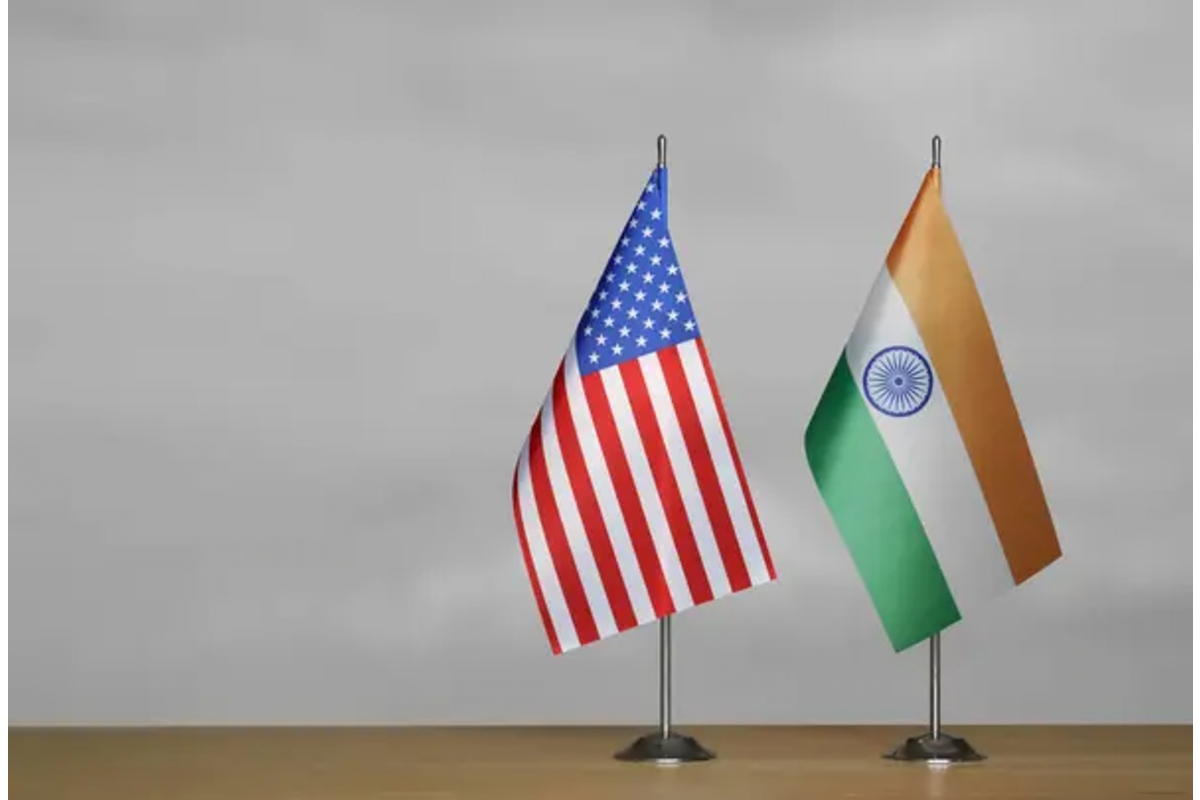 Representative Image / iStock photo
In the year since the Trump administration’s arrival, the Indo-U.S. relationship has seen unexpected turbulence and recalibration. Initial expectations of bonhomie succumbed to a rupturing of the relationship as the U.S. imposed punitive tariffs. However, the partnership is now recovering with new agreements and is expected to evolve positively.
American companies now have unprecedented access to India's 1.4 billion consumers and US$4 trillion economy. The interim trade agreement announced Feb. 6 between the United States and India represents the most significant economic realignment between the world's two largest democracies in a generation.
With tariffs slashed from 50 percent to 18 percent, India's US$500 billion purchasing commitment, and a pathway toward zero tariffs on U.S. industrial goods, the agreement unlocks major opportunities across pharmaceuticals, technology hardware, aerospace, agricultural products, energy, textiles, and digital services. For companies in these sectors, the question is no longer whether to pursue U.S.-India expansion, but how quickly and strategically they can execute it.
But this historic opening comes layered with geopolitical nuance. The agreement did not emerge from routine trade negotiations; it crystallized after 10 months of escalating tariffs, stalled talks, and strategic maneuvering involving not just Washington and New Delhi, but also Beijing, Moscow, and Brussels. It represents not merely a trade reset but a broader geopolitical repositioning touching energy security, defense cooperation, Indo-Pacific strategy, and technology supply chains.
Companies must recognize a central reality: this is not a conventional trade deal. It sits within an evolving strategic landscape where geopolitics and risk management now directly shape commercial success.
The sectoral upside is substantial. Generic pharmaceutical manufacturers face tariff elimination on exports to the United States, potentially expanding market share in a sector where India already supplies roughly 50 percent of U.S. generic medicines. Technology firms gain streamlined processes for GPUs, semiconductors, and data center equipment—critical as both nations seek to strengthen AI infrastructure and reduce reliance on China-linked supply chains.
Digital trade commitments create momentum for education technology and digital services. India's vast student base—over 250 million K-12 learners—continues digitizing rapidly, while U.S. universities seek partnerships and technical talent pipelines. Aerospace and defense firms benefit from India's reported US$80 billion Boeing aircraft commitment and deepening defense industrial collaboration. U.S. agricultural exporters gain improved access to Indian consumers, while Indian textile, apparel, and gem manufacturers regain American market competitiveness.
These headline gains tell only part of the story. The interim agreement still requires formalization through joint statements and treaty processes expected in mid-March 2026. Critical components—rules of origin, digital trade provisions, intellectual property frameworks, and dispute mechanisms—remain under negotiation as part of the broader Bilateral Trade Agreement.
Implementation presents its own challenges. In India, state-level regulatory processes add complexity around standards recognition, ICT import licensing, data localization requirements, and sectoral approvals, which often involve lengthy review timelines with uncertain outcomes. Companies must navigate both central government ministries and state governments with varying political alignments.
For digital and education technology firms particularly, translating digital trade commitments into operational access requires navigating India's federal-state education governance, content regulation, and evolving data protection rules. Assuming seamless market access without understanding regulatory sequencing invites costly miscalculations.
Both nations are simultaneously concluding trade agreements with other partners, creating competitive dynamics. India's expanding trade footprint, including Europe agreements and Indo-Pacific negotiations, affects American firms seeking preferential access. U.S. trade policy remains fluid, with "reciprocal tariff" frameworks and shifting enforcement mechanisms that may rapidly recalibrate market conditions.
China's strategic recalibration in response to deepening U.S.-India alignment will shape regional supply chains. Russia's evolving energy relationship with India complicates sourcing in sensitive sectors. Europe's trade engagement adds competitive layers.
Businesses must remain attentive to domestic political sensitivities in both democracies. In the United States, workforce concerns and job protection remain sensitive across the political spectrum. Technology partnerships, talent mobility frameworks, and outsourcing arrangements face scrutiny through employment security lenses. In India, agricultural livelihoods and food prices are deeply sensitive. Any perception that trade liberalization undermines farmer incomes generates domestic pushback. Agri-trade companies must understand rural political dynamics and state-level sensitivities.
The lesson for business leaders is clear: success requires more than reading tariff schedules. It demands integrated geopolitical analysis, real-time regulatory monitoring, and risk management frameworks accounting for federal-state political alignment, competing trade agreements, technology governance, energy sourcing sensitivities, domestic employment politics, and agricultural pressures. Trade strategy is now inseparable from geopolitics.
Companies that will thrive understand this not as tariff reduction but as strategic realignment. They will invest in stakeholder engagement across governments, build compliance systems anticipating regulatory shifts, and develop scenario planning tied to geopolitical developments. For businesses prepared to navigate nuance and align strategy with geopolitics, the opportunity is immense.
Chuck Melley is the founder of Lighthouse Public Advisors and a government relations and market entry strategist.
Rajesh Mehta is a senior advisor at Lighthouse Public Advisors and an international business development expert.
(The views and opinions expressed in this article are those of the author and do not necessarily reflect the official policy or position of New India Abroad.)
Discover more stories on New India Abroad.
Leave A Comment
Related
.jpeg)








ADVERTISEMENT

ADVERTISEMENT
E Paper
Video

Comments
Start the conversation
Become a member of New India Abroad to start commenting.
Sign Up Now
Already have an account? Login