ADVERTISEMENT
ADVERTISEMENT



The 2026 FIFA World Cup and America’s Big Test
Travel bans are in effect for 39 countries, including qualifying nations Senegal, Côte d’Ivoire, Haiti and Iran.
-
 Ritu Marwah
 - Mon, 08, Jun 2026
- 09:34 EDT
- 101
 FIFA World Cup / X@fifamedia
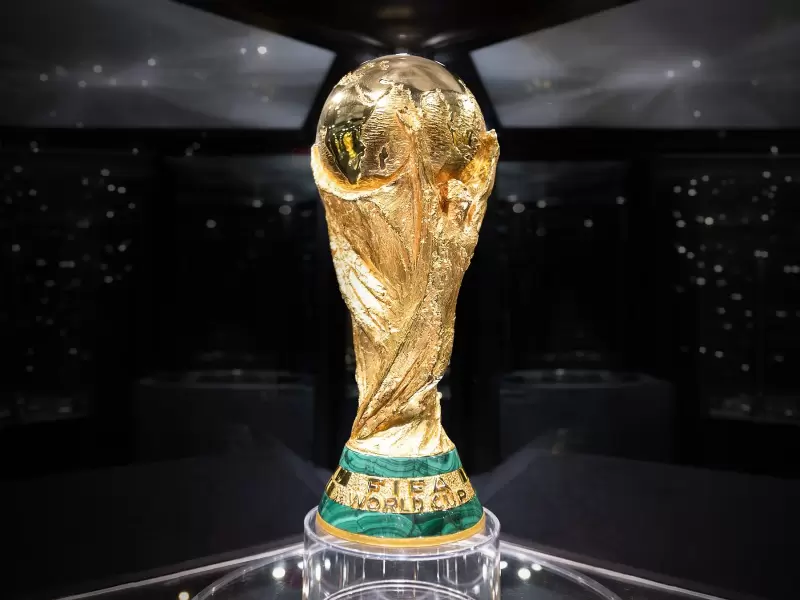
Tahsin Mohammed Jamshid, a 19-year-old of Indian-Malayali origin has reached the final squad for the 2026 FIFA World Cup. He plays for Al-Duhail SC in the Qatar Stars League. FIFA will be played across the U.S., Mexico, and Canada. In the United States, Qatar is scheduled to play in Santa Clara, San Francisco Bay Area host venue and Seattle.
Are the eleven U.S. host cities, including Los Angeles, Houston, Miami, Seattle, Atlanta, and the New York/New Jersey regional ready to welcome the world? asked the four panelists at the American Community Media briefing.
Tahsin Mohammed Jamshid’s parents originate from Thalassery and Valapattanam in the Kannur district. His father Jamshid was a footballer too. He moved to Qatar with his family, where he raised his son.
Will visa bans and border policies facilitate Jamshid’s international travel?
How will host cities balance security with civil liberties?
“Many of the athletes are exempted from the bans, but their families and supporters are not,” said Minky Worden serves as Director of Global Initiatives at Human Rights Watch.
Travel bans are in effect for 39 countries, including qualifying nations Senegal, Côte d’Ivoire, Haiti and Iran.
The Iranian team’s situation makes the contradiction most visible. Despite qualifying for the tournament, the players are not permitted to stay in U.S. territory; they will cross the border nightly from Tijuana to compete in Los Angeles and Seattle.
Ariel G. Ruiz Soto, senior policy analyst at the Migration Policy Institute, outlined the broader, uneven landscape facing international visitors.
Travelers from U.S. Visa Waiver Program countries, primarily in Europe and parts of Asia, face “relatively simple” entry conditions, he explained. For those from the 39 countries under full travel bans, entry is simply barred.
For others, he continued, the Trump administration announced a World Cup visa bond of up to $15,000 as a condition of entry, waived only for those who secured tickets or travel plans before April 15, “to assure that they will actually leave the country once the World Cup ends.”
Lovers of the game threatened by ICE?
International travelers could face denied entry, arrest or deportation, as well as "aggressive immigration enforcement," according to the advisory promoted by the Massachusetts Immigrant & Refugee Advocacy Coalition, the Maine Immigrants' Rights Coalition, the New Hampshire Alliance of Immigrants and Refugees, and the Vermont Asylum Assistance Project. More than 120 organizations have signed onto the alert,
While the Trump administration and FIFA have agreed that no Immigration and Customs Enforcement (ICE) operations will happen at the stadiums nor fan zones, activists have received conflicting information regarding ICE arrests around the venues. Trump officials have not ruled out the possibility.
Department of Homeland Security (DHS) officials, including Secretary Markwayne Mullin, have confirmed that ICE will have a daily presence at World Cup venues to assist with security. While the agency stated its primary focus is on public safety (such as stopping human trafficking and counterfeit merchandise), officials have explicitly refused to rule out immigration arrests at or around the games.
A major flashpoint for the 2026 games is FIFA's requirement that stadium employees submit personal data for background checks. Unions like UNITE HERE Local 11 have sounded alarms that this creates a direct pipeline sharing sensitive worker data with ICE, prompting strike threats.
A labor union representing over 2,000 hospitality employees at Los Angeles’ SoFi Stadium, expected to draw 70,000 fans per match, has threatened to strike if ICE agents are deployed at the venue.
HRW, alongside the Sport and Rights Alliance and the coalition Dignity 2026, has called for an “ICE Truce”, a suspension of enforcement operations for the tournament’s duration, modeled on the Olympic Truce.
“Families, and particularly immigrant families, love the World Cup,” Worden added. “Human Rights Watch has interviewed people in host cities, in communities that are affected, and we’ve had people say to us, ‘I don’t care if I get arrested or deported, I am going to follow my team, I love the World Cup so much.’ And when we hear that, it’s very concerning.”
Soft bans executed through price gouging
Prices for tickets to the 2026 North American matches have reached historic highs. While the cheapest international general sale ticket to the 2022 opening match in Qatar was $302, ticket prices for the upcoming U.S. opener against Paraguay have soared past $1,100, exacerbated by additional entry costs like the World Cup visa bond for certain travelers.
The 2026 FIFA World Cup begins June 11th and will conclude July 18th. Seventy-eight of the 104 matches will be held in the United States.
Discover more at New India Abroad.
Leave A Comment
Related









ADVERTISEMENT

ADVERTISEMENT
E Paper
Video

Comments
Start the conversation
Become a member of New India Abroad to start commenting.
Sign Up Now
Already have an account? Login