ADVERTISEMENT
ADVERTISEMENT



Ten events that defined 2025
Donald Trump’s return to power, a ceasefire in Gaza, and massive investments in artificial intelligence were among the events that shaped 2025.
-
 AFP
AFP - Wed, 31, Dec 2025
- 04:00 EST
- 219
 Representative Image / Courtesy: Unsplash
Trump returns
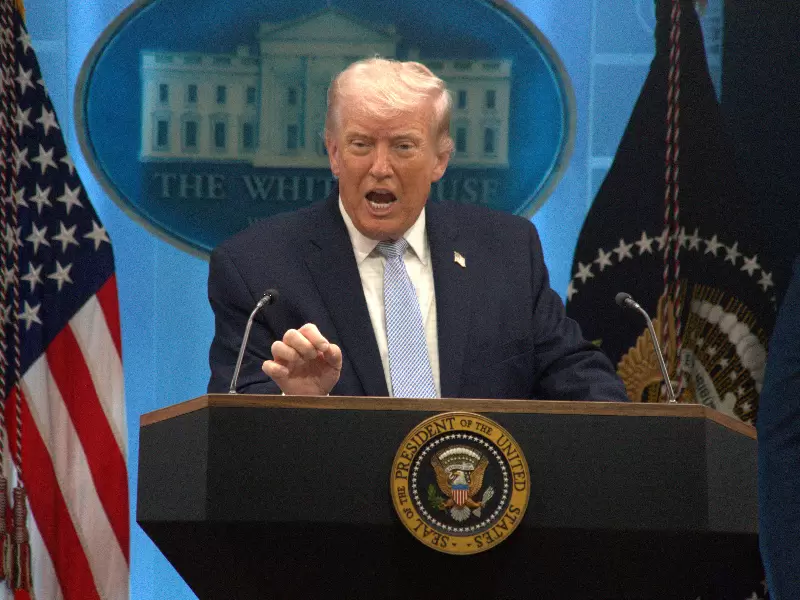
A protectionist offensive, mass deportations of undocumented immigrants, and the dismantling of entire sections of the federal government marked Donald Trump’s return to the White House for a second term in January.
Since taking office, the Republican president has targeted political adversaries, deployed the National Guard in Democrat-voting cities, worked to intimidate the media, and fought diversity and inclusion programs. He has also launched extensive diplomatic efforts, with mixed results.
Polls suggest Americans are increasingly disgruntled over economic issues, particularly the cost of living. Stinging defeats in local elections have left his party in a fragile position ahead of midterm elections due next autumn.
A ceasefire in Gaza
US pressure led to a ceasefire between Israel and Hamas, two years after a devastating war began in the Gaza Strip.
The truce enabled the return to Israel of the last surviving hostages and most of the bodies of the deceased in exchange for the release of Palestinian prisoners. It also allowed an increased flow of humanitarian aid into Gaza, although still far short of what is needed, according to the United Nations and humanitarian organizations.
Negotiating the next steps in Trump’s peace plan, particularly the disarmament of Hamas, has proven delicate. Israel has carried out several deadly airstrikes in Gaza in recent weeks, which it says were retaliatory. Regional tensions persist, with continued Israeli strikes on Hezbollah strongholds in Lebanon.
With US support, Israel also launched raids on Iran’s nuclear facilities during a 12-day war in June. In September, Israel targeted Hamas officials in an unprecedented attack in Qatar.
Unsuccessful talks in Ukraine
Trump’s arrival in the White House reinvigorated efforts to end the war in Ukraine, sparked by Russia’s full-scale invasion in 2022.
His sympathies shifted repeatedly between Ukrainian President Volodymyr Zelensky and Russian President Vladimir Putin, fueling fears in Kyiv that Ukraine could be forced into a deal on Moscow’s terms. In February, Trump berated Zelensky in the Oval Office, accusing him of risking World War III and disrespecting the American people.
As direct Russia-Ukraine talks stalled, Trump hosted Putin at a high-stakes summit in Alaska in August. The meeting ended early, with Washington accusing Moscow of lacking seriousness about ending the war. Trump later imposed his first major sanctions package on Russia.
International negotiations resumed in late November based on a draft US plan, though Kyiv and its European allies viewed the initial proposal as largely favorable to Moscow. Russian forces continued advancing slowly, at massive human and financial cost, while battering Ukrainian cities with record numbers of missiles and drones.
Global trade war
Trump imposed successive waves of tariffs on imports and entire industries deemed strategic, including steel, aluminum, and copper, triggering a trade dispute that rattled the global economy.
As targeted countries weighed retaliatory measures, tough negotiations produced multiple deals, including with the European Union and China. Talks with Mexico continued, while negotiations with Canada were suspended after a Canadian province funded an advertisement criticizing the tariffs.
Facing pressure to lower the cost of living, Trump moved in mid-November to cancel tariffs on certain food products, including imported coffee and beef.
A new pope
Robert Francis Prevost, 69, became the first American pope on May 8 following the death of Pope Francis, whom he had long advised.
White smoke rose above the Sistine Chapel after a conclave lasting less than 24 hours, announcing the election of the 267th head of the Catholic Church. The Chicago-born clergyman, who spent nearly two decades as a missionary in Peru and later became a citizen, took the name Leo XIV.
He followed his Argentine predecessor’s focus on the poor, migrants, and the environment, while reassuring conservatives by ruling out, at least in the short term, the ordination of women as deacons and the recognition of same-sex marriage.
Gen Z uprisings
Mass movements led by people under 30 erupted across Asia, Africa, and Latin America, protesting poor living standards, social media censorship, and elite corruption.
Results were mixed. In Morocco, the government promised reforms, yet more than 2,000 protesters now face prosecution. In other countries, violent repression transformed protests into broader challenges to power.
Nepal’s Prime Minister KP Sharma Oli and Madagascar’s President Andry Rajoelina were forced from office. Young people also played a central role in post-election protests in Tanzania, which were brutally suppressed.
The pirate flag from the manga One Piece—a skull and crossbones wearing a straw hat—became a global protest symbol, spreading across social media as an emblem of resistance to oppression.
AI boom
Technology companies and investors poured unprecedented sums into artificial intelligence, driving rapid expansion across the sector.
AI-related spending is projected to reach about $1.5 trillion in 2025 and $2 trillion in 2026, according to Gartner. Market enthusiasm briefly pushed chipmaker Nvidia’s valuation beyond $5 trillion.
However, fears of a speculative bubble grew. AI has been accused of fueling misinformation, copyright lawsuits have multiplied, and companies have cited AI adoption as a factor behind mass layoffs.
OpenAI faced a lawsuit from the parents of a California teenager who died by suicide, alleging that its ChatGPT chatbot provided guidance on how to carry out the act. The company said it strengthened parental controls, while California enacted legislation regulating chatbots.
A spectacular Louvre heist
On Oct. 19, thieves wearing workers’ vests used a furniture ladder to break into the Louvre Museum in Paris.
They escaped on scooters with Crown Jewels valued at 88 million euros ($102 million), though they dropped a diamond-encrusted crown during the getaway. The audacious heist sparked global headlines and renewed debate over security at the world’s most-visited museum.
Three suspects were charged and jailed, but the stolen treasures have not been recovered.
US strikes anger Venezuela
Since Aug. 2025, Washington has deployed a significant military presence off the coast of Latin America, officially to combat drug trafficking bound for the United States.
More than 20 strikes were carried out in the Caribbean and Pacific against vessels suspected of transporting drugs, leaving several dozen people dead. The US Justice Department said the strikes were lawful and rejected claims by a senior UN official that they were extrajudicial.
The campaign sharply escalated tensions with Venezuela, which views the strikes as a pretext to topple President Nicolas Maduro and seize the country’s oil reserves. Washington accuses Maduro of leading a cartel and has offered a $50 million reward for his capture.
Record-breaking weather
Deadly floods hit Vietnam, while powerful storms battered the Caribbean and the Philippines.
Scientists say extreme weather events are becoming more frequent, deadly, and destructive due to climate change driven by human activity. Hurricane Melissa, among the most powerful ever to strike the Caribbean, devastated parts of Jamaica and flooded Haiti and Cuba.
In Southeast Asia, the Philippines was hit by Typhoons Ragasa, Kalmaegi, and Fung-wong within two months, while Vietnam suffered storms, floods, and landslides. Europe saw soaring temperatures and intensified wildfires, with a record number of hectares burned.
France’s Mediterranean coast experienced its worst fire in 50 years. In the United States, lightning-sparked fires forced the closure of the Grand Canyon’s North Rim in mid-July for the remainder of the tourist season.
Leave A Comment
Related







ADVERTISEMENT

ADVERTISEMENT
E Paper
Video

Comments
Start the conversation
Become a member of New India Abroad to start commenting.
Sign Up Now
Already have an account? Login