ADVERTISEMENT
ADVERTISEMENT



Why the U.S.-India Partnership Will Define the Next Quarter Century
The future of U.S.-India ties is built on mutual trust and shared strategic priorities. The relationship has long moved from aid to trade.
-
 Mukesh Aghi
 - Sat, 15, Aug 2026
- 01:00 EDT
- 53
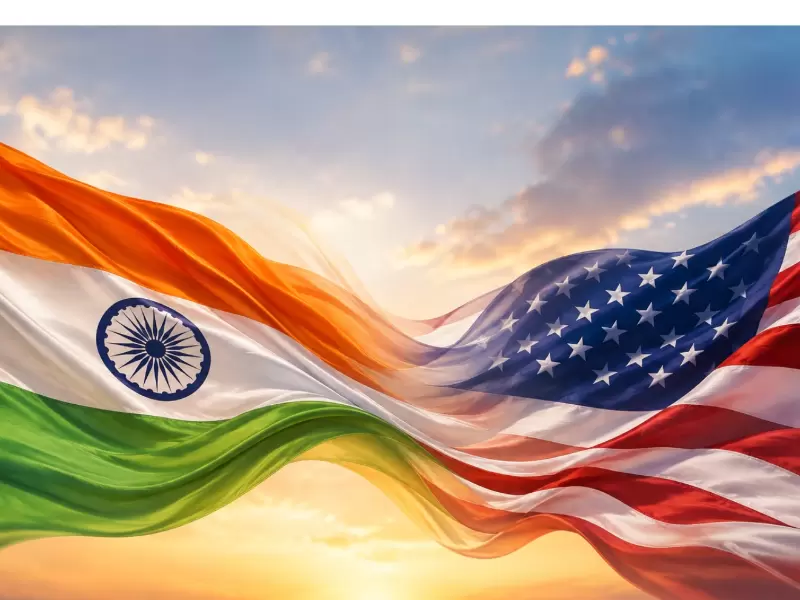
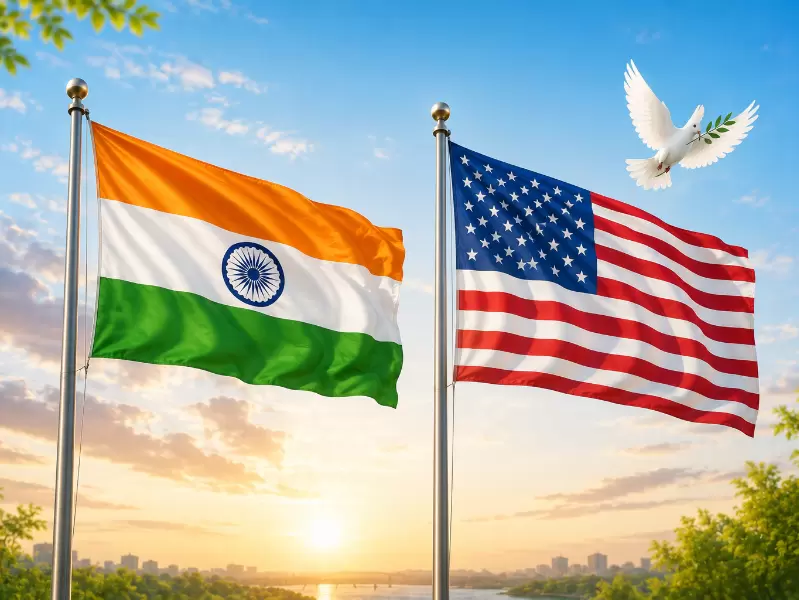
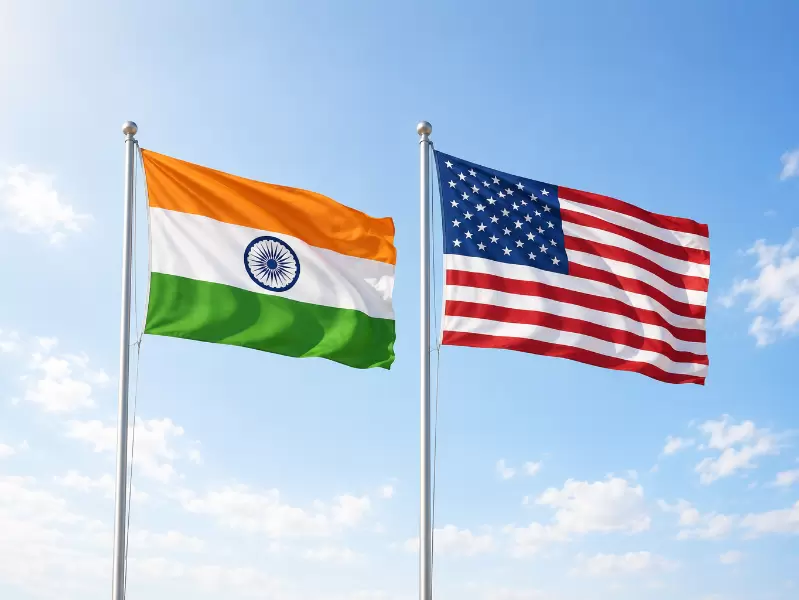 Representative Image / Generated using AI
Over the past twenty-five years, the U.S.-India relationship has undergone one of the most remarkable transformations in modern diplomacy. Two countries that once viewed each other through different geopolitical lenses, now coalesce on technological partnerships, energy, educational bonds, healthcare, defense exercises and broader strategic cooperation.
This transformation may seem miraculous, but it was put in place by visionary leaders across political parties, in a bipartisan effort, supported by the private sector, who believe in the strength of this partnership and of course, driven by the people to people exchange.
Also Read: US envoy Gor, NSA Doval discuss deepening strategic cooperation
Today, more than five million Indian Americans serve as a living bridge between our two democracies. They are the one percent of the population but serve in the highest one percent from leaders of Fortune 500 companies, pioneering scientific breakthroughs, launching startups, and are academic scholars, Hollywood actors, and answer the call to public service.
The success story of the Indian diaspora is the success story of the United States itself. As India approaches its 80th year of independence, New Delhi’s own rise has become the economic success story of a vibrant democracy in the twenty-first century.
India is now the most populous nation and one of the fastest-growing major economies, and investing in dynamic innovation ecosystem, consolidating its manufacturing base in advanced electronics across semiconductors, and advanced technology, digital public infrastructure, doubling down on pharmaceutical production.
The future of U.S.-India ties is built on mutual trust and shared strategic priorities. The relationship has long moved from aid to trade.
For American companies, India is no longer an emerging market for American consumer goods. India is a vital strategic partner, with shared democratic values and critical to upholding the rules based international order in the Indo-Pacific.
On the other hand, the United States remains India's most important destination for procuring investments, as the country heads towards a $5 trillion economy, boosting its technological innovation, strengthening defense, building education bridges, and advanced research collaboration.
Whether developing next-generation defense technologies through initiatives like U.S.-India TRUST and INDUS-X, advancing trusted telecommunications networks, collaborating on AI, quantum, cyber, strengthening supply chains, expanding civil nuclear cooperation, or investing in critical minerals, both countries are working hard to solve the global challenges of the 21st century.
The private sector has become one of the strongest pillars of this relationship, helping governments identify the gaps and coming up with solutions.
American companies have invested billions in India, fueling India’s own meteoric economic rise, creating jobs for millions entering the workforce, expanding manufacturing and integrating Indian talent into global value chains.
Take the example of Global Capability Centers (GCCs), which today have emerged as a bridge between India and the world, an evolution from the back-office outsourcing days for IT companies. America is a key partner in this process.
GCCs have specifically advanced the US-India economic and strategic relationship beyond the traditional areas of trade and outsourcing. GCCs are now a $46 billion industry in India and employ over 1.9 million professionals across more than 1900 centres.
GCCs are currently nearly 45% US-headquartered companies and make up over 50% of Fortune 500 firms with GCCs in India, which have moved beyond support functions into product engineering, AI, and cybersecurity R&D.
Indian companies, too, have expanded and become employers across the United States, contributing to American manufacturing, research, hospitality, healthcare, education, and technology.
This is a relationship of mutual investment, confidence, and trust.
In an era marked by geopolitical uncertainty, macroeconomic headwinds, and defined by technological disruption, this shared foundation becomes an enduring competitive advantage for both the U.S. and India to lead for the best part of the next century.
The next chapter of American leadership will depend not only on what the United States accomplishes at home, but also with partners abroad.
No relationship offers greater promise than that between Washington and New Delhi.
The United States brings unmatched innovation, capital markets, research institutions, and entrepreneurial dynamism. India contributes extraordinary human talent, manufacturing at scale, dynamic markets, and a demographic dividend.
Together, our democracies possess the ingredients needed to shape a more prosperous future for all two billion.
(The views and opinions expressed in this article are those of the author and do not necessarily reflect the official policy or position of New India Abroad.)
Discover more at New India Abroad.
Leave A Comment
Related




ADVERTISEMENT

ADVERTISEMENT
E Paper
Video

Comments
Start the conversation
Become a member of New India Abroad to start commenting.
Sign Up Now
Already have an account? Login