ADVERTISEMENT
ADVERTISEMENT



When AI starts to feel like a new religion
It is not surprising that Pope Leo is worried about the “idolatry of profit” and the risk that AI is used in ways that sacrifice the weak for the convenience of the strong.
-
 Prasad Kaipa
 - Mon, 01, Jun 2026
- 15:32 EDT
- 56
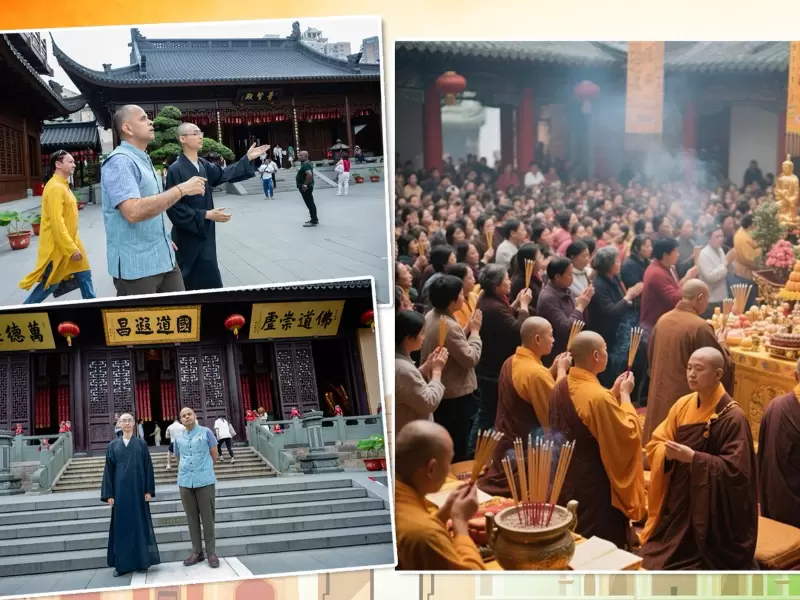
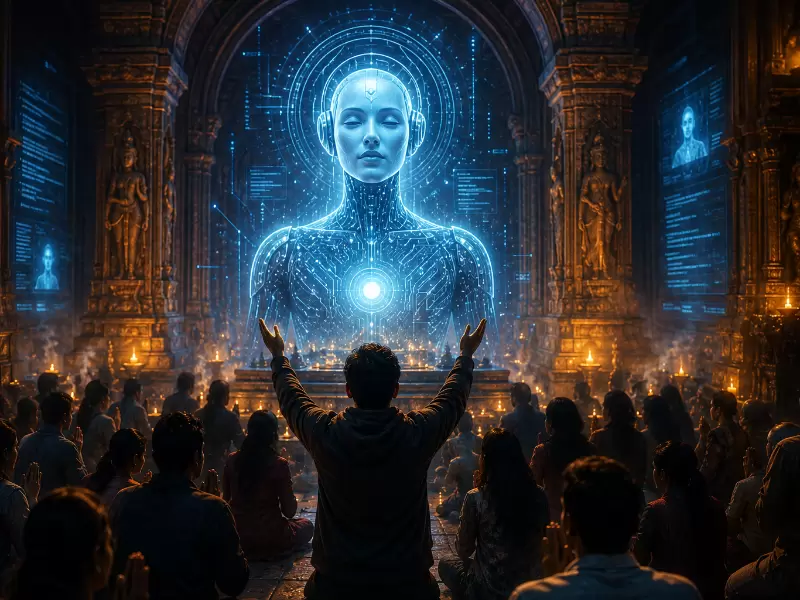 Representative Image / Generated using AI
Last week, Pope Leo XIV released his first encyclical, Magnifica Humanitas, a long reflection on artificial intelligence and what it means to be human in an age of algorithms. It warns against “technological idolatry,” the growing power of a few tech companies, and the temptation to build a new Tower of Babel out of data, code, and profit.
Reading it from Silicon Valley, I felt two presences in the room: the Pope in Rome, and Mahatma Gandhi in Sabarmati. And I also felt my own journey show up.
More than three decades ago, I made a deliberate shift. I moved from working on technology to focusing on the human element, because at that time technology was behind and the human was ahead. We needed better leaders, better learning, deeper self-understanding. Now, I sometimes feel the polarity has reversed. Technology has raced ahead. The human has not kept pace.
Also Read: AI Ethics Is Missing the Most Important Question
Living in Silicon Valley, I increasingly feel that, for many people here, AI is becoming a new religion, not just a new technology. I say that as someone who loves AI. I am deeply curious about how Human + AI can evolve together—not as a new god, but as a new way of taking responsibility.
Three places that shaped how I see AI
To understand what is at stake, I carry three places in my heart at the same time.
The first is Sabarmati Ashram, where Gandhi tried to live his experiments in truth, nonviolence, and self-rule. Sabarmati was very concrete. People woke up early, did manual work, shared chores, lived simply. It was not just a residence; it was a training ground for Swaraj—freedom from external rule, but also from our own fear, greed, and ego. Sitting there, you can feel how a community organised around limits and service shapes the minds and hearts of the people inside it.
The second is ServiceSpace, the global ecosystem started by my friend Nipun Mehta. ServiceSpace works quietly at the intersection of technology, volunteerism, and a “gift culture.” It began as a small experiment to use the internet for selfless service and has grown into a web of projects held up by volunteers. The focus is not on monetizing attention but on cultivating generosity and inner transformation. For almost two decades, I have watched how technology can be used to invite compassion rather than consumption.
The third is Silicon Valley’s AI ecosystem, where I spend much of my time coaching leaders. Here I see remarkable creativity and intelligence. I also see a subtle shift in what people believe in, often without noticing it.
In this world, AI models increasingly function like oracles: “the data says,” “the model shows,” “the system has learned.” Leaders defer to recommendations because they appear objective, neutral, and precise. A small group of companies and engineers controls the most powerful systems, while the rest of us are asked to trust that they will act responsibly. Dashboards and metrics become daily rituals that shape how we see success and failure.
From Sabarmati, to ServiceSpace, to Silicon Valley, one question keeps returning to me: who is ruling whom—human beings over their tools, or the tools over human beings?
It is not surprising that Pope Leo is worried about the “idolatry of profit” and the risk that AI is used in ways that sacrifice the weak for the convenience of the strong. It is also not hard to imagine what Gandhi might ask us in this moment.
Gandhi’s question for AI
Gandhi is often described as being anti-technology. That is not how I read him. He used trains, telegraphs, newspapers, microphones, and cameras when they served his purpose. His real question was different: does this particular tool make human beings more capable of governing themselves, or more dependent on systems they don’t fully understand and cannot easily influence?
The Pope’s encyclical asks whether AI serves human dignity or undermines it. Gandhi, I think, would ask a sharper question: in the age of AI, do human beings still think, discern, and decide for themselves?
If students allow AI to write for them, workers allow AI to decide for them, and leaders allow AI to judge for them, we may gain speed and efficiency, but we lose something more fundamental—our capacity for self-rule. Gandhi might recognise this as a new form of colonisation, not by a foreign empire, but by systems of our own creation.
This does not mean he would reject AI itself. I can imagine Gandhi appreciating AI that helps farmers adapt to climate change, teachers reach struggling students, or doctors catch disease early—so long as these systems expand human capability without weakening our sense of responsibility.
The Pope also acknowledges that AI can serve the common good, but only if it is embedded in strong ethical and social frameworks. Gandhi would agree—and he would insist that the most important framework is the human mind and heart.
Sabarmati and Silicon Valley: limits vs. limitless
When you walk through Sabarmati, you feel the power of limits. Life there is organised around simple food, simple clothing, and a rhythm of manual work and reflection. Gandhi did not glorify poverty for its own sake. He believed that self-imposed limits free us from endless craving and keep us close to the consequences of our actions.
By contrast, Silicon Valley’s imagination of AI leans toward the limitless—scale, speed, optimisation, “move fast.” The question “Should we?” is easily drowned out by “Can we?” and “If we don’t, someone else will.”
Sabarmati also embodies Gandhi’s respect for the dignity of work. The spinning wheel was never about efficiency. It was about participation. By spinning, people could contribute directly to the collective effort and stay connected to the larger struggle. Work there was a way to express responsibility and service, not just to earn a wage.
As AI now begins to automate not only physical labour but cognitive work, the risk is not only that jobs disappear. The deeper risk is that people are left without meaningful ways to contribute. When systems do most of the thinking and humans are reduced to supervising or correcting algorithms, something essential in us starts to fade.
Gandhi would not only ask, “Can AI do this work?” He would ask, “What happens to human beings when they are no longer needed to do it?”
ServiceSpace and another way of using technology
ServiceSpace gives us a contemporary example that another kind of digital ecosystem is possible. Its projects use technology to enable acts of kindness, reflection circles, and everyday generosity. Volunteers run most of the work. Metrics matter less than intention.
In ServiceSpace circles, you don’t see technology as a way to capture more of people’s time and attention. You see it used to gently nudge people toward compassion, listening, and inner growth.
To me, this is very close to what Pope Leo calls for when he says AI should be governed by the common good rather than by narrow profit. It is also very close to Gandhi’s idea that tools should support our humanity and our values, not erode them.
Human + AI as trusteeship
Gandhi’s idea of trusteeship—that wealth should be held in trust for the benefit of society—can be extended to AI. Today, the most powerful “wealth” includes data, algorithms, and computing infrastructure. The people and organisations that control these are, whether they like it or not, trustees for humanity.
A Gandhian view would ask: are we behaving like trustees—protecting the vulnerable, thinking about long-term consequences, placing human dignity at the centre—or like owners who simply extract as much value as possible?
That is why I speak of Human + AI. For me, AI is not a replacement for human intelligence. It is a test of human maturity. AI can help us see patterns, expand access, and support service at scale. It can also amplify our blind spots, our greed, and our desire for control.
If AI is becoming a new religion in Silicon Valley, the answer is not to destroy the temple. It is to remember that the temple is not God.
A responsibility for those between ashrams and algorithms
Those of us in the Indian diaspora live between ashrams and algorithms, between Sabarmati and San Jose, between Vatican statements and venture capital. We have inherited Gandhi’s questions, and we are helping build the future of AI, often at the same time.
The question that Pope Leo and Gandhi, together, seem to put before us is simple and hard:
Will we build AI that strengthens human self-rule, dignity, and compassion—or systems that slowly colonise our minds while promising convenience and control?
I do not fear AI. I fear a human culture that treats AI as a substitute for conscience. The real work, for Indians abroad and at home, is to ensure that as AI becomes more powerful, we grow into the kind of human beings who deserve to use it.
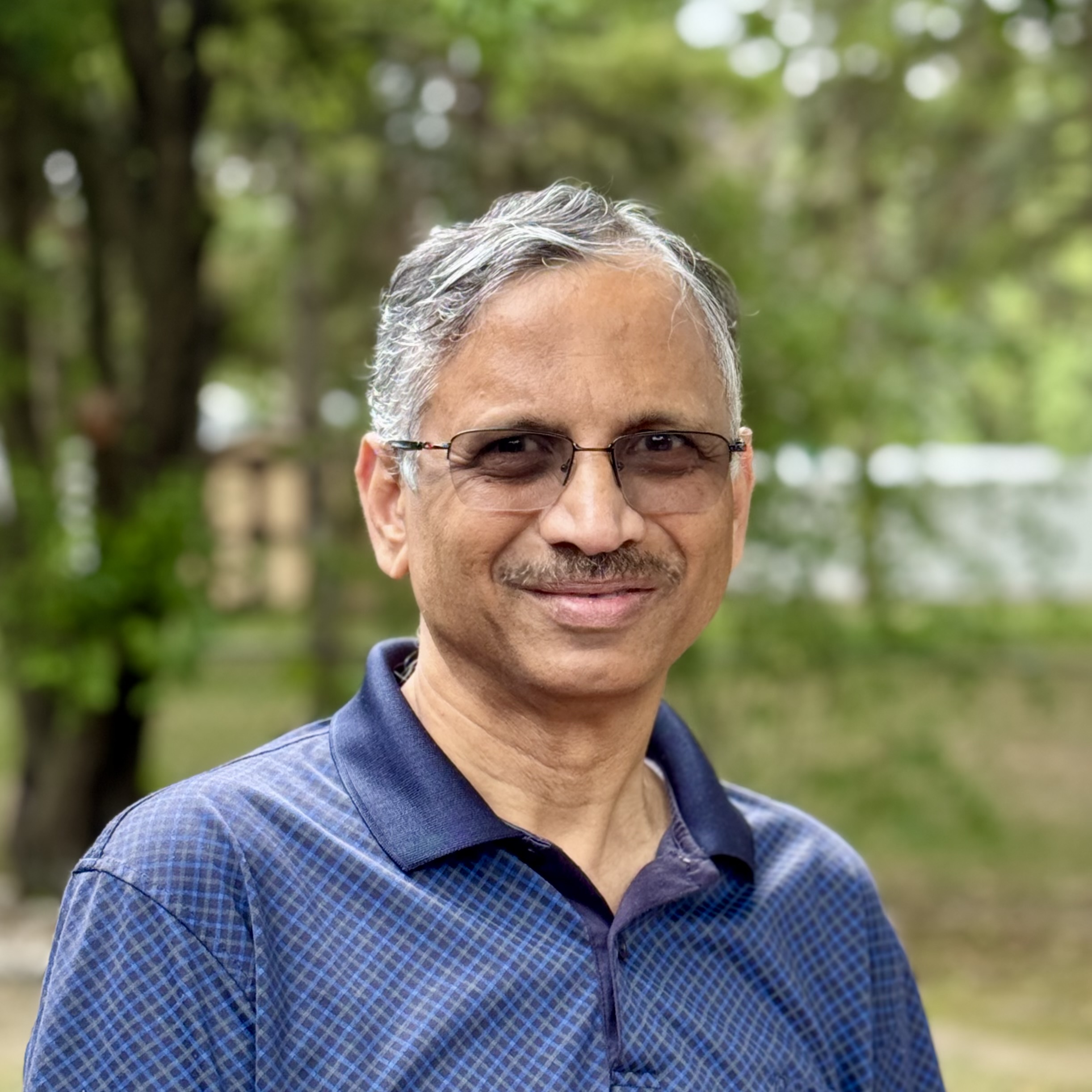
The author is a researcher, former fellow at Apple University and CEO coach.
(The views and opinions expressed in this article are those of the author and do not necessarily reflect the official policy or position of New India Abroad.)
Discover more at New India Abroad
Related



ADVERTISEMENT

ADVERTISEMENT
E Paper
Video

Comments
Start the conversation
Become a member of New India Abroad to start commenting.
Sign Up Now
Already have an account? Login