ADVERTISEMENT
ADVERTISEMENT


Tulsi Jayanti awards presented outside India for first time
The 16-year-old awards tradition honoring contributions to Tulsidas’ literary and spiritual legacy was held in the United States for the first time.
-
1759953093.png) Staff Reporter
Staff Reporter - Thu, 20, Aug 2026
- 15:04 EDT
- 65
 Award ceremony / Handout
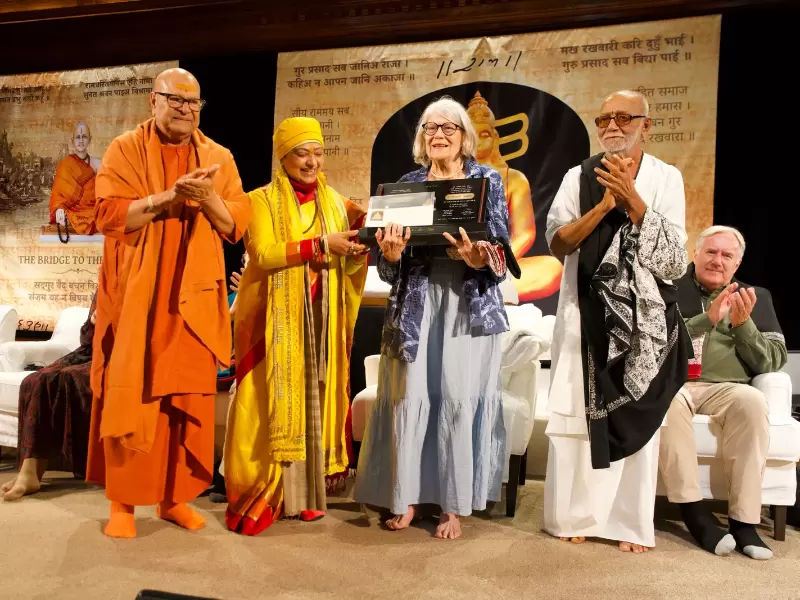
The Tulsi Jayanti awards were presented outside India for the first time Aug. 19 at Harvard University.
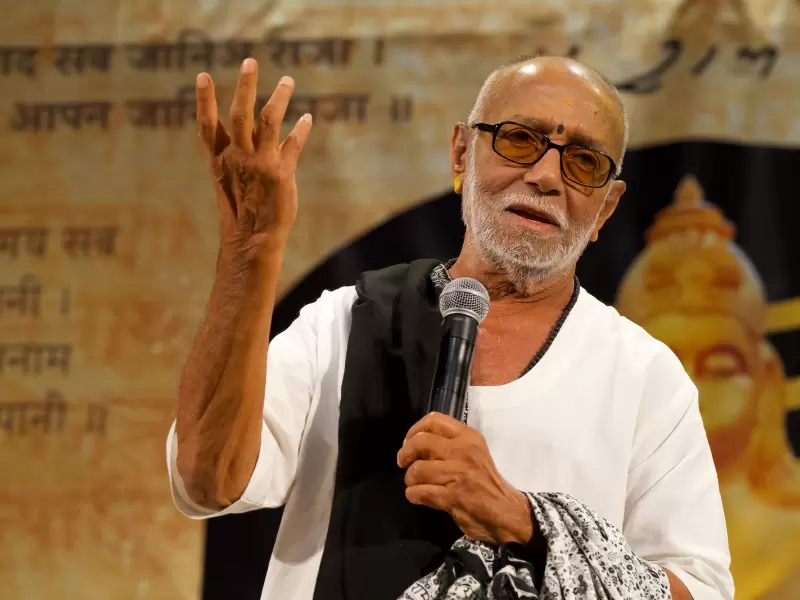
The awards ceremony took place at Sanders Theatre on the birth anniversary of Goswami Tulsidas, the 16th-century poet and author of the Ramcharitmanas. The ceremony was held as part of spiritual leader Morari Bapu’s nine-day Ram Katha, Manas Guru Prasad.
Also Read: Recital of Ramcharitmanas by Morari Bapu held at Harvard
The Tulsi, Vyas, Valmiki and Ratnavali awards have been presented annually at Talgajarda, Gujarat, since 2010 to recognize scholars, spiritual figures and others whose work has contributed to the study and preservation of traditions associated with Tulsidas and the Ramcharitmanas.
Eight awards were presented to nine recipients.
University of California, Berkeley professors Sally J. Sutherland Goldman and Robert Goldman jointly received the Valmiki Award. Osaka University professor Madoka Fukuoka was also presented with the Valmiki Award.
The Vyas Award was presented to Columbia University professor John Stratton Hawley, U.S.-based scholar Ashwin Bhai Kantilal Rajgor and Indian spiritual orator Devi Chitralekha.
 Morari Bapu / Handout
University of Texas at Austin professor Rupert Snell and community leader Piyush Bhai Mehta received the Tulsi Award.
Harvard University professor Diana L. Eck received the Ratnavali Award for her work in comparative religion and India studies.
The award ceremony followed a three-day scholarly program held Aug. 16-18 as part of the Harvard gathering. The sessions brought together academics from the United States, Europe and Japan to examine the Ramayana and its literary and cultural traditions across Asia, including traditions in Tamil, Persian, Thai and Javanese.
The academic component gave the celebration a broader scholarly context at Harvard, where the study of Indian religions and culture has been an established area of research. Eck, one of the award recipients, is a professor of comparative religion and Indian studies at Harvard Divinity School. Her research has examined Hinduism, religious pluralism and sacred geography in India.
Tulsidas’ Ramcharitmanas, composed in Awadhi in the 16th century, is one of the best-known retellings of the Ramayana. The work became particularly influential in North India and has played a major role in the region’s literary and devotional traditions.
Speaking at the ceremony, Bapu said, in remarks translated from Hindi, that he was grateful for the opportunity to honor those who had contributed to the tradition.
“My heart is filled with happiness and gratitude, by the grace of the divine and Mother Savitri, that we are able to honor the scholars and spiritual teachers who carry forward this tradition,” he said.
Paavan Popat, the lead organizer of the Ram Katha, said the program was intended to make the tradition accessible to audiences outside India.
“Through Bapu's teachings of Truth, Love and Compassion, Ram Katha offers something deeply universal – a sense of acceptance, joy and love that transcends geography and culture,” Popat said.
Bapu began the Tulsi Jayanti program in 2010 at Talgajarda, Gujarat. The annual celebration and awards had been held there for 16 years before the program was brought to the United States in 2026.
Discover more at New India Abroad.
Leave A Comment
Related







ADVERTISEMENT

ADVERTISEMENT
E Paper
Video

Comments
Start the conversation
Become a member of New India Abroad to start commenting.
Sign Up Now
Already have an account? Login