ADVERTISEMENT
ADVERTISEMENT



Looking back: It is no longer Russia at FIFA, but its impact remains
Looking back, here is how the world looked at Russia when it last organized the FIFA World Cup to win hearts.
-
 Prabhjot Paul Singh
 - Mon, 01, Jun 2026
- 05:05 EDT
- 26
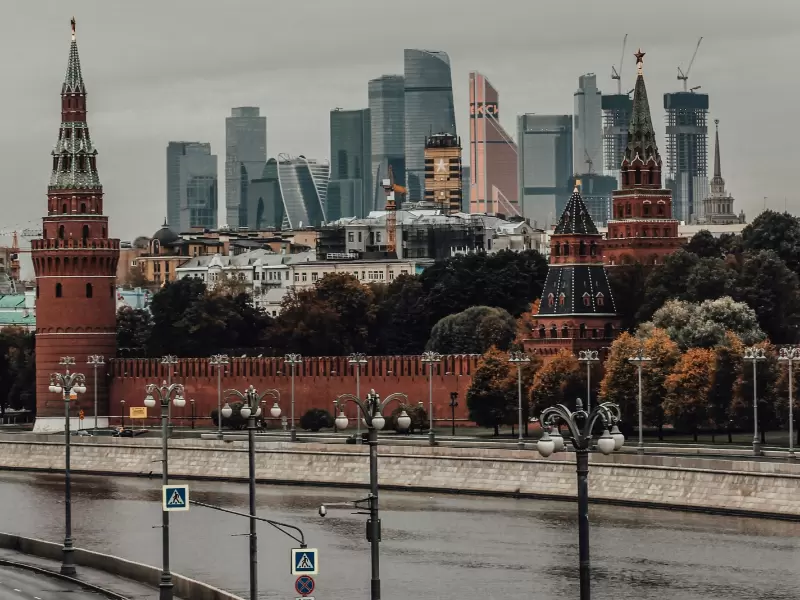 Representative image / Pexels
When Russia played host to the FIFA World Cup, the whole world fell in love with it. But not long afterward, the same world turned against Russia, accusing it of waging a war against Ukraine. Russia was earlier rocked by doping scandals that grabbed media headlines after the infamous Sochi Winter Olympic Games.
Now the World Cup is all set to reach North America, with the United States, Mexico, and Canada joining hands to host the biggest 104-match soccer extravaganza. Intriguingly, when the International Federation of Association Football (FIFA) awarded the 2026 FIFA World Cup to them, they were part of a very cohesive economic conglomerate bound by the North American Free Trade Agreement (NAFTA). The member states enjoyed a plethora of benefits for trading among themselves.
Things, however, changed so much that they have rocked the entire world. Geopolitics is a new game impacted mainly by the new tariff onslaught of Donald Trump, enjoying his second term in office.
For the United States, Canada and Mexico are now more sources of drugs and illegal immigrants than long-term main trade partners. How the changed trade equations will influence the proceedings and outcome of the FIFA World Cup starting June 12, time will tell.
Looking back, here is how the world looked at Russia when it last organized the FIFA World Cup to win hearts. Over to Moscow:
Moscow splurged more than $11 billion to make the FIFA World Cup an event that would make the “planet” change its outlook on Russia. It worked, leading the FIFA chief to say, “The whole world fell in love with Russia.”
The FIFA World Cup 2018 was an all-European show. If France won the cup, Russia, the host, won hearts. The Americas—North, South, and Central—were all cut to size not only on the playfields of Russia but also in politics. It turned out to be a wonderful carnival of fun, sport, and politics that witnessed many upheavals, besides showcasing Russia as a modern, dynamic, and “normal” nation, ready for inclusion in the global economic, political, and sporting landscapes.
Not only did all 32 nations that qualified laud the event as the “best,” but a certificate of appreciation also came from FIFA President Gianni Infantino when he commented, “The whole world fell in love with Russia” for hosting the best World Cup ever.
The FIFA World Cup 2018 was no different from the 2008 Beijing Olympic Games and 2016 Rio Olympic Games in attracting criticism over corruption, organizational lapses, and failure to provide “clean, healthy, and sporting environs for free and fair competitions.” Intriguingly, at the end of these events, this criticism turned to praise.
The awarding of the FIFA World Cup 2018 to Russia was not without controversy. FIFA itself was dogged by allegations of corruption and impropriety. Sepp Blatter, the infamous suspended FIFA chief, was a special guest of Russian President Vladimir Putin.
The award was made in 2010, and Putin had promised that the event would change the way the planet saw his “nation.” He had put in place a mechanism to keep FIFA’s showcase event free from threats of hooliganism, terrorist attacks, or disruptions by political activists.
Russia, an offshoot of the former Soviet Union, won the World Cup at a time when its relationship with both Europe and the United States had touched its lowest ebb in decades. Its recent actions in Syria and Ukraine further fractured these ties.
But unlike the 1980 Moscow Olympic Games, held a year after the invasion of Afghanistan, this FIFA World Cup witnessed no boycotts. It was all the more credible to have a full FIFA house in Russia, especially when the host remained on the suspension list of the International Olympic Committee. In the last Winter Olympic Games in Pyeongchang, Russia was not allowed, though its athletes participated under the banner of Olympic Athletes from Russia. The World Cup provided a pleasant change. Between June 14 and July 15, the 64 games played in 11 cities not only saw Iceland make an impressive debut but also saw defending champion Germany exit after the group matches.
For Asia, it was Japan that carried the flag to the round of 16, as other Asian contenders—Iran, Saudi Arabia, and South Korea—could not cross the group-stage hurdle.
Though India has seldom qualified for the prestigious FIFA event, it had nominal representation through Rishi Tej, 10, and John K. Nathania, 11, who were chosen to carry the ball for games on June 18 and 23 in the Russia World Cup. Besides, there were about 100 football fans from India, including Amitabh Bachchan. There were also some volunteers from India.
The FIFA World Cup is an event that is as prestigious as, if not more prestigious than, the Summer Olympic Games. Russia spent more than $11.6 billion on infrastructure for the FIFA World Cup. Four years earlier, it had invested heavily in the Winter Olympic Games, an event that ultimately soiled its credibility for conspiring to “dope” the games, with critics calling the 2014 Sochi Winter Olympics the “chemist” games.
Besides the Russian government’s expenditure on making the World Cup an event to make the “planet” change its outlook on Russia, FIFA’s budget for the just-concluded World Cup was a whopping $1.943 billion.
Compared with that, when Bhubaneswar hosts the World Cup Hockey Tournament later this year, the total cost is estimated at $19 million. The event will be spread over 19 days and feature 16 teams and 36 matches. The FIFA World Cup, a 35-day event, witnessed 64 games played in 11 different cities.
There were nearly half a million football fans, including several thousand from Peru alone, drinking on the streets of Russia during the World Cup.
As the event progressed to its knockout rounds, icons such as Argentina, Spain, Portugal, Brazil, and Uruguay made unceremonious exits, losing through late goals, penalties, own goals, or penalty shootouts. There were 29 penalties awarded in the tournament, besides own goals, including the first goal of the final between France and Croatia. Then the second goal came from a penalty.
By the time the tournament reached the semifinal stage, the challenge from Asia, Africa, and the Americas had ended. The semifinals and final were an all-European affair. Though Croatia made it to its first World Cup final, it could not stand up to the experience of the French, who won their second World Cup title in 20 years and thus became only the sixth nation to win the elite soccer tournament two or more times.
Harry Kane (England), Luka Modric (Croatia), Kylian Mbappe (France), and Thibaut Courtois (Belgium) were adjudged among the best players of this World Cup, which also saw the fading away of Lionel Messi (Argentina), even as Cristiano Ronaldo (Portugal) and Neymar (Brazil) may continue to grab headlines for some more time.
And who can forget Croatian President Kolinda Grabar-Kitarović, who spent her own money to travel to Russia, sported the team jersey to watch the “silver team” play the final from the stands, and greeted and consoled each member of the losing finalist team with a warm hug?
Discover more at New India Abroad.
Related


ADVERTISEMENT

ADVERTISEMENT
E Paper
Video

Comments
Start the conversation
Become a member of New India Abroad to start commenting.
Sign Up Now
Already have an account? Login