ADVERTISEMENT
ADVERTISEMENT



Imagine a World of Sports Without a Whistle
Even in normal life, the whistle plays not only as an instrument of entertainment but also facilitates the removal of irritants.
-
 Prabhjot Paul Singh
 - Mon, 01, Jun 2026
- 04:43 EDT
- 15
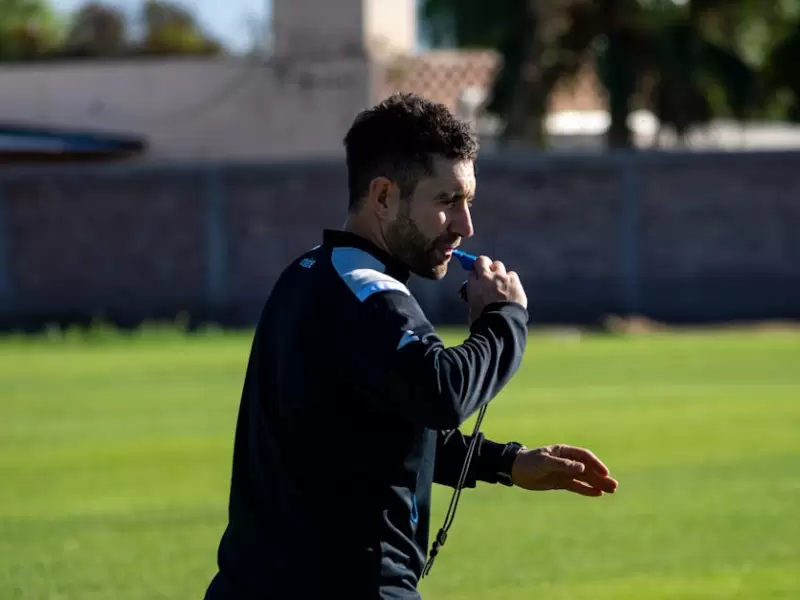 Representative image / Pexels
Can you imagine a world of sports without a whistle? Probably impossible!
This handheld musical instrument, weighing a few grams, has the power to decide the best. One firm blow, with the referee pointing toward the dreaded spot in an equally well-contested encounter between two of the best teams, can ruin a game, leading to violent clashes and even the snapping of political relations between two otherwise friendly nations. This is the power of a whistle. Though the decision of the referee is now challengeable, as the impacted team can seek a video review of events leading to the award of a penalty kick, it is the whistle that determines the progress of the remainder of the game.
Even in normal life, the whistle plays not only as an instrument of entertainment but also facilitates the removal of irritants. A cop using a whistle to clear a traffic jam or a PT instructor using a whistle to conduct a parade are normal procedures supporting the use of a whistle for restoring or maintaining order in everyday life.
Change, they say, is the only permanent thing.
Evolution is a continuous process. It brings with it changes that minimize irritants and make games free, fair and spectator-friendly. Though the basics of soccer have been the least impacted by changes in rules, playing surfaces, equipment, kits or other paraphernalia, it continues to be a common person's sport, easy to understand, follow and enjoy. The only interruption, if at all, is the blowing of a whistle to indicate an infringement or some violation of rules by one or more players. Again, it is the whistle that fixes responsibility.
Be it a game of soccer, hockey, basketball, water polo, volleyball or any other team sport, a whistle plays a crucial role in adjudicating the contest between two teams. That is why international sports federations have stringent rules for selecting referees for international contests, including World Cups, Olympic Games, continental games and other mega events.
2026, like any other year, has many major sporting events that will be the cynosure of all eyes. The FIFA World Cup in June and July, the FIH World Cups for men and women, the Commonwealth Games and the Asian Games are some of the prime events that will draw worldwide attention. And all these major sporting events will witness extensive use of whistles. After all, these tiny, modernized and effective musical instruments come packed with powers that rulebooks vest in referees and umpires.
Slovenian water polo referee Boris, a highly respected name in water sports, says: “We play water polo for spectators. Spectators demand a fast, clean, intelligent game and understandable rules. Nobody wants static and physical games. So these were, and still are, key goals that we want to achieve with the new rules.
“It was a big change, and everybody needs time to adapt, understand and follow the new rules, including referees. Until now, a great job has been done with explanations, instructions and the progress of those rules. I strongly believe that it was a step forward to speed up the game, get more action, score more goals and especially ensure that the movement of the players is under maximum protection. In all team sports, protecting the movement of an attacker is a basic fundamental rule. I would like to mention and congratulate TWPC for the use of modern techniques such as VAR and referees’ review of the game. All those elements give a full picture of the success of the new rules. Of course, the process is still not over. Some rules need more changes or explanations. But we are on the right path, and our game has become faster and less physical,” he said.
I vividly remember the 2006 FIFA World Cup final, for which I was fortunate enough to get a ticket to watch Italy beat France in a penalty shootout to win the title. It is a different thing that Italy failed to qualify for this year’s FIFA World Cup.
Soccer fans remember this final, like all past and future finals, for some of its unique features. On July 9, 2006, before a sardine-packed Olympia Stadion in Berlin, with supporters of both Italy and France in full voice, the stands nearly burst when French captain Zinedine Zidane scored an early “Panenka” penalty (7') before being sent off (110') for head-butting Italy’s Marco Materazzi (who scored the equalizer in the 19th minute) in his final career match.
Some romance of whistling was witnessed at crucial and exciting moments of the game. After a 1-1 deadlock in regulation and extra time, Italy defeated France 5-3 in the penalty shootout. Italy’s victory marked its fourth World Cup title, its first since 1982.
In the second half of extra time, Zinedine Zidane head-butted Marco Materazzi in the chest. Referee Horacio Elizondo of Argentina sent Zidane off after consulting the fourth official, a defining moment in his final professional game.
In the penalty shootout, Italy scored on all five of its penalties, while France’s David Trezeguet missed his shot after it hit the crossbar. Italy’s Andrea Pirlo was named Man of the Match, while Zinedine Zidane was awarded the Golden Ball as the tournament’s best player.
How competitive the game of soccer can be can be imagined from the story of 2006 FIFA World Cup champion Italy, which was relegated to 26th position in the 2010 edition and moved up to 22nd position in 2014. Since then, it has failed to qualify for the World Cup finals in 2018, 2022 and 2026.
FIFA referees primarily use the Molten Valkeen whistle, which is specially designed for elite-level soccer and has been used at the FIFA World Cup since 2010. It is known for its high-pitched, penetrating sound (125 dB) that can be heard over loud crowds, often featuring a specific finger-flip grip. Other popular choices among top officials include the Acme Tornado and Fox 40.
Other whistles used by FIFA referees include the Molten Valkeen, known as the standard for elite soccer. This Japanese-designed whistle produces a unique four-octave sound (3.67 kHz and 4.15 kHz) designed to be heard even in chaotic, noisy stadiums. The Acme Tornado 2000 is a popular, very loud (122 dB) whistle used in international matches and the Premier League; and the Fox 40 Sonik Blast is another high-pitched, loud, pealess option designed to cut through crowd noise.
These professional-grade whistles are pealess, meaning they do not contain a small cork ball, ensuring the sound remains consistent and cannot be “choked” even when wet.
The other day, senior and respected hockey umpire Satinder Sharma told me that the International Hockey Federation (FIH) gives its international umpires Fox 40 Sonik whistles. For uniformity, no other whistles are allowed by the FIH.
After an umpire has officiated 100 international games in hockey, he or she is awarded a “golden whistle.” Satinder Sharma has been a recipient of the Golden Whistle and has the distinction of officiating at both the World Cups and Olympic Games. Since retiring from umpiring, he has become co-chair of the Umpiring Commission of Hockey India.
“Umpiring,” he says, “needs lots of mental and physical fitness, concentration and complete knowledge of rules and regulations, besides nerves of steel to keep tempers cool, as games at the highest level are contested with everything at stake.”
Some of the most experienced umpires and referees in soccer, hockey, basketball, volleyball, water polo and other team sports are held in high esteem, as they represent not nations but the global community and are assigned the important task of adjudicating the fiercest contests.
Discover more at New India Abroad.
Related







ADVERTISEMENT

ADVERTISEMENT
E Paper
Video

Comments
Start the conversation
Become a member of New India Abroad to start commenting.
Sign Up Now
Already have an account? Login