ADVERTISEMENT
ADVERTISEMENT



PM’s Visit to Ethiopia: A Defining Moment in India–Africa Relations
For India, Ethiopia is not just another nation in Africa; it is a gateway to the Horn of Africa, a region crucial for maritime connectivity, global trade, and regional stability.
-
 Amit Deshmukh
 - Sun, 14, Dec 2025
- 12:37 EST
- 200
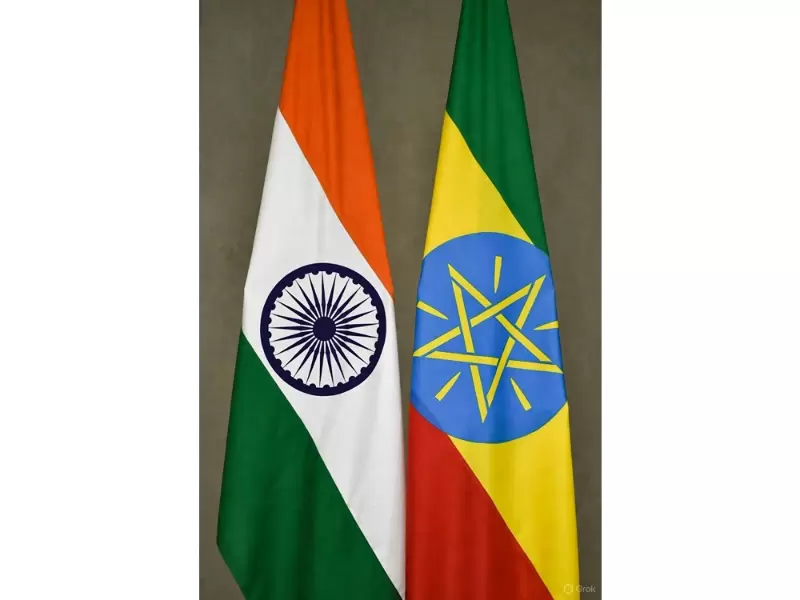 Indian and Ethiopian flags (Representative Image) / Courtesy: AI-generated
Prime Minister Narendra Modi’s landmark visit to Ethiopia is more than a diplomatic engagement—it is a moment of strategic recalibration for both nations. At a time when global power structures are being tested and new alliances are emerging, this visit underlines India’s resolve to place Africa at the center of its foreign policy vision.
Ethiopia, with its demographic strength, historical depth, and regional influence, stands as a natural partner in that vision.
For India, Ethiopia is not just another nation in Africa; it is a gateway to the Horn of Africa, a region crucial for maritime connectivity, global trade, and regional stability. In recent years, Ethiopia has undergone significant political, economic, and infrastructural transitions.
Despite facing challenges, it remains one of Africa’s most forward-looking nations. Prime Minister Modi’s visit signals New Delhi’s belief in Ethiopia’s long-term potential and its role in shaping a stable, multipolar world.
Also Read: Macaulay is an “important," not an “outstanding” character for India
Strategic Conversations in Addis Ababa
The Prime Minister’s discussions with Ethiopian leadership were wide-ranging and future-oriented. Security cooperation, maritime awareness, counter-terrorism mechanisms, and peacebuilding efforts were important components of the dialogue. India recognizes Ethiopia’s influence in the African Union and sees Addis Ababa as a pivotal partner in addressing regional challenges.
The visit also strengthened India’s support for Ethiopia’s ongoing peace and reconciliation initiatives. India has always stood for Africa-led, Africa-owned solutions and reaffirmed its commitment to development partnerships free from conditionalities and geopolitical pressures.
Development Cooperation: A People-First Approach
India’s development cooperation with Ethiopia reflects a model starkly different from extractive or debt-driven approaches. The focus remains on local capacity-building—enhancing skills, boosting digital literacy, modernizing agriculture, supporting public health systems, and promoting education.
The Prime Minister highlighted India’s Lines of Credit and grant-based projects that have transformed sectors such as sugar, textiles, rural electrification, and railways. India’s digital public infrastructure, admired globally, opens exciting collaboration possibilities for Ethiopia as it advances its own digital transformation.
Economic Diplomacy Gains New Momentum
Ethiopia’s emerging industrial ecosystem—from its industrial parks to its expanding logistics corridors—aligns naturally with India’s manufacturing and technology strengths. The visit encouraged Indian businesses to explore opportunities in pharmaceuticals, IT services, textiles, agri-processing, healthcare, mining, and renewable energy.
A renewed dialogue on trade facilitation, ease of doing business, and private-sector partnerships has set the stage for long-term economic engagement. The Prime Minister emphasised the need for sustainable and mutually beneficial investments, ensuring that growth directly benefits the Ethiopian people.
A Special Bond with the Indian Diaspora
The Indian community in Ethiopia, one of the oldest in Africa, has been an enduring bridge of friendship. Teachers who shaped generations, entrepreneurs who built local industries, and professionals contributing across sectors were acknowledged by the Prime Minister as ambassadors of India’s core values.
His interaction with the diaspora reaffirmed India’s gratitude for their role in strengthening bilateral ties. Their success stories mirror the trust and affection that Ethiopians hold for India.
Cultural Diplomacy and Civilizational Links
Both nations share a deep civilizational resonance—from ancient trade routes across the Indian Ocean to spiritual exchanges and cultural interactions. The visit infused new energy into cultural diplomacy, including proposals for academic exchanges, heritage collaborations, and youth-focused initiatives.
India’s soft power—Yoga, Ayurveda, cinema, and literature—continues to find a warm and receptive audience in Ethiopia. The Prime Minister’s visit provided a renewed platform to deepen this cultural connection.
A Partnership for the Future
This visit is more than symbolic. It is a blueprint for a shared future. A future where India and Ethiopia collaborate on climate resilience, fintech, startup ecosystems, skilling, clean energy, and regional peacebuilding.
At a time when global uncertainties dominate headlines, India and Ethiopia have chosen a path of partnership anchored in trust, solidarity, and a shared belief in inclusive development. As I reflect on this historic visit, one message echoes clearly: India and Ethiopia are not merely partners—they are stakeholders in each other’s growth.
Prime Minister Modi’s visit has opened a new chapter. The responsibility now lies with us—policymakers, businesses, institutions, and people—to convert this vision into reality.
All inputs are from talks with Indian Ambassador to Ethiopia Anil Kumar.
(The views and opinions expressed in this article are those of the author and do not necessarily reflect the official policy or position of New India Abroad.)
Leave A Comment
Related









ADVERTISEMENT

ADVERTISEMENT
E Paper
Video

Comments
Start the conversation
Become a member of New India Abroad to start commenting.
Sign Up Now
Already have an account? Login