ADVERTISEMENT
ADVERTISEMENT



Next generation of Indian American hoteliers face new test says industry leader Ahmed Kabani
Veteran hotel broker says new-generation entering the hospitality business must embrace technology and reinvestment as the industry navigates economic uncertainty.
-
1759953093.png) Staff Reporter
Staff Reporter - Mon, 18, May 2026
- 17:46 EDT
- 441
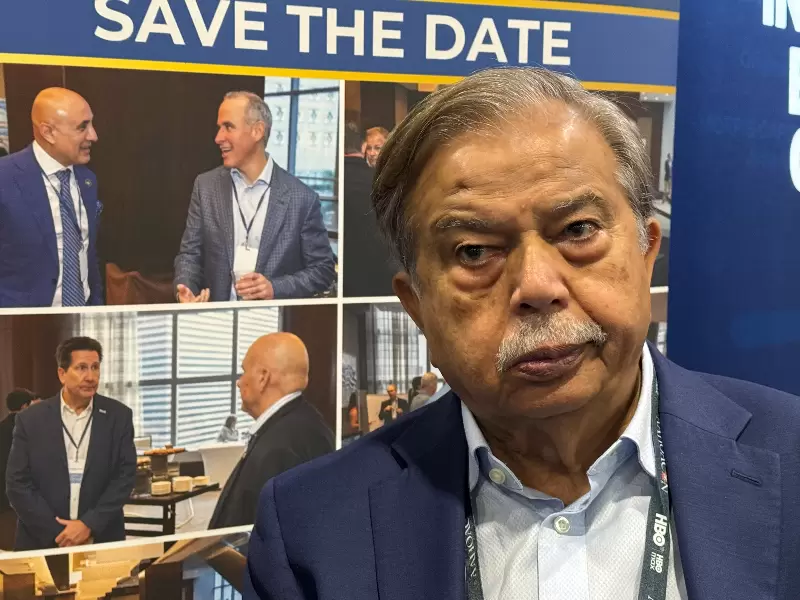 Ahmed Kabani - Founder & CEO of The Kabani Hotel Group / New India Abroad
As second- and third-generation Indian Americans step into leadership roles in their family-owned hotel businesses, veteran hospitality broker Ahmed Kabani says they must adapt to a changing market shaped by economic uncertainty, rising costs, and rapid technological shifts.
Kabani, founder and CEO of Kabani Hotel Group, said Indian Americans have long been a dominant force in the U.S. hospitality sector, with immigrant families building a vast network of motels and hotel franchises over the past five decades.
Also Read: AAHOA backs move to delay LA hotel wage mandate
“There is a vibration in the whole nation that hotels are run by Indians. And it is a fact,” he said. Today, many Indian American families operate portfolios across major brands such as Hilton, Marriott International, and IHG Hotels & Resorts, making hospitality one of the most significant business sectors for the diaspora in the United States.
According to him that legacy now places new responsibility on younger generations inheriting those businesses.
“So I tell the families of hotel owners, our kids, our grandchildren are the future. Train them,” Kabani said in an interview with New India Abroad. He said the next generation is entering the business at a moment of considerable disruption, with slowing travel demand affecting every segment of hospitality.
“First thing, there is uncertainty in the market,” Kabani said. “If people are not travelling, or people are doing less travel, it affects all segments of hospitality.”
He said higher borrowing costs have significantly changed the economics of hotel ownership compared with the years before the pandemic.
“The interest rate for 2019-20 was almost 3 or 4 percent. Now it jumped to almost 6 or 7 percent,” he said.
At the same time, rising labor, insurance, and renovation expenses are putting pressure on owners, especially as major hotel brands require property upgrades to maintain standards.
In such a scenario, he said the next phase of growth will depend on whether younger generations embrace innovation, particularly artificial intelligence and data-driven management.
“After the technology and AI has come in the market, you, the hotel owners, whether you select service, limited service, or luxury, need to bring talented young people who know the AI technology to make sure that it's available in your hotel,” he said.
He urged hotel owners to involve younger family members in strategy and operations, but in modernized roles.
“The most important thing is that you don't put them behind the desk, please,” he said.
Despite the current challenges, Kabani said the hospitality industry remains fundamentally resilient, with strong opportunities emerging in wellness tourism, extended-stay hotels, and family-focused travel.
“Now that doesn't mean that we are not going to survive. Hospitality always survives. But at this time, we need a survival kit,” he said. “Keep your property alive. Manage your hotel. Spend money on renovation.”
Kabani’s own journey mirrors the broader immigrant story behind the industry’s rise. He arrived in the United States as a student in 1970, studied hotel management at Florida International University, worked in hotel operations, and later built a career in hospitality brokerage. Today, his Miami-based firm advises hotel buyers, sellers, developers, and lenders across the country.
The firm also organizes an annual investment forum in Miami that brings together hotel owners, lenders, and market analysts to assess trends shaping the industry’s future.
Discover more at New India Abroad.
Leave A Comment
Related








ADVERTISEMENT

ADVERTISEMENT
E Paper
Video

Comments
Start the conversation
Become a member of New India Abroad to start commenting.
Sign Up Now
Already have an account? Login