ADVERTISEMENT
ADVERTISEMENT



Milano Cortina 2026: New nations have emerging Winter Olympic icons
Though the Winter Olympic Games continue to be a European powerhouse, tropical nations or nations located in the Southern Hemisphere have also started evincing interest with podium finishes.
-
 Prabhjot Paul Singh
 - Sun, 22, Feb 2026
- 00:28 EST
- 91
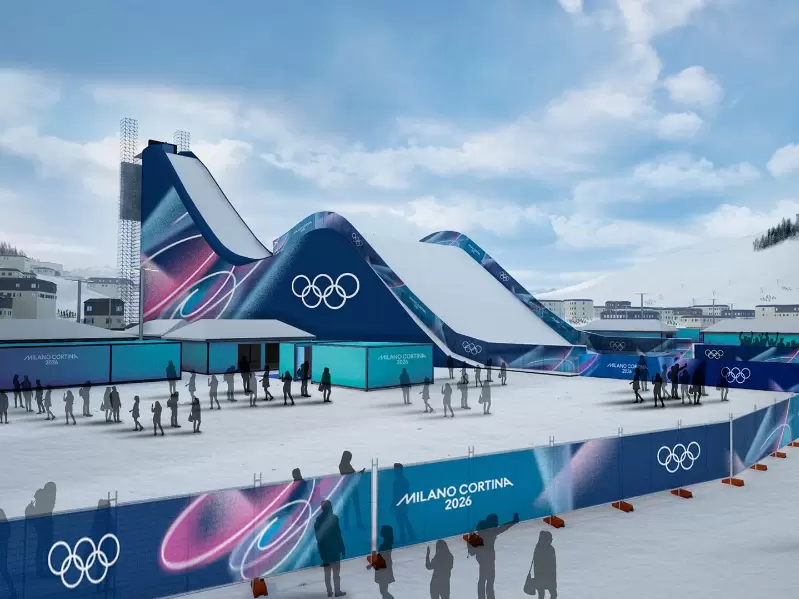 Milano Cortina 2026. / Milano Cortina
As the curtain draws on another Olympic spectacle, some moments made this a truly special fortnight of sporting brilliance for countries like Australia, Brazil, and Georgia.
Both Brazil and Georgia won their first-ever Winter Olympic medals in Milano Cortina 2026. Though the Winter Olympic Games continue to be a European powerhouse, tropical nations or nations located in the Southern Hemisphere have also started evincing interest with podium finishes. Such podium finishes may be few, yet they mark a beginning.
ALSO READ: Milano Cortina 2026: USA, Canada set up summit clash in men’s ice hockey
Brazil got its first-ever gold in the Winter Olympics, the first for South America; it was primarily won by an athlete whose parents came from Europe. A similar success story of a Chinese athlete representing the U.S. is captivating. Expatriates are adding flavour to the culture of adventure on snow and ice alike.
After failing to retain her moguls title, Australia’s Jakara Anthony made amends as she became the first Olympic champion in dual moguls. Jaelin Kauf claimed her second silver of the Games, with U.S. teammate Elizabeth Lemley adding bronze to her moguls gold.
Jakara Anthony will leave Italy as the most decorated Winter Olympian in Australia’s history—but it didn’t come easy for the freestyle skier. She came into these Games as the defending champion in the women’s individual moguls, winning a thrilling gold four years ago in Beijing. In Livigno, her defence did not go to plan, finishing way outside the medals in eighth.
Anthony dusted off the heartbreak of that event and turned her attention to the dual moguls, a completely new event debuting at Milano Cortina, to showcase exactly what she is capable of. Fending off competition from U.S. rival Jaelin Kauf, Anthony stormed to gold in style to win her second Olympic title—in doing so, she became Australia’s most successful Winter Olympian of all time.
On winning her second gold, she said, "This one is really different from the last one because I picked this up after the heartbreak of the other day. It speaks a lot to the support I have around me and the work I’ve done on the mental side of things as well, to be able to handle that and rip it up.”
Josie Baff’s second-ever Olympic outing was proof that truly anything can happen when you compete on the world’s biggest stage. Despite coming into proceedings as one of the most in-form snowboarders in the world, the 23-year-old found herself struggling with the opening few races. Coming in 17th in the time trial after an uncharacteristic error and a nervy photo finish in the quarter-final may have raised questions, but Baff squashed them when it mattered most.
In the semi-final, a scintillating inside takeover propelled her from third to first as she powered to the final. With a medal on the line, Baff showed once more why she is among the best in the world, capitalising on those inside lines to storm to gold. It marked a significant upturn on her maiden outing in Beijing, where she finished 18th.
“I would like to say that I can’t believe it, but I kind of can. I feel like I deserve it. I put in a lot of hard work, so I knew I could do it, but to actually have that gold medal around my neck is very, very cool,” the Australian said.
“There’s been a lot of sacrifice, a lot of sweat, a lot of tears, and probably not as much blood. It’s definitely something that I’ve been working towards for a very long time, and my team has been helping me achieve that every step of the way.”
Cooper Woods and Mikael Kingsbury both scored 83.71 in the second final of the Men’s Moguls competition, but the Australian’s superior turns score saw him take victory. Canadian hero Kingsbury won his third Olympic silver to go with his PyeongChang 2018 gold. Japan’s Horishima Ikuma repeated his bronze from Beijing 2022.
Cooper Woods had the honour of winning Australia’s first medal of these Games remarkably. The 25-year-old has been competing on the men's moguls World Cup circuit since 2019, yet has only finished on the podium once—a silver medal in the 2023/24 season. Yet something about the Olympics seems to stir up something special in Woods; he demonstrated as such in Beijing when he finished sixth overall. In Milano Cortina, though, he stepped things up.
The first qualification round didn’t go according to plan, finishing 15th and advancing to the second round of qualifiers, though there he laid down the second-best run out of all competitors with a statement score of 80.46. He bettered that with 83.60 in the first final, meaning he was last to drop in the super final for the first time in his career. Soaking up the pressure, Woods delivered big-time—his run of 83.71 was enough to clinch the gold, though it came down to his cleaner turns after finishing with the same score as Canada’s Mikael Kingsbury.
“It’s something you dream of,” he said. “Day in, day out, as a kid, through the hard days, through the good days. It’s an absolute journey, and a lot of people don’t get to be in this position.
“But you know what? I’m very proud of the hard work and the sacrifice and the moments that I’ve shared with people around the world and, more importantly, my family. I don’t spend a lot of time back home in Australia; countries we don’t have a lot of snow, so it’s everyone’s medal, not just mine.”
From 22nd in the World Cup standings to an Olympic champion—there's nothing quite like competing on the world’s biggest stage.
Xu Mengtao of the People's Republic of China saved her best for last, posting the best score in Final 2easily to retain her crown from Beijing 2022. Australia’s Danielle Scott could not repeat her mammoth score from Final 1 as she took silver ahead of Xu’s teammate Shao Qi.
One of the biggest highlights from Australia’s time at Milano Cortina came from veteran freestyle skier Danielle Scott, who finally got her hands on Olympic hardware on her fourth attempt. Debuting at Sochi, where she finished ninth, Scott has been to every subsequent Games but has been unable to mirror her World Cup form.
The 35-year-old looked formidable throughout the women’s aerials, particularly in the first final, where she delivered the biggest score of the day to top the standings heading into the super final. Scott continued to deliver big, though she was ultimately bested by Xu Mengtao, who successfully retained her crown. Nevertheless, it was a moment that was 10 years in the making for the Aussie.
“It’s honestly finally the icing on the cake I needed,” she said after clinching silver. “To go to four Olympics and to have walked away from the last two without a medal was pretty heartbreaking. I didn’t even think I would be at these Olympics because it is tough.
“You dedicate your life to something, and when it doesn’t really pay off, you question why you do it. But I knew I had it in me, and to finally put something down today that I needed to and walk away with a silver medal is really special.”
Australia’s Scotty James had to settle for silver again as Totsuka Yuto scored 95.00 on his second run to take an epic Men’s Snowboard Halfpipe final. Yamada Ryusei made it gold and bronze for Japan. Rounding up what has been a historic outing at Milano Cortina from the Aussies are Scotty James and Matt Graham, who won silver and bronze, respectively.
After winning bronze in PyeongChang, followed by silver in Beijing, James left it all on the snow in a bid to complete the set with a golden snowboard halfpipe run. It was a final full of twists and turns, the 31-year-old bouncing back from a missed landing at the end of run one to lay down an impressive 93.50 in his second. Another tumble in the third, however, meant he fell just shy of the top spot and clinched silver for a second successive Olympic cycle. It was a “bittersweet” moment for James, who still takes pride in such an achievement.
For Graham, it was a moment in the history books as he became one of the first athletes to medal in the men’s dual moguls, a new event that debuted at these Games. After narrowly missing the podium in the individual, finishing fifth in the event he won silver in four years ago, it was his chance at redemption. In a course that proved difficult on the day, the 31-year-old remained consistent to bounce back from his semi-final defeat to win bronze, beating Japan’s Shimakawa Takuya 20-15 in the medal showdown.
There is another chance for Australia to extend its best-ever tally, with Indra Brown set to compete in the postponed women’s freeski halfpipe final on Feb. 22. The 16-year-old qualified in fourth and has a real shot at making the podium.
Discover more stories on NewIndiaAbroad
Leave A Comment
Related









ADVERTISEMENT

ADVERTISEMENT
E Paper
Video

Comments
Start the conversation
Become a member of New India Abroad to start commenting.
Sign Up Now
Already have an account? Login