ADVERTISEMENT
ADVERTISEMENT



Leeds research supports India’s cleaner cities goal
The studies highlight how better waste management and cleaner energy solutions could help India tackle pollution and meet its climate targets.
-
 Malvika Choudhary
 - Thu, 21, May 2026
- 18:03 EDT
- 1468
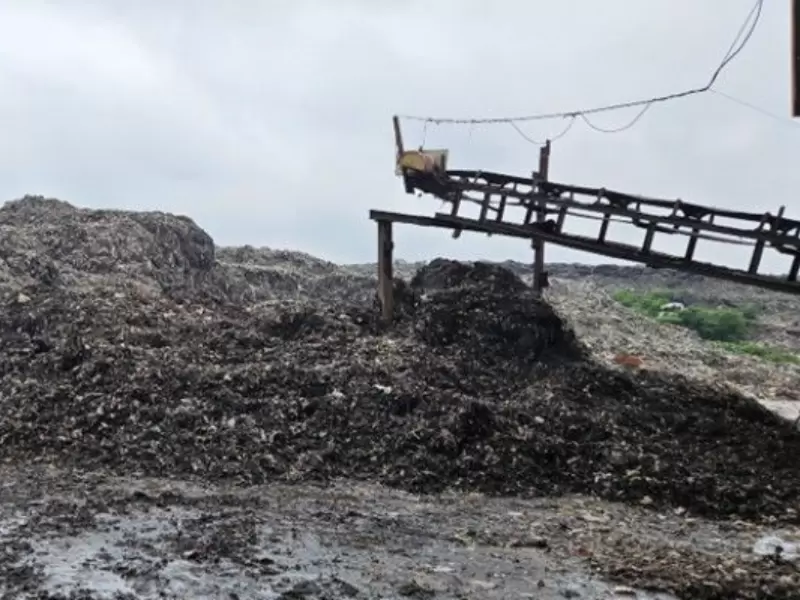 Representative image / Photo credit -Rutuben Rajeshbhai Gajera
Researchers from the University of Leeds and Indian institutions have published two studies highlighting how stronger waste management systems and sustainable agricultural practices could support India’s transition toward cleaner cities and its 2070 net-zero target.
The studies, conducted in collaboration with researchers from India, Hong Kong and the UK, examined the impact of municipal solid waste and agricultural residue burning on pollution, public health and greenhouse gas emissions in India’s rapidly growing urban centers.
Also Read: Navigating higher education: Advice from a professor with seven degrees
One study, published in the Journal of Industrial Ecology, warned that municipal solid waste generated in urban areas could increase twelve-fold by 2050 if current consumption patterns continue.
“If we carry on with business as usual, mountains of garbage will surround India’s major cities,” said Daya Pandey, assistant professor in Energy Systems at the University of Leeds.
The research team called for increased infrastructure investment to develop circular waste management systems aimed at reducing emissions and human exposure to toxic substances. Recommendations included improved waste segregation at source, expanded recycling and processing facilities, and reduced dependence on landfills.
The study said such measures would support India’s Solid Waste Management Rules, 2026, and help the country progress toward its net-zero emissions goal by 2070.
The research involved experts from King's College London, London School of Hygiene & Tropical Medicine, Indian Institute of Technology Kharagpur and CSIR-National Environmental Engineering Research Institute, along with contributions from researchers at Hong Kong Baptist University and Manipal Institute of Technology.
A second study, published in Biomass and Bioenergy, focused on agricultural waste management. The study found that India could use agricultural residue to generate renewable energy and high-value products through technological innovation, policy reforms and circular bioeconomy approaches.
The agricultural sector is currently the second-largest contributor to India’s greenhouse gas emissions, largely due to crop residue burning.
Vinay Yadav, assistant professor at IIT Kharagpur, said India’s urban waste problem extends beyond disposal challenges to issues of public health, climate impact and urban livability.
“With smarter policies, better infrastructure and a shift toward a circular economy where waste is reduced, reused and recycled, we can turn this challenge into an opportunity,” Yadav said.
The University of Leeds said its partnership with IIT Kharagpur has expanded in recent years, including a 2024 memorandum covering joint PhD supervision and broader research collaboration across engineering, biological sciences and transport studies.
Discover more at New India Abroad.
Leave A Comment
Related











ADVERTISEMENT

ADVERTISEMENT
E Paper
Video

Comments
Start the conversation
Become a member of New India Abroad to start commenting.
Sign Up Now
Already have an account? Login