ADVERTISEMENT
ADVERTISEMENT


India’s right to claim its Hindu identity: Fighting unfair views
India’s hold on its Hindu cultural identity is a strong step forward, not a step back into majority control.
-
 Madhu Hebbar
 - Wed, 24, Dec 2025
- 00:52 EST
- 210
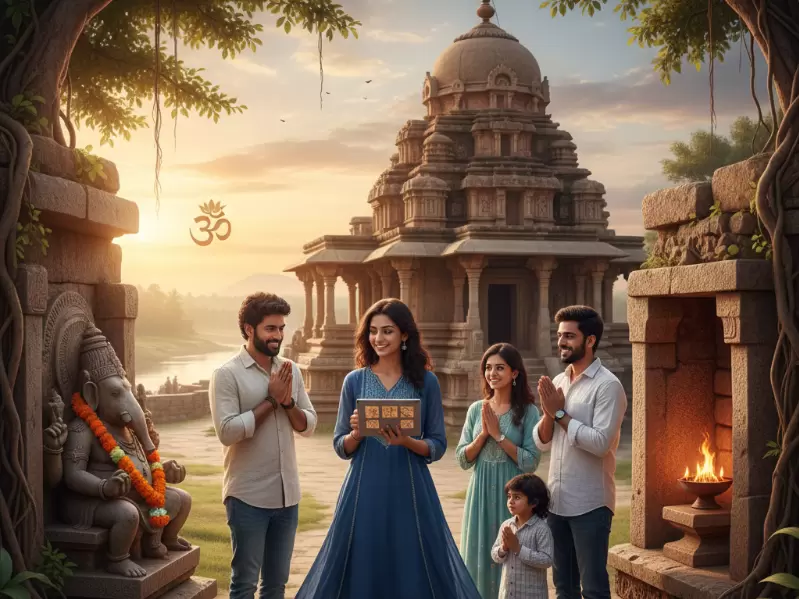 Representative image / AI generated
In today’s world, countries often talk proudly about their cultural and religious roots. But there’s a clear unfairness in how people react. When U.S. Vice President JD Vance calls America a “Christian nation” and says we need to protect American jobs from cheaper workers from other countries, many see it as standing up for national values and control.
This fits into the “America First” idea, focusing on history and protecting the economy, and it doesn’t get much criticism from around the world. But when India talks about its ancient Hindu culture as the heart of its identity, people quickly call it “majority rule” or harmful nationalism. This double standard stops India — the home of Hinduism and its main protector — from having the basic right to define itself, while other countries do the same without problems.
As the birthplace of a welcoming dharma, India has every reason to hold onto its Hindu identity, building a society where all religions can grow thanks to built-in tolerance.
India: The only protector of Hindu culture
Hinduism is one of the oldest religions that has lasted without breaks. It started in India, from the Indus Valley Civilization about 4,500 to 5,000 years before Christ, through the time of the Vedas, creating a mix of ideas, ceremonies and rules that shaped the area’s past. Unlike Christianity, which is big in more than 100 countries, or Islam in almost 50, Hinduism stays closely tied to where it began. India is home to more than 94% of all Hindus in the world, with about 80% of its 1.4 billion people calling themselves Hindu. This makes it much bigger and more important than smaller Hindu groups in Nepal or Mauritius.
This special role means India must keep Hindu culture alive, since no other big country does the same for it. If India weakens this identity because of ideas like strict separation of religion and state or world pressures, it could lose key teachings like the Vedas, karma and moksha. History shows how easy this could happen: British rulers during colonial times broke Hinduism apart to make it easier to control, and attacks and divisions hurt it more. After gaining freedom, India’s laws chose to be neutral on religion, but this was to protect smaller groups in a mostly Hindu country, not to wipe out its roots. Today, claiming this Hindu identity is about taking back what’s been lost — it’s key for a country that has survived hundreds of years of outside control. Stopping India from doing this is like taking away its cultural freedom, especially when the West does similar things without much complaint.
The welcoming nature of Hindu dharma: Freedom for everyone
India’s Hindu identity comes from dharma’s natural openness, which gives freedom to all beliefs. It doesn’t push one truth like some single-god religions do. Instead, it follows “sarva dharma sambhava” — equal respect for every way to reach the divine. The Rig Veda says, “Ekam sat vipra bahudha vadanti” (Truth is one, but wise people call it by many names), showing a way of thinking that accepts differences without forcing change.
This openness isn’t just words — it’s shown in history. Long ago, India took in ideas from Greek, Persian and Central Asian people, adding them to its own culture without destroying them. In the Middle Ages, Hindu kings gave safe homes to Zoroastrians (called Parsis) escaping from Persia, letting them follow their religion fully. Jewish groups in Kerala lived well for thousands of years without the attacks they faced in Europe, and early Christians from the first century lived side by side with Hindus without trouble. Leaders like Swami Vivekananda later shared this welcoming idea with the world.
In modern India, this openness is part of laws and daily life that protect non-Hindus. Hinduism doesn’t push hard to convert people, seeing belief as something from past actions, not campaigns. Studies show Indians from all religions value being tolerant, wanting respect for other faiths while keeping their own. Dharma’s basic nature creates a system where Muslims, Christians, Sikhs, Buddhists and more can worship freely, unlike strict religious countries that limit smaller groups. So, India’s Hindu focus actually helps its diverse society — a right it should claim to honor its past.
Showing the unfairness: Protecting India’s cultural right
People who criticize India’s Hindu-focused rules, like the Citizenship Amendment Act (CAA) and laws against forced changes in religion, say they push aside smaller groups and point to fights as proof that neutrality is fading. But this misses the full story and shows hypocrisy. The CAA helps non-Muslims escaping harm in nearby Muslim countries, just like U.S. rules that favor certain religious refugees, but without the same anger.
India’s “neutral” laws control Hindu temples but leave mosques and churches alone, creating unfairness from old colonial and Mughal thefts. Supporters want to fix these past wrongs. Western news boosts stories of problems in India but ignores similar ones in Christian or Muslim places, like laws against insulting religion in Pakistan or limits in Europe. This unfair focus comes from power differences: As a growing non-Western country, India’s strong identity challenges the usual world rules, bringing extra blame.
History proves the Hindu way doesn’t lead to shutting people out; rare fights, though bad, don’t define thousands of years of openness. Looking at U.S. Christian nationalism — like Vance’s talk on protecting jobs — shows the joke: It’s good there but bad here. India needs to push back and claim its Hindu right for true independence.
Wrapping up: An example of tolerant cultural pride
India’s hold on its Hindu cultural identity is a strong step forward, not a step back into majority control. As the only main keeper of a religion that pushes openness, it shows how dharma can bring people together in differences with freedoms for all. The world must stop the double standards; saying no to this right pushes away billions. In dharma’s heart — a place where different roads lead to the same truth — is the plan for freedom that includes everyone, making India’s choice right.
(The views and opinions expressed in this article are those of the author and do not necessarily reflect the official policy or position of New India Abroad.)
Leave A Comment
Related





ADVERTISEMENT

ADVERTISEMENT
E Paper
Video

Comments
S D
2025-12-24 00:00:00
Excellent article which hits the nail on the head. Another challenge that India faces is the decreasing birth rate of Hindus and the influx of Muslims from neighboring countries. Unless the BJP secures the borders it will only be a matter of time when Hindus become a minority in their own country. And we will see the decline of Hindu Dharma in the country which gave birth to Hindu Dharma. How ironical will that be.