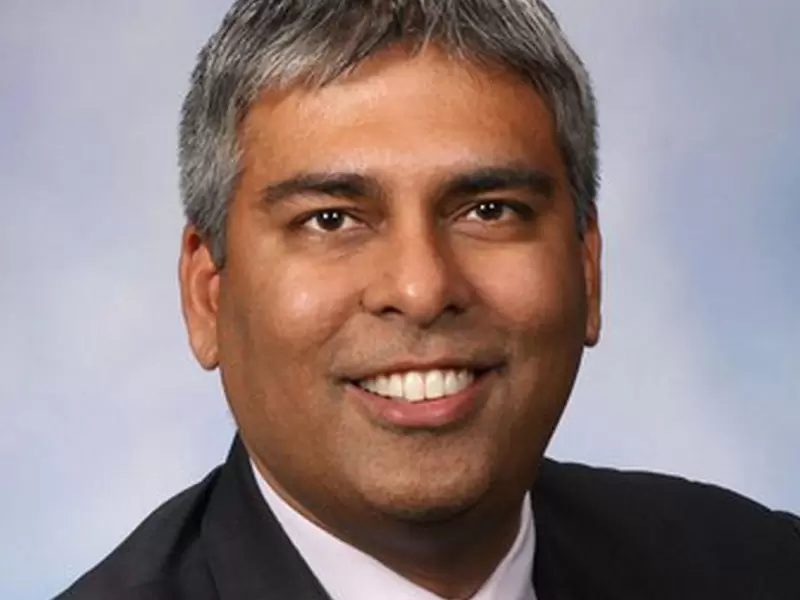
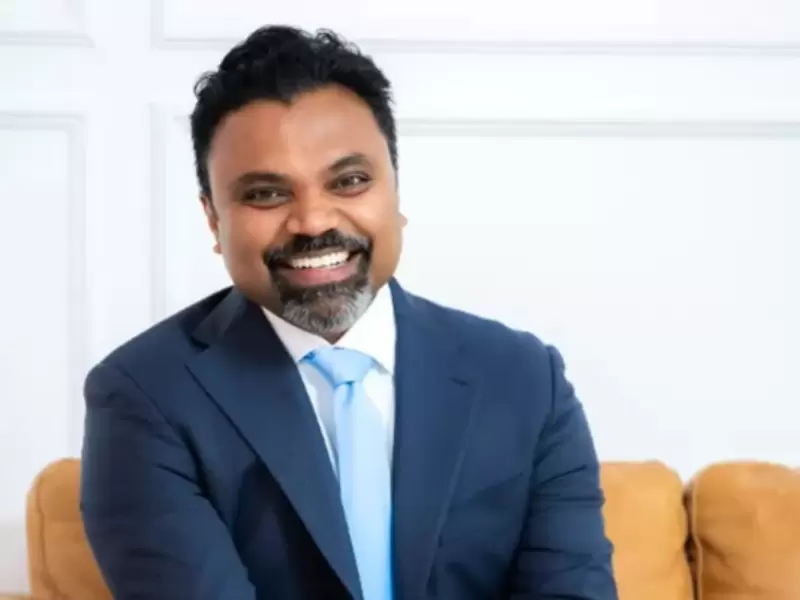
State Senator Sam Singh / Courtesy photo
Democratic Michigan State Senator Sam Singh’s career began in the nonprofit sector, a foundation that proved vital when he transitioned into public life. In 1995, at just 24 years old, he ran for the East Lansing City Council. “The nonprofit was a statewide group focused on strengthening volunteerism. That experience was incredibly helpful during my first campaign,” Singh recollects. By applying his expertise in volunteer management, he successfully mobilized his constituents.
The son of Indian immigrants who moved to Michigan in the 1960s in pursuit of the American Dream, Singh made history as the first Indian American elected to the East Lansing City Council. At the time, Indian American representation in Michigan politics was scarce. “There were only one or two others in elected office, though several served within the state bureaucracy,” he notes. Today, the landscape has shifted dramatically. Since 2010, Michigan has seen a surge of Indian Americans running for school boards, city councils, and college boards of trustees. After years of being the sole Indian American in the state legislature, a few others too have been elected. Michigan has also elected its first Indian American Congressional representative Shri Thanedar.
Singh, who served as Mayor of East Lansing from 2005 to 2007, views the role of mayor as a city’s ‘CEO’. “The mayor is the chief executive and the face of the community, whether they are coordinating with other local governments or recruiting new businesses,” Singh explains. He sees immense potential for Zohran Mamdani as he begins his term as Mayor of New York City. Unlike smaller municipalities, Singh notes that mayors of major hubs like New York or Detroit manage massive staffs and hold final executive authority. “In a city like New York, the mayor is a full-time determinator of decisions. Their budgets can exceed those of some small states, giving them significant sway on an international stage.”
ALSO READ: The rise of Indian Americans as mayors
In contrast, Singh describes his experience in a smaller city as a partnership between the mayor and a city manager. While Singh served on the city council and as mayor, he maintained his professional career as the President and CEO of the Michigan Nonprofit Association. “We functioned like a Chamber of Commerce for charities,” he recalls. “Advocating for nonprofits and providing technical assistance gave me a robust perspective that I brought directly to local government.”
He served as the first Indian American state representative in Michigan, and minority floor leader, between 2013 and 2019. In 2022, Singh became the first Indian American elected to the state senate, where he serves as majority floor leader. East Lansing, where he lives and which he represents, has a very small Indian American community. “There are several Indian Americans attached to the Michigan State University which is housed up here in my district. The community there was involved in my campaign and I think they were very proud to see an Indian American running for the state legislature and senate roles,” he says. While Indian Americans helped him raise funds for his election, they form a very small percentage of the voting bloc.
“But it was definitely a group of people who talked to their neighbours and coworkers about me. I also went to other parts of the state where there were larger populations of Indian Americans and raised money in those areas because they were proud to see somebody like them coming out and running for public office.” Indian Americans are a significant and growing community in Michigan, especially in the south-east part of the state which includes cities such as Detroit, Troy and Canton.
Senator Singh identifies affordability as the paramount concern for Michigan residents. “For Democrats, and for me specifically, the focus is affordability—whether it’s housing, healthcare, or groceries,” he explains. He attributes the sharp rise in living costs to a combination of inflation and what he describes as the “reckless policies” of the Trump administration, particularly regarding tariffs.
Furthermore, Singh points to the rollback of the Affordable Care Act as a primary driver of skyrocketing healthcare costs. “Many Michigan residents have seen their health insurance premiums double or triple,” he says. “We are facing a crisis, and people are rightfully upset.”
Viewing Michigan as a microcosm of the national economic climate, Singh is championing workforce and economic development policies. His goal is to cultivate a diverse business landscape that offers high-paying jobs. “Michigan is the heart of the automotive industry, and our universities are leaders in healthcare and advanced manufacturing,” he notes. “I want to scale those industries right here.” In the State Senate, Singh is also bridging economic development with energy policy, advocating for a transition to green energy to both reduce carbon emissions and lower utility costs for everyday Michiganders.
Singh, who returned to India this past holiday season, maintains a deep connection to his heritage. “I manage to get out to India every few years,” he says. “I have several cousins and uncles there I enjoy visiting. When I was young, my parents were the only members of their family in the United States, so we travelled back every couple of years to see their siblings. Now, with work and family obligations, it’s harder to get back as often as I’d like.”
The December trip was especially significant for his eight-year-old son, Remy, who was visiting India for the first time. While Singh’s parents, Abha and Karan, were born in Uttar Pradesh—his mother in Agra and his father near Meerut—much of the family has since relocated. “A lot of the family has migrated to New Delhi, which is our central hub now,” Singh explains. “But UP is where our roots are.”
Discover more at New India Abroad.
ADVERTISEMENT
ADVERTISEMENT

Comments
Start the conversation
Become a member of New India Abroad to start commenting.
Sign Up Now
Already have an account? Login