ADVERTISEMENT
ADVERTISEMENT



Indian American community hailed as economic ‘bridge’ amid sharp immigration concerns
Dhruva Jaishankar said Indian-origin professionals add over $200 billion and support 830,000 US jobs.
-
 IANS
IANS - Thu, 11, Dec 2025
- 00:30 EST
- 132
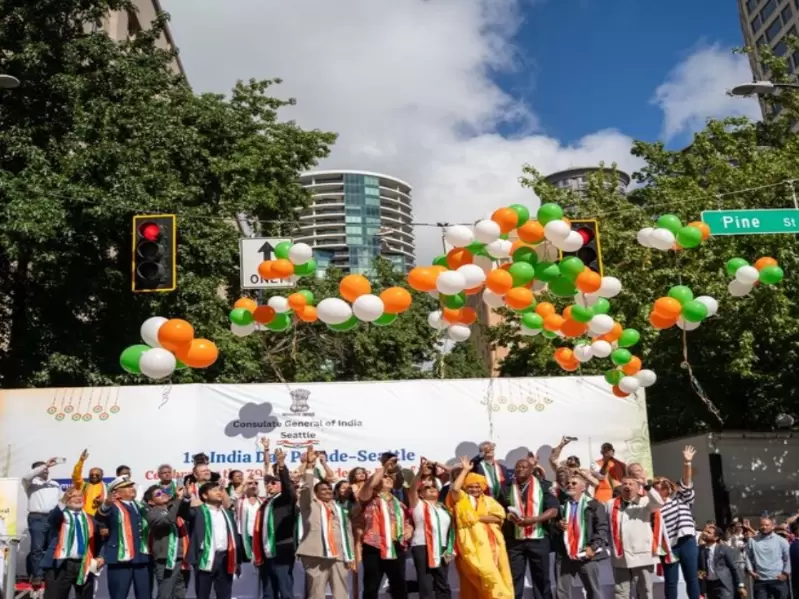 File Photo / IANS
The vital role of Indian Americans in strengthening the US–India partnership took center stage during a congressional hearing, even as lawmakers sharply criticized the Trump administration's policies affecting visas, immigration pathways and bilateral goodwill.
During the House Foreign Affairs Subcommittee on South and Central Asia's hearing on the US–India strategic partnership on Dec. 10 (local time), Committee Chairman Bill Huizenga said more than "5 million Indian Americans contribute to the American economy… They serve in our military, they lead major companies," describing the diaspora as "a living bridge of shared values, democratic principles and economic opportunity."
He submitted a letter from the Indo-American Chamber of Commerce praising the hearing and reinforcing that the relationship is "not just a diplomatic one, but rather a living bridge."
ALSO READ: US-India ties face ‘political standstill,’ expert warns
Dhruva Jaishankar from ORF America provided detailed economic metrics, noting that Indian-origin investors, entrepreneurs, students, doctors and researchers contribute "over $200 billion to the US economy" and support "at least 830,000 American jobs in every one of the 50 states and territories."
But the hearing also delivered blunt warnings. Rep. Sydney Kamlager-Dove condemned the administration's imposition of a $100,000 fee on H-1B visas — "70 per cent of which are held by Indians" — calling it "a rebuke of the incredible contributions Indians have made" to America's scientific and economic success. She said such measures "attack the people-to-people ties between the US and India."
Rep. Pramila Jayapal, the first Indian American woman in the US Congress, told the panel that legal immigration pathways are being "shut down," recalling her own journey on a student visa and later an H-1B. She said she is hearing from constituents about rising "anti-Indian hate," adding that "Indian Americans are extremely important to our economy, an integral part of our society… leading cutting-edge research to save lives."
Jayapal warned that tariffs and visa restrictions could "push India closer" to forums like BRICS and the SCO. She said Indian businesses in her state report that the tariff increases represent "the greatest threat to their business in over 120 years."
Sameer Lalwani told lawmakers that hostility toward Indian students, technologists and scientists could harm US innovation itself. "I would worry a little bit about the deterrence of students, scientists, and Indian businesses… that we have encountered on our own technological prowess," he said.
The testimony made clear that beyond defense and geopolitics, the Indian American community remains one of the strongest pillars of bilateral cooperation — and one of the most vulnerable to political decisions in Washington.
Leave A Comment
Related


ADVERTISEMENT

ADVERTISEMENT
E Paper
Video

Comments
Start the conversation
Become a member of New India Abroad to start commenting.
Sign Up Now
Already have an account? Login