ADVERTISEMENT
ADVERTISEMENT



Trump urges Senate to pass bill ending daylight saving time
President says Congress should eliminate seasonal clock changes across the United States.
-
 IANS
IANS - Tue, 28, Jul 2026
- 05:44 EDT
- 21
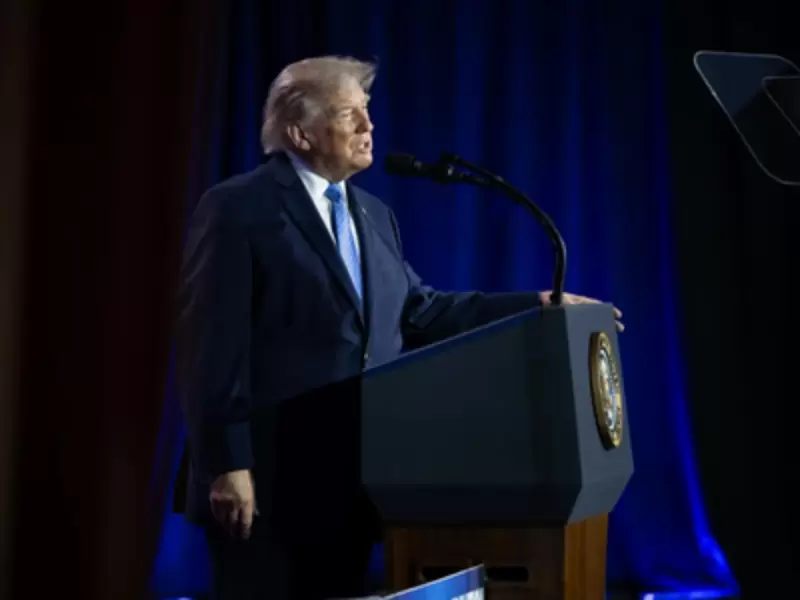
 President Trump / Xinhua/Ting Shen/IANS
President Donald Trump has renewed his call to end daylight saving time, urging the U.S. Senate to pass legislation that would eliminate the twice-yearly clock changes.
Speaking to workers at the General Motors Milford Proving Ground in Michigan on Monday, Trump said the House of Representatives had already approved legislation on the issue and expressed hope that the Senate would act next.
Also read: Indian CG Ghosh lauds Odia diaspora at Minneapolis event
"And, by the way, speaking of that, let's get rid of daylight saving time stuff, OK?" Trump said.
"We have a bill in. Hopefully, the Senate is going to improve that one. The House approved it, and we're going to get rid of that," he added.
Trump raised the issue while recounting a story about his father, who he said considered receiving a new Cadillac every two years a sign of luxury.
"And he got, every two years, like his, you could count on it. You could set your clocks by it," Trump said before shifting to the topic of daylight saving time.
He described the abrupt transition between subjects as part of his speaking style.
"You know, it's called the weave, right?" Trump said. "I go from — we always get back to the right subject."
The president did not provide details about the legislation or clarify whether he supports making standard time or daylight saving time permanent.
Trump then returned to discussing automobiles, recalling that his father had modified his Cadillac so it could be driven either by himself or by a chauffeur.
"He could drive it himself, or he could have somebody else but he could also drive it himself," Trump said. "Did you ever hear of that? This could be a new concept for a car."
Most of the United States changes its clocks twice a year, moving them forward in the spring and back in the autumn. Supporters of ending the practice argue that the seasonal changes disrupt sleep patterns, travel and business schedules, while debate continues over whether permanent standard time or permanent daylight saving time would be preferable.
Any change to the current system would require legislation to pass both chambers of Congress before being signed into law by the president.
If enacted, a permanent change to U.S. clock policy would also affect the seasonal time difference with India, as well as international flight schedules, financial markets and business communications between the two countries.
Discover more at New India Abroad.
Leave A Comment
Related






ADVERTISEMENT

ADVERTISEMENT
E Paper
Video

Comments
Start the conversation
Become a member of New India Abroad to start commenting.
Sign Up Now
Already have an account? Login