ADVERTISEMENT
ADVERTISEMENT



India-US ties stronger despite differences: envoy
Khampa said the past year had demonstrated the resilience of the India-U.S. relationship.
-
1759953093.png) Staff Reporter
Staff Reporter - Wed, 24, Jun 2026
- 00:27 EDT
- 99
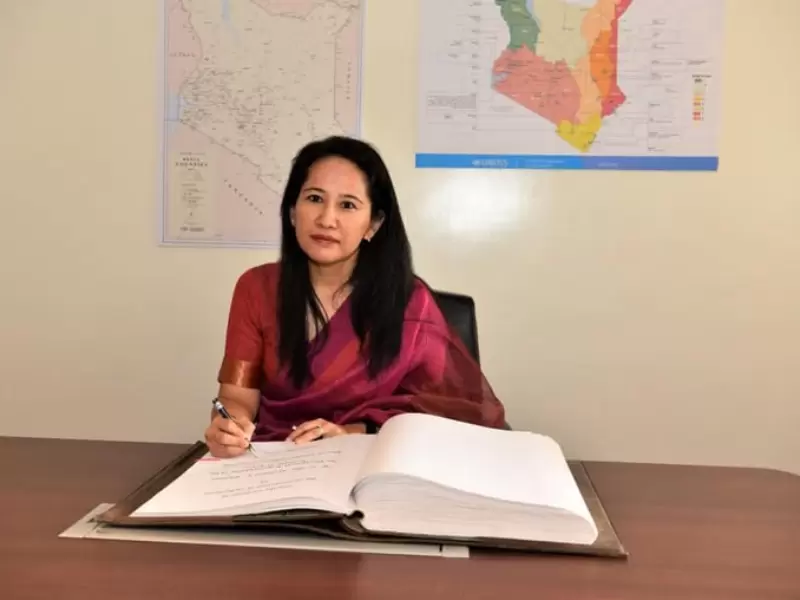 Namgya C. Khampa / Unofficial: Diplomats of India via Facebook
India's Deputy Chief of Mission in Washington, Namgya C. Khampa, said June 23 that India and the United States have built one of the defining strategic partnerships of the 21st century, arguing that the relationship continues to grow stronger despite occasional differences between the two countries.
Speaking at a Capitol Hill event organised by the Foundation for India and Indian Diaspora Studies (FIIDS), Khampa said the durability of the relationship stems from shared interests, expanding economic ties and growing cooperation in critical technologies, defence and regional security.
“The India US Partnership has been described as one of the most seminal and defining partnerships of the 21st century,” Khampa said.
“I think that that description is justified not because we are 100 percent aligned and agree on every issue, because we do not necessarily as is natural. But because the strategic logic underpinning the relationship has become stronger with each passing year.”
Her remarks came as Washington and New Delhi continue negotiations on a bilateral trade agreement and expand cooperation in emerging technologies, energy and defence.
Khampa said the past year had demonstrated the resilience of the relationship.
“The year that has gone by and what we've managed to build together over the last year shows us the resilience of the partnership,” she said.
She said differences occasionally arise between democracies, but noted that both governments have continued to advance cooperation across a broad range of sectors.
“What has held this together is the importance of the endeavor and the strength and resilience of the partnership that has been acquired over two decades of commitment and vision,” she said.
ALSO READ: US India relationship is the future: State Dept
Khampa pointed to the recent meeting between Prime Minister Narendra Modi and President Donald Trump as evidence of the commitment both leaders have shown toward strengthening bilateral ties.
“As you all know, they enjoy a warm friendship and a bond and a shared commitment to advancing the relationship,” she said.
She also welcomed Secretary of State Marco Rubio's recent visit to India, which included bilateral meetings and participation in a Quad foreign ministers' gathering.
The diplomat identified trade as one of the central pillars of the relationship and expressed optimism that ongoing negotiations would soon result in a bilateral trade agreement.
“The determination on both sides to conclude the bilateral trade agreement and to enlarge the opportunities for shared economic prosperity,” Khampa said.
She noted that an interim trade framework agreed earlier this year had established a foundation for broader economic cooperation.
“We remain optimistic we'll get there soon,” she said.
According to Khampa, the goal extends beyond addressing trade disputes.
“The objective is not just to remove irritants, but it is to build a stronger, a more deeper and more mutually beneficial and ambitious economic partnership that expands trade, that encourages investment and creates jobs,” she said.
Energy cooperation has emerged as another major growth area, she said.
“Energy has emerged, I think, as one of the most promising areas of bilateral cooperation,” Khampa said.
She noted that India's growing energy demand and America's energy resources create a natural opportunity for collaboration in crude oil, liquefied natural gas and civil nuclear energy.
Khampa said technology will likely define the next chapter of the relationship.
“Technology really is an area wherein the future of this partnership lies,” she said.
She highlighted cooperation in artificial intelligence, semiconductors, advanced computing, quantum communications and other emerging technologies.
India and the United States, she said, are increasingly focused on creating more resilient and diversified supply chains.
“There is a shared recognition between both governments that the pathway to diversification lies through stronger cooperation between India and the United States,” Khampa said.
Defence and security cooperation also continue to deepen.
Khampa said bilateral cooperation now spans military exercises, maritime security, intelligence sharing, critical technologies and counterterrorism.
“We did conclude a 10-year blueprint for what defense cooperation should look like,” she said.
She added that the framework provides a basis for expanding interoperability and collaboration across the defence sector.
The diplomat also highlighted cooperation through the Quad grouping of India, the United States, Japan and Australia.
“We had a very productive meeting of the Quad foreign ministers during Secretary Rubio's visit to India,” she said.
Despite discussing trade, technology and security, Khampa repeatedly returned to what she described as the most important element of the relationship — the people.
“Ultimately I think the strength of this partnership rests not just on governments and what the two governments are doing, but on our people,” she said.
She credited the more than five million Indian Americans living in the United States with helping transform bilateral ties into a broader societal partnership.
“The people are the ultimate custodians of this partnership,” Khampa said.
She praised the diaspora's contributions across business, technology, medicine, academia, entrepreneurship and public service.
“Your voices matter, your perspective matters,” she told the audience.
Khampa concluded by thanking members of Congress from both parties for their continued support of stronger ties with India.
“We continue to count on congressional leadership and support as we take this relationship to new heights,” she said.
India and the United States have transformed their relationship over the past two decades from a largely transactional engagement into a broad strategic partnership spanning trade, defence, technology, energy and regional security. The relationship today enjoys strong bipartisan support in Washington and sustained backing from successive governments in New Delhi.
Discover more at New India Abroad
Related

ADVERTISEMENT

ADVERTISEMENT
E Paper
Video

Comments
Start the conversation
Become a member of New India Abroad to start commenting.
Sign Up Now
Already have an account? Login