ADVERTISEMENT
ADVERTISEMENT



Pichai’s Stanford speech interrupted by Project Nimbus backlash
More than 100 graduates reportedly walked out of Stanford University's commencement ceremony as Sundar Pichai began his address.
-
 Ankita Baidya
 - Mon, 15, Jun 2026
- 05:04 EDT
- 28
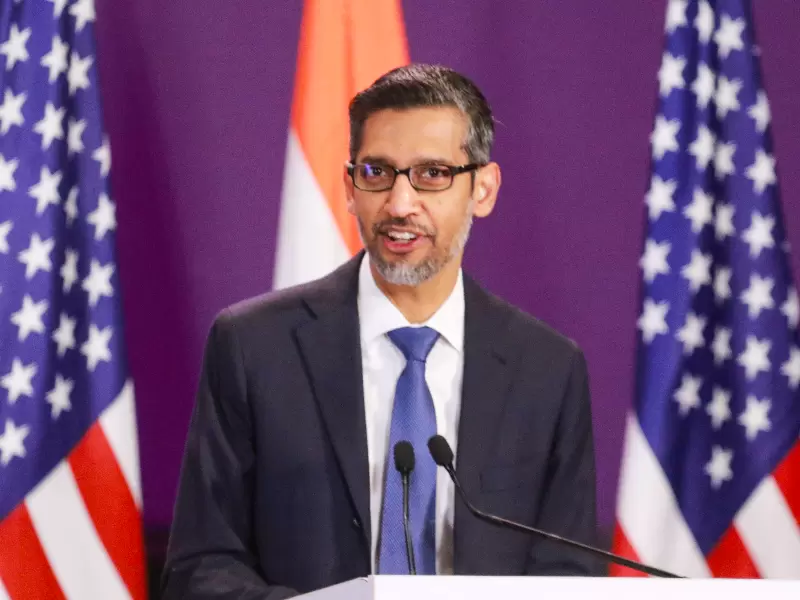 Google CEO Sundar Pichai delivers Stanford University's 2026 commencement address. / IANS/Qamar Sibtain
Google and Alphabet CEO Sundar Pichai faced a student walkout during Stanford University's 135th commencement ceremony on June 14, as protesters used the high-profile event to criticize Google's cloud-computing contract with the Israeli government.
Pichai, an Indian-American technology leader and Stanford alumnus, delivered the keynote address to graduating students at Stanford Stadium. However, shortly after he began speaking, more than 100 graduates reportedly walked out while chanting pro-Palestinian slogans and waving Palestinian flags, according to multiple media reports.
Also Read: Google wants its search bar to act on your behalf with AI
The demonstration was organized by student activists who have opposed Project Nimbus, the $1.2 billion cloud-computing agreement between Google, Amazon and the Israeli government. Protesters have argued that the contract enables Israeli government operations amid the ongoing conflict in Gaza.
The protest reflects a broader debate that has followed Google in recent years. In 2024, the company dismissed more than two dozen employees who participated in workplace demonstrations against Project Nimbus, drawing national attention and fueling the "No Tech for Apartheid" campaign
Well over 100 Stanford students walked out of Google CEO Sundar Pichai’s commencement speech at Stanford just now, chanting “Free, free Palestine.” Google has a cloud contract with the Israeli government. Lots of boos and cries of “shame on you” as well pic.twitter.com/2dIqs1SBvi
— Erin Woo (@erinkwoo) June 14, 2026
Despite the disruption, Pichai continued with his remarks, delivering a speech that focused largely on personal growth, optimism and finding meaningful work rather than on artificial intelligence, the technology driving much of Google's current business strategy.
Pichai arrived at Stanford from Chennai in 1993 and earned a master's degree in materials science and engineering in 1995 before going on to lead one of the world's most influential technology companies.
Reflecting on his own journey, Pichai recalled his early days in California and described how access to computers at Stanford helped shape his belief in technology as a force for human progress.
He encouraged graduates to embrace what he called "California optimism," pursue work that excites them, and remain open to unexpected opportunities. At one point, he joked that artificial intelligence was "the last two letters" of his surname, drawing laughter from the audience.
Stanford President Jonathan Levin introduced Pichai as a leader whose work has helped shape the modern technological landscape and praised his commitment to innovation.
BREAKING NEWS: Stanford graduates walk out of Google CEO Sundar Pichai's speech to protest Indian immigration. "It has gotten too much even for me" one student, Mahesh Patel stated, "I came here to get away from these people" pic.twitter.com/KoLiGTLjA5
— True Discipline (@TruueDiscipline) June 14, 2026
The walkout added Stanford to a growing list of universities where commencement ceremonies have become venues for political protest, particularly around issues related to the Israel-Gaza conflict and the role of major technology companies.
While the demonstration drew headlines, Pichai's appearance also highlighted the continuing influence of Indian-origin leaders in global technology, with the Google chief returning to the university that helped launch his path from Chennai to Silicon Valley.
Discover more at New India Abroad.
Related






ADVERTISEMENT

ADVERTISEMENT
E Paper
Video

Comments
Start the conversation
Become a member of New India Abroad to start commenting.
Sign Up Now
Already have an account? Login