ADVERTISEMENT

ADVERTISEMENT



Indian Army to showcase unique animal force at Republic Day parade
This year’s Republic Day parade will not only celebrate military might but also showcase sustainable and innovative methods that support soldiers in some of the world’s toughest conditions.
-
 IANS
IANS - Tue, 30, Dec 2025
- 15:37 EST
- 11
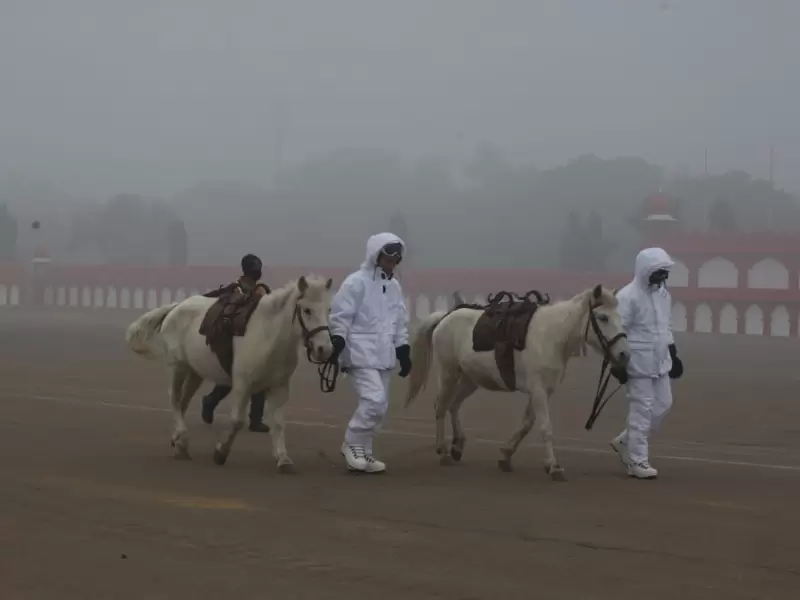 India's Republic Day Parade / Photo: IANS
The Indian Army, while rapidly modernising with cutting-edge technology, continues to strengthen its capabilities by blending tradition with innovation.
This unique approach will be on full display at the upcoming Republic Day parade, where, for the first time, double-humped Bactrian camels and Zanskari ponies will march along Kartavya Path, symbolising resilience and adaptability in extreme terrains.
Also Read: India approves lease of two more MQ-9 drones for Navy, boosting U.S. defence cooperation
The Remount Veterinary Corps (RVC) contingent will be one of the main attractions of the parade. The contingent will be led by a woman officer which will add to the significance of the parade. This will mark another milestone in the Indian Army’s evolving leadership landscape.
For the first time, double-humped Bactrian camels will participate in the Republic Day parade. These camels have been inducted into the Indian Army for last-mile logistics delivery and patrol duties in the cold desert of eastern Ladakh, close to the Line of Actual Control (LAC).
Over the past two years, Bactrian camels have proven to be invaluable in some of the harshest operational environments. They can comfortably operate at altitudes ranging from 15,000 to 18,000 feet, carry loads of 150–200 kilograms, and function efficiently in temperatures as low as minus 20 degrees Celsius.
Apart from logistics, they are also used for long-range patrols in terrain inaccessible to vehicles.
In the initial phase, more than a dozen Bactrian camels have already been inducted into service. During the parade, two Bactrian camels will be seen marching on Kartavya Path—possibly the first time these animals will be seen in Delhi.
Traditionally found in Mongolia and Central Asia, these camels are believed to have reached Ladakh centuries ago via the ancient Silk Route and are now bred in Hunder village of the Nubra Valley.
Alongside the camels, four Zanskari ponies (mules) will also march during the parade. These ponies, which are widely used by local communities in Ladakh, have gradually been inducted into the Army over the last two years due to their ‘exceptional endurance’.
These ponies can carry over 70 kilograms of load, operate smoothly at altitudes of up to 18,000 feet, and survive temperatures as low as minus 40 degrees Celsius.
The role of the ponies has been crucial in maintaining supply lines in remote and rugged areas. Normally, mechanised transport is not feasible in such areas, so these animals are useful there.
According to reports, the DRDO’s Defence Institute of High Altitude Research (DIHAR) in Leh, in collaboration with the Army’s Remount Veterinary Corps, conducted extensive research on both Bactrian camels and Zanskari ponies before formally inducting them into military service.
Apart from this, the RVC contingent will also showcase a unique blend of traditional and modern warfare capabilities. To counter enemy drones, trained eagles have been introduced as part of an innovative anti-drone strategy. These birds are capable of reconnaissance and can intercept small drones mid-air. Four such eagles will be on display during the Republic Day parade.
In fact, these eagles had been showcased for the first time during the India–US joint military exercise “Yudh Abhyas” in 2022. This exercise was held in Auli, Uttarakhand.
Similarly, the Army Dog Squad will also participate in the parade. Around 10 military dogs, including some Indian breeds, will participate. These breeds include Mudhol Hound, Rampur Hound, Chippiparai, Kombai, and Rajapalayam. Three conventional foreign breeds will also be there.
This year’s Republic Day parade will not only celebrate military might but also showcase sustainable and innovative methods that support soldiers in some of the world’s toughest conditions.
Related
.png)









ADVERTISEMENT
ADVERTISEMENT
E Paper
Video

Comments
Start the conversation
Become a member of New India Abroad to start commenting.
Sign Up Now
Already have an account? Login