ADVERTISEMENT
ADVERTISEMENT



India key to America's future, says Senator Marshall
Marshall told the audience that his support for stronger India-US ties stems not only from policy considerations but also from personal relationships with Indian Americans in Kansas.
-
1759953093.png) Staff Reporter
Staff Reporter - Wed, 24, Jun 2026
- 04:37 EDT
- 30
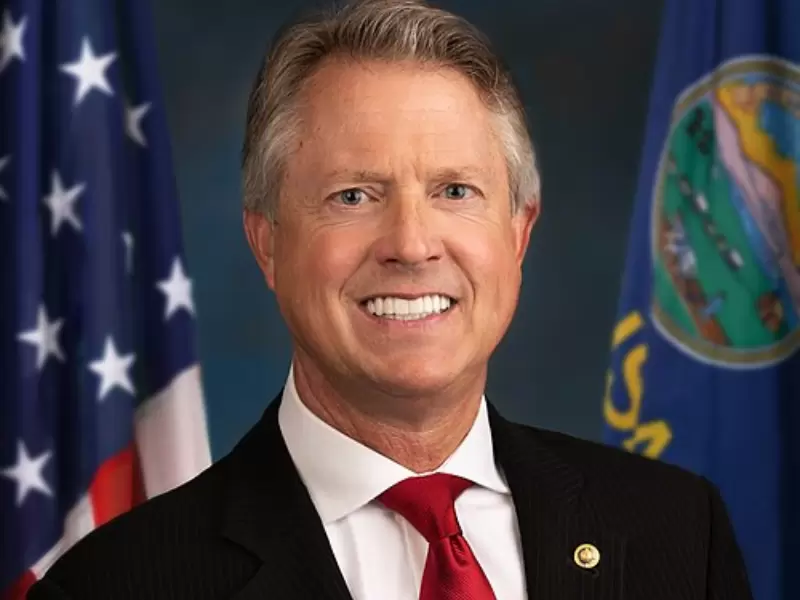 Senator Roger Marshall / Wikipedia
Senator Roger Marshall from Kansas said June 23 that India is emerging as one of America's most important strategic partners and argued that Washington must strengthen economic, security and people-to-people ties with New Delhi as China faces mounting demographic and economic challenges.
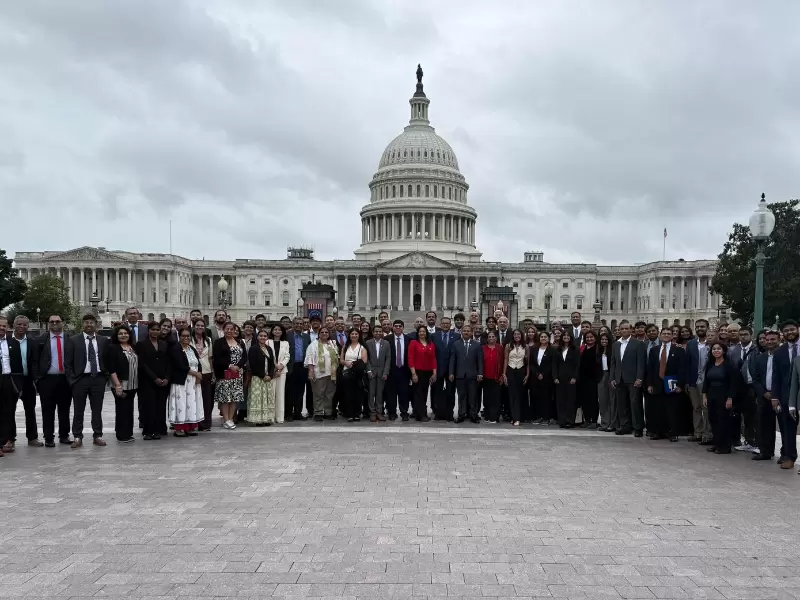
Speaking at a Capitol Hill event organised by the Foundation for India and Indian Diaspora Studies (FIIDS), the Kansas Republican praised India's economic rise, highlighted the contributions of Indian Americans and called for reforms to legal immigration and bilateral trade.
“India is young, growing, democratic and partnered with us,” Marshall said.
“The 21st century relationship that matters most for America isn't the one we're managing. It's the one we're building.”
Marshall told the audience that his support for stronger India-US ties stems not only from policy considerations but also from personal relationships with Indian Americans in Kansas.
ALSO READ: Hindus, Jews unite against rising hate in US
“I'm here today because I wanna help build that friendship,” he said.
The senator devoted much of his speech to highlighting the achievements of the Indian-American community.
“Indian Americans are 1.5% of the American population,” Marshall said.
“But they pay five to 6% of all our federal income taxes.”
He cited Indian-American leadership in business, medicine and entrepreneurship, noting that the community leads major corporations, helps drive innovation and plays a significant role in the US economy.
“You're the most educated, highest earning immigrant community in the history of the United States,” he said.
Marshall described Indian Americans as a powerful example of successful legal immigration.
“Every time someone in Washington questions whether legal immigration works, you're the answer,” he said.
“You're not the argument, you're the answer.”
Turning to India, Marshall said the country's economic trajectory places it among the world's most important emerging powers.
“India just overtook Japan to become the world's fourth largest economy,” he said.
He cited projections that India could become the world's third-largest economy within the next few years and eventually rise to second place globally.
Marshall contrasted India's demographic profile with China's.
“Sixty-five percent of India's population is under the age of 35,” he said.
China, by contrast, faces an ageing population and declining workforce, he argued.
“In my humble opinion, China has peaked out and they're on their way down.”
Marshall said India possesses characteristics that make it a natural partner for the United States.
“India is a democracy, English speaking, a Quad security partner aligned with us on China, aligned with us on the Indo-Pacific, home to the values that we share,” he said.
“This is not a country we need to convince to be our partner. They already are.”
At the same time, Marshall acknowledged that economic ties have not yet reached their full potential.
He noted that bilateral trade between the two countries has grown substantially but remains well below what should be expected between two of the world's largest democracies.
“There's $200 billion of trade between the two countries,” he said.
“It's a fraction of what it should be.”
Marshall pointed specifically to barriers affecting agricultural exports from states such as Kansas.
“India still imposes a 50% tariff on many of our grains,” he said.
He argued that reducing trade barriers could significantly increase exports while benefiting consumers in both countries.
The senator also pledged to continue advocating for immigration reforms affecting highly skilled Indian workers.
He described the employment-based green card backlog as one of the country's major immigration failures.
“It tells the world's most talented, hardest working immigrant community that the line is 70 years long,” Marshall said.
“You deserve better.”
Marshall said he would continue working to address country-based caps and improve legal immigration pathways for skilled workers.
“Fixing this remains one of my top priorities,” he said.
He argued that stronger ties with India would benefit both countries economically and strategically.
“American farmers win. Indian consumers win,” Marshall said.
“And the strategic balance of the 21st century tilts towards democracy and away from authoritarianism.”
Marshall concluded by describing India and the United States as nations connected by common values and shared aspirations.
“We are two peoples who believe that family, hard work, education and faith are the building blocks of a good life,” he said.
“That's not a trade relationship. That's a kinship.”
The senator's remarks reflected a broader bipartisan consensus evident throughout the Capitol Hill gathering, where lawmakers from both parties described India as an increasingly important strategic partner in the Indo-Pacific and a critical contributor to global economic growth.
Discover more at New India Abroad
Related


ADVERTISEMENT

ADVERTISEMENT
E Paper
Video

Comments
Start the conversation
Become a member of New India Abroad to start commenting.
Sign Up Now
Already have an account? Login