ADVERTISEMENT

ADVERTISEMENT



ICCR Alumni: Global ambassadors of India’s cultural diplomacy
From Sri Lanka to Malawi and Botswana, leaders, scholars and artists educated in India are strengthening global cultural ties
-
 Amit Deshmukh
 - Sat, 04, Apr 2026
- 13:14 EDT
- 24
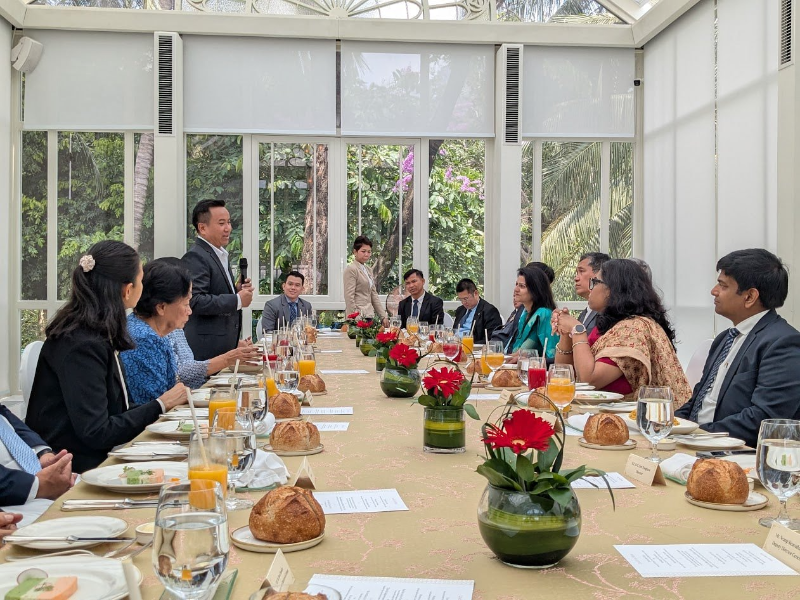 ICCR Alumni get together / X/@ritthyou
For more than seven decades, the Indian Council for Cultural Relations (ICCR) has played a vital role in strengthening India’s cultural diplomacy by welcoming thousands of international students to study in Indian universities. Through its scholarship programmes, ICCR has built an influential global network of alumni who today contribute to leadership, governance, academia, arts, and cultural exchange across the world.
Established in 1950 under the vision and inspiration of Maulana Abul Kalam Azad, ICCR was conceived as a bridge between India and the rest of the world through cultural and educational engagement. Over the decades, the organisation’s scholarship initiatives have enabled students from more than 150 countries to experience India’s academic institutions, cultural traditions, democratic values and social diversity.
Also Read: The Case Against the USCIRF
For many international students, studying in India becomes more than an academic journey. It becomes a transformative cultural experience that shapes their perspectives and builds enduring bonds with the country. As these students return home and assume leadership roles in their societies, they often emerge as natural partners and advocates for closer ties with India.
Several ICCR alumni have risen to prominent positions in global politics and governance. Among them is Ranil Wickremesinghe, President of Sri Lanka and a former Prime Minister, who studied in India during his academic years. Another distinguished alumnus is Phandu Skelemani, former Foreign Minister of Botswana, who has been associated with ICCR’s academic exchange initiatives.
Africa, in particular, has seen a strong presence of ICCR alumni in public life. The late Bingu wa Mutharika, former President of Malawi, was associated with India during his academic engagement, and Malawi’s current Foreign Minister is also an ICCR scholar. These leaders exemplify how educational ties forged through ICCR have translated into long-standing diplomatic goodwill between India and partner countries.
ICCR alumni have also played significant roles in governance and public institutions in South Asia. Khil Raj Regmi, former Chairperson of the Council of Ministers (Prime Minister) and former Chief Justice of Nepal, has been associated with ICCR’s initiatives and participated in the organisation’s Distinguished Visitors Programme in 2015.
Similarly, Nepal’s young entrepreneur Diwesh Bothra, Founder and Chairperson of Nepal Franchise and JITO Youth–Nepal, participated in ICCR’s Gen-Next Democracy Programme in 2022, reflecting the organisation’s continued engagement with emerging global leaders.
Beyond politics and governance, ICCR alumni have achieved distinction in academia and higher education. Prof. Dr. Abraham Matoc Dhal, Vice-Chancellor of Dr. John Garang Memorial University of Science and Technology in South Sudan, represents the academic leadership that has emerged from ICCR’s educational exchange programmes. Another prominent academic figure is Asst. Prof. Kristina Dolinina, a distinguished ICCR alumna who has contributed significantly to research and teaching in her field.
The influence of ICCR alumni extends strongly into the cultural and artistic spheres as well. Faidros Kavallaris, a renowned Cypriot musician, composer and musicologist, is among the many artists whose academic journey in India has shaped their creative work and engagement with Indian culture. Likewise, Nepalese violinist and educator Yati Raj Adhikari studied performing arts in India under the ICCR General Scholarship Scheme, completing his Bachelor’s degree at Bhatkhande Music University between 2009 and 2012. Today, he continues to promote classical music and cultural exchange through his work.
These examples illustrate the remarkable diversity of ICCR’s alumni network — one that spans presidents, ministers, judges, academics, entrepreneurs, and artists across continents. Together, they form a vibrant global community connected not only by their academic experiences in India but also by shared cultural understanding and enduring friendships.
In an era when diplomacy increasingly depends on people-to-people engagement and cultural dialogue, the role of ICCR alumni has become even more significant. They serve as informal ambassadors of India’s soft power — individuals who carry with them memories of India’s pluralism, intellectual traditions and cultural richness.
As India continues to expand its global partnerships, the ICCR alumni network stands out as one of the most powerful pillars of its cultural diplomacy. The relationships built through education and cultural exchange often outlast political cycles and diplomatic negotiations, creating long-term goodwill and trust between nations.
More than seventy-five years after its founding, ICCR’s vision remains as relevant as ever. By investing in education, cultural exchange and international friendship, the organisation has nurtured generations of global leaders who continue to strengthen India’s cultural and diplomatic presence across the world.
Discover more at New India Abroad.
Related




ADVERTISEMENT

ADVERTISEMENT
E Paper
Video

Comments
Start the conversation
Become a member of New India Abroad to start commenting.
Sign Up Now
Already have an account? Login