ADVERTISEMENT
ADVERTISEMENT


Harvard hosts recital of Ramcharitmanas by Morari Bapu
The program includes a scholarly conference and the first Tulsi Jayanti observance outside India.
-
1759953093.png) Staff Reporter
Staff Reporter - Tue, 18, Aug 2026
- 17:02 EDT
- 34
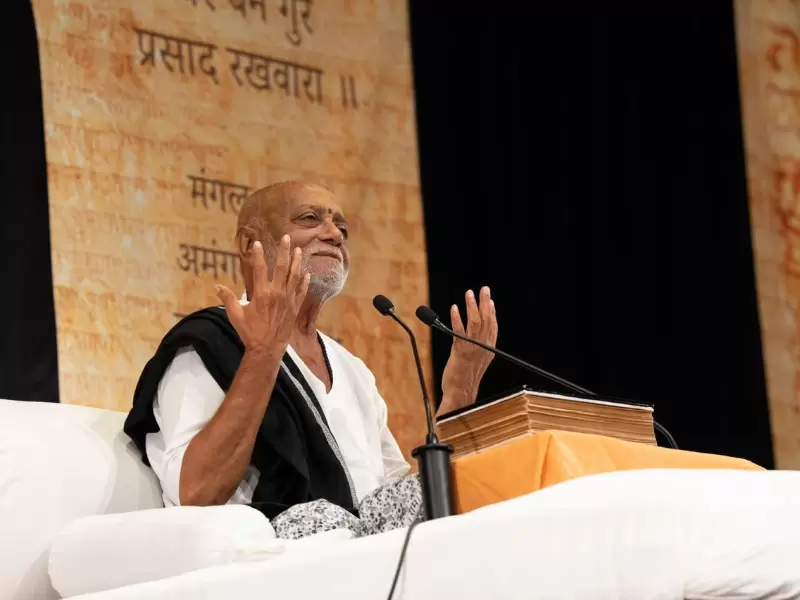 Morari Bapu / Handout
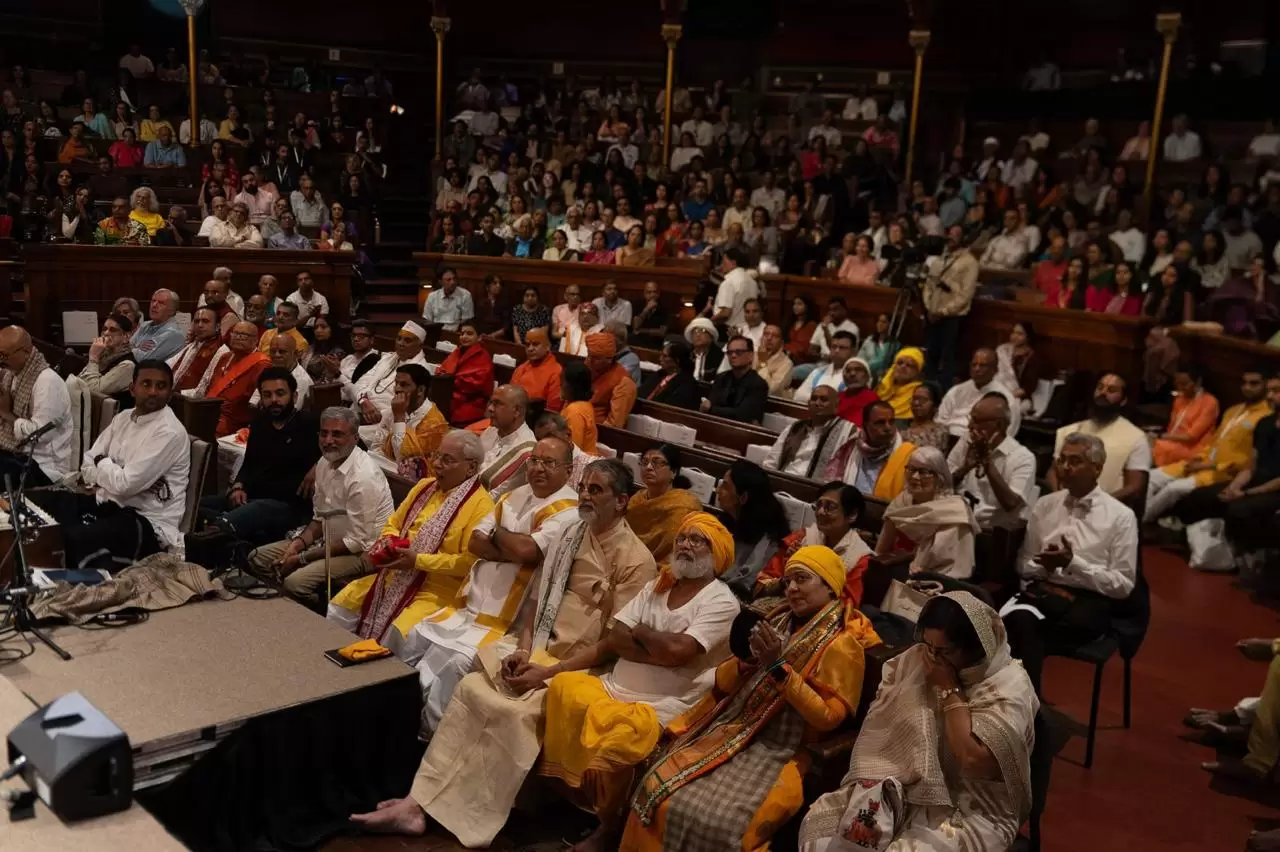
Harvard is hosting a nine-day recital of the Ramcharitmanas by Indian spiritual speaker Morari Bapu, with the program underway at Sanders Theatre through Aug. 23.
Titled “Manas Guru Prasad,” the recital began Aug. 15, coinciding with India’s 80th Independence Day. It has brought together religious scholars, Ramayana storytellers, musicians, and artists from India with academics and members of the Cambridge community.
Also Read: Threads & Bridges Festival explores Indian American history in Virginia
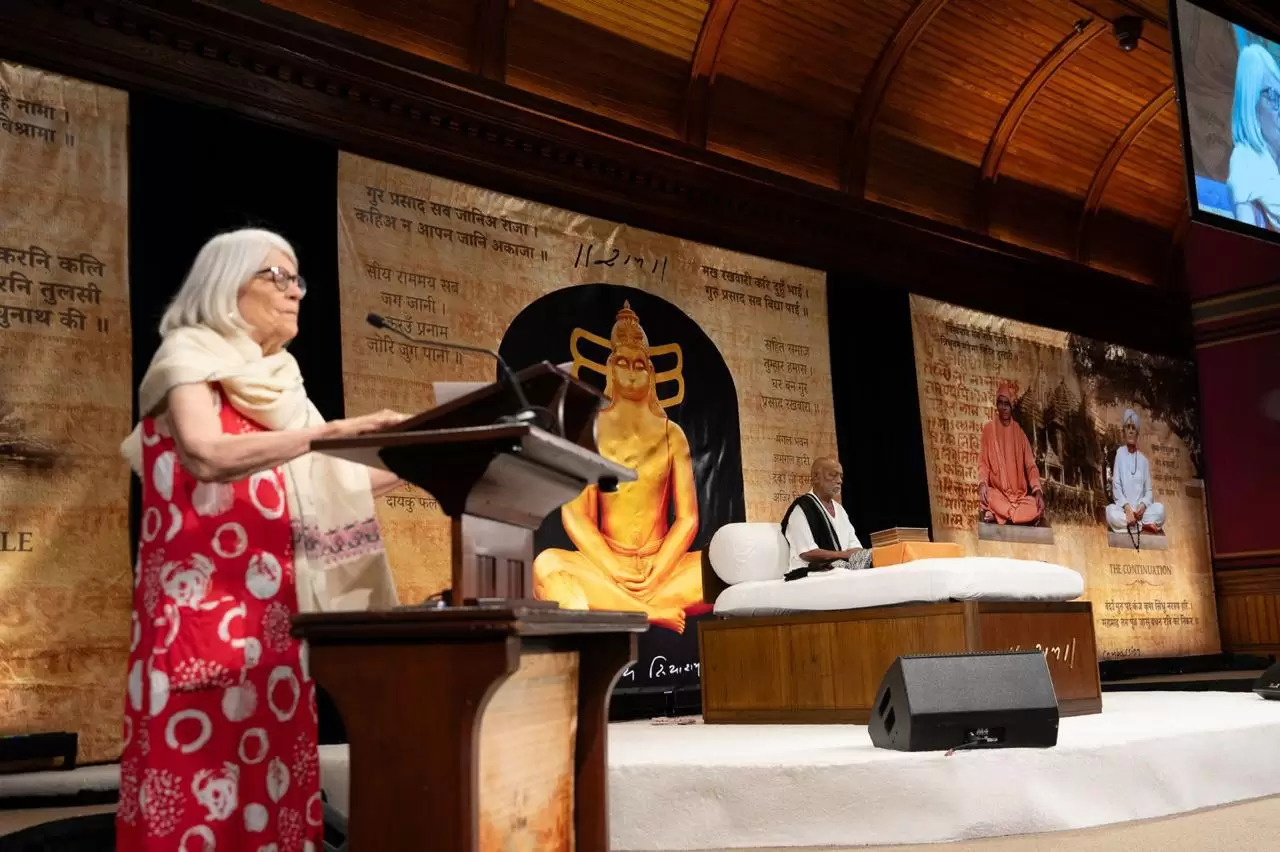
The opening session featured remarks from Hitesh Hathi, executive director of Harvard’s Lakshmi Mittal and Family South Asia Institute, and Diana Eck, faculty director of the institute and a scholar of religion.
Eck said the Ramayana has shaped India’s religious and cultural landscape while influencing traditions across Asia.
“Perhaps Ram, Sita and Lakshmana were the primordial pilgrims,” Eck said, referring to their 14-year journey from Ayodhya through places including Prayag, Chitrakoot, Panchavati, Kishkindha and Rameshwaram.
“As they travelled, these places were transformed into sacred sites, and pilgrims have followed their footsteps ever since,” she said.
Eck also pointed to the Ramayana’s influence on Ramlila traditions in Thailand, Indonesia and Cambodia.
“The Ramayana, therefore, is not simply a story or a map–it is a living landscape, one into which Tulsidas and Morari Bapu invite all of us today,” she said.
The Ramcharitmanas, written by 16th-century poet-saint Goswami Tulsidas, is one of the most influential retellings of the Ramayana, the ancient Indian epic centered on the life of Rama.
As part of the Harvard program, organizers held a three-day scholarly conference from Aug. 16 to 18, bringing together scholars and practitioners to discuss the Ramayana, Tulsidas and the continuing cultural tradition surrounding the text.
On Aug. 19, the program is marking Tulsi Jayanti, the birth anniversary of Tulsidas, with the presentation of the Tulsi, Vyas, Valmiki and Ratnavali awards. Organizers say the awards are being presented outside India for the first time.
Bapu launched the Tulsi Jayanti program in 2010 at Talgajarda, Gujarat, to recognize contributions to preserving, interpreting and carrying forward the traditions of Ram Katha and the Ramcharitmanas. The annual observance has traditionally been held in Gujarat.
The 2026 celebration at Harvard marks the first time the Tulsi Jayanti program has been held outside India.
Bapu said the Harvard Katha was being held in the context of Tulsi Jayanti and centered on the themes of truth, love and compassion.
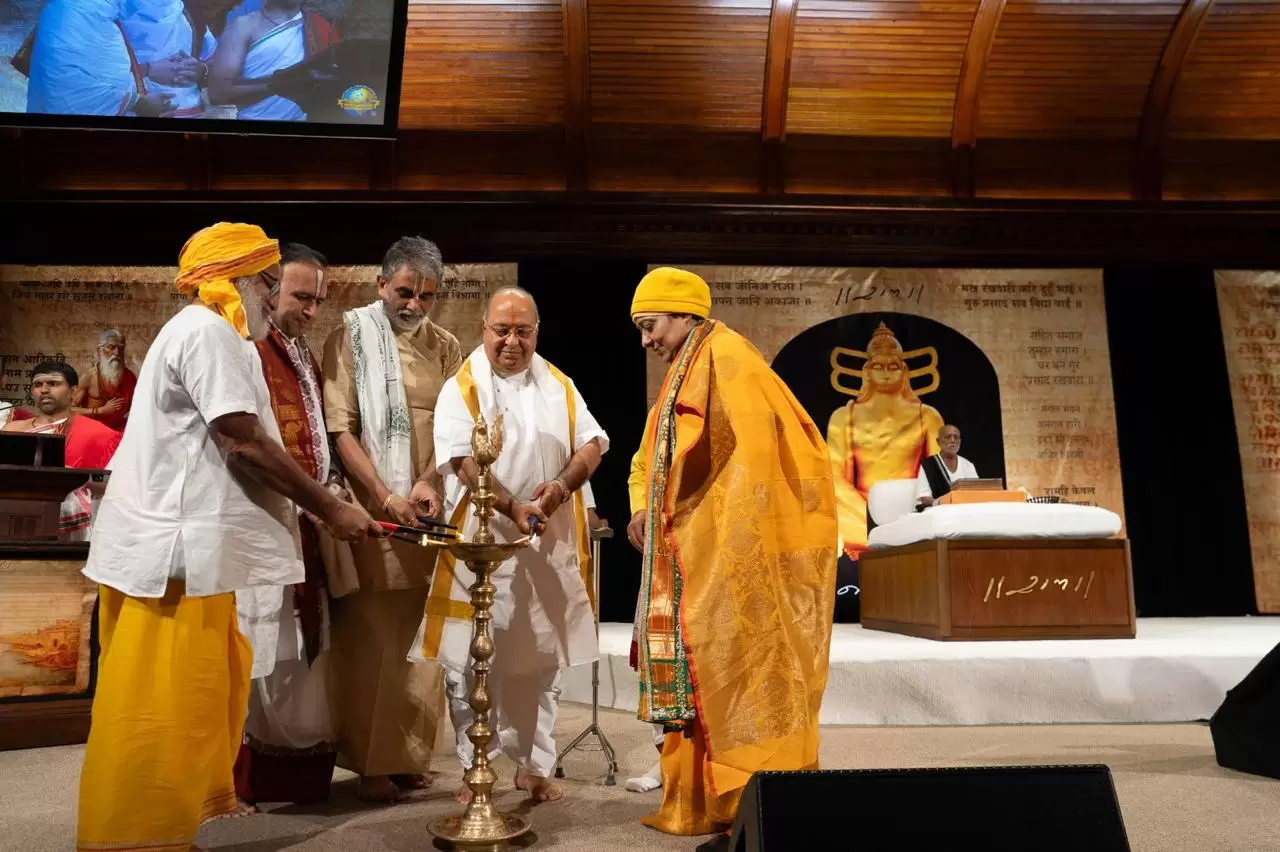
“What was lit today by the sadhus was not gyan deep, it was prem jyoti,” Bapu said at the opening.
He described the gathering as a spiritual observance focused on truth, love and compassion and urged attendees to move beyond distinctions between the worldly and spiritual.
“Let us leave behind the worldly and the otherworldly, and become truly authentic,” he said.
Bapu also marked India’s Independence Day at the opening, offering his respects to the national flag.
“Protocol says we salute the national flag, but for the Indian flag, pranam karne ka mann karta hai,” he said.
The Katha’s central theme is drawn from three passages of the Ramcharitmanas concerning the guru’s role in imparting knowledge and guidance.
The delegation includes religious figures and scholars from Ayodhya, Vrindavan, Chitrakoot and Varanasi, among them Maa Mandakini of Ayodhya, Bhupendrabhai Pandya, Pundrik Goswami of Vrindavan, Uma Shankar Sharma and Jagatguru Ramkamaldas Vedanti Maharaj of Varanasi.
Entrepreneur Paavan Popat, a member of the organizing team, said the event had brought Indian religious practitioners and scholars to Harvard, including some who had never previously traveled outside India.
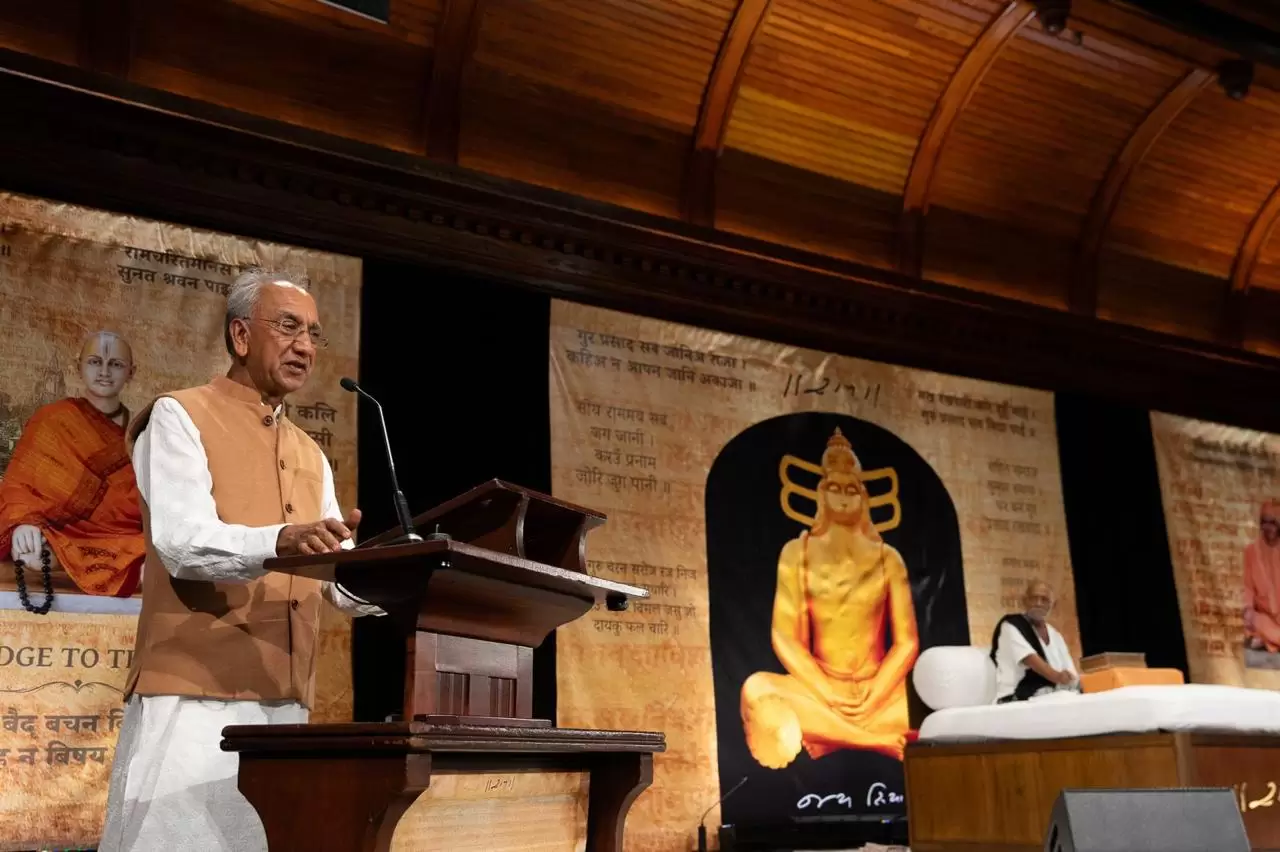
“For nine days, the world's oldest recital traditions and one of its greatest centres of learning will sit in the same room and listen to each other,” Popat said.
Dolar Popat, a member of the United Kingdom’s House of Lords who addressed the gathering, described the event as “history making” and drew a connection between Harvard’s motto, Veritas, meaning truth in Latin, and Bapu’s teachings.
“Veritas is a Latin word meaning truth,” he said. “And for over 60 years, Bapu has pursued the very same truth, but through the teachings of Ramayana.”
Bapu has conducted more than 980 Ram Kathas at more than 900 locations worldwide, according to organizers. His previous venues have included the Vatican, the United Nations headquarters in New York and the University of Cambridge in 2023.
Harvard has longstanding connections with Indian intellectual traditions. Rabindranath Tagore lectured at Harvard in 1913 on Indian philosophy and the Upanishads, while economist and Nobel laureate Amartya Sen has taught at the university for decades.
The organizers said the Indian delegation’s travel, accommodation and meals were funded by charitable foundations and that participants were not paid to take part in the program.
Bapu began reciting the Ramcharitmanas at age 14 and has spent more than six decades conducting Ram Kathas in India and abroad. His programs have been held in countries including the United States, United Kingdom, Sri Lanka, Indonesia, South Africa, Kenya, Brazil, Australia, Israel and Japan.
Discover more at New India Abroad.
Leave A Comment
Related
.jpg)




ADVERTISEMENT

ADVERTISEMENT
E Paper
Video

Comments
Start the conversation
Become a member of New India Abroad to start commenting.
Sign Up Now
Already have an account? Login