ADVERTISEMENT

ADVERTISEMENT



AI Impact Summit 2026: India Fights for its traditional knowledge systems under threat by AI Tsunami
The free-to-attend summit drew participants ranging from high school students and startup founders to cabinet ministers, global venture capitalists, and Silicon Valley technologists.
-
 Ritu Marwah
 - Sun, 22, Feb 2026
- 00:06 EST
- 12
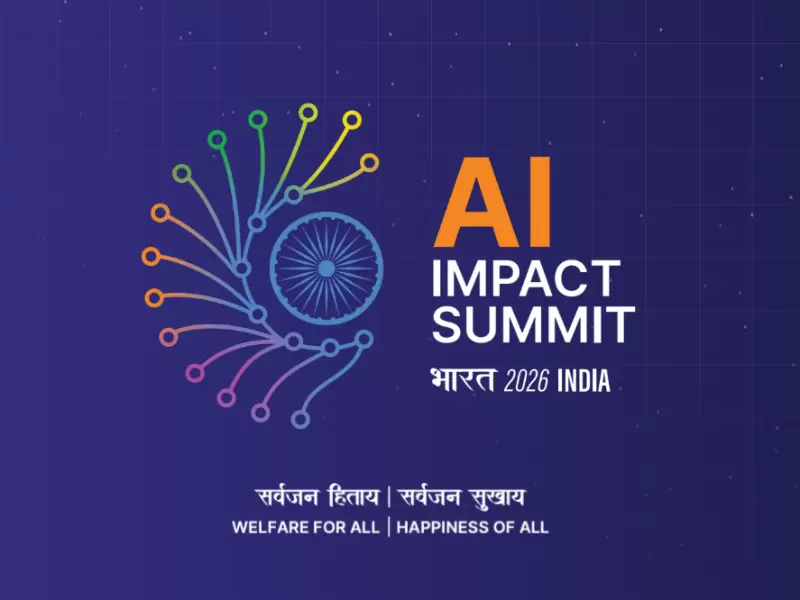 AI Impact Summit 2026 / impact.indiaai.gov.in
The AI Impact Summit 2026 concluded in the capital this week with packed auditoriums, high-profile international participation, and a clear message: India intends not just to adopt artificial intelligence, but to diffuse it at scale across its vast and diverse population. The risk of falling behind is not merely technical, it is civilizational.
Knowledge that is not digitized or does not fit the statistical logic of Large Language Models (LLMs) faces an existential threat. Centuries of civilizational wisdom, including regional languages, oral traditions, and community-specific knowledge, if not digitized. will be erased from the "active" global knowledge pool.
Held at the striking Bharat Mandapam complex, the free-to-attend summit drew participants ranging from high school students and startup founders to cabinet ministers, global venture capitalists, and Silicon Valley technologists. Sir Demis Hassabis, CEO & Co-Founder, Google DeepMind (Research Keynote), Prof. Yoshua Bengio, AI Research Pioneer (Université de Montréal) (Keynote on AI frontier research) were some of the AI stars that shone light on their work. The juxtaposition was striking, teenagers with backpacks queued to attend sessions led by some of the most influential names in global AI.
ALSO READ: Shaping a human-centric future for AI – AI Impact Summit 2026
Silicon Valley glitterati share in the excitement
Organizers assembled what attendees described as a “top-of-the-breed” keynote roster. Academic leaders, industry CEOs, philanthropists, policymakers, and international investors shared the stage across two days of discussions focused on democratizing AI.
Among the prominent international voices present were Jimmy Wales, co-founder of Wikipedia, who emphasized the importance of trust and neutrality in AI systems. Wales noted that India is “very well poised” to harness AI given its strong IT ecosystem.
Silicon Valley investor Asha Jadeja was visibly enthusiastic about India’s progress. “The Indian government pulled off some extraordinary AI diffusion at lightning speed,” she said. “Hundreds of us were here from the U.S. private sector, alongside an official delegation of around 40 American government representatives. India is going to be unstoppable on AI and may well lead the planet in AI diffusion to the masses.”
Venture capitalist Vinod Khosla was on a panel with startup founders giving early backing to Indian foundational model startups.
Startup Pavilions and Big Tech Ecosystems
The exhibition halls were a hive of activity. Major global and Indian technology companies including Tata Group, Reliance Industries, Google, NVIDIA, Qualcomm and Mastercard anchored startup ecosystems around their platforms. Young firms demonstrated AI-powered solutions spanning healthcare diagnostics, financial inclusion, agritech advisory tools, vernacular chatbots, retail and fraud detection.
IT Minister Ashwini Vaishnaw said the summit attracted $250 billion investments in AI infrastructure and saw more than five lakh visitors. Investment pledges for AI infrastructure,including data centers and semiconductor facilities, surpassed $250 billion.
One of the discussed companies was Sarvam AI, founded by Pratyush Kumar, which is building India’s own multilingual foundational model. The startup has early backing from global investors such as Khosla Ventures.
The Sovereign AI Question
Sarvam featured in discussions on the challenge of linguistic and cultural representation.
Most foundational AI models today are trained primarily on Western datasets, raising concerns about “Western bias” in outputs. For a country with 22 Scheduled languages and hundreds of dialects, the risk is not merely technical, it is civilizational.
Government representatives pointed to infrastructure initiatives designed to bridge the divide. These include BHASHINI, aimed at enabling AI-powered translation and voice interfaces across Indian languages, and BharatGen, which seeks to develop indigenous foundational models tailored to Indian contexts.
Other initiatives such as Anuvadini, Adi Vaani, and broader digitization missions were discussed as part of a long-term strategy to preserve tribal languages and traditional knowledge systems.
The challenge, speakers acknowledged, is formidable. Low-resource languages face what experts call a “double tax”: limited digital data and higher training costs. There were also demonstrations of low-bandwidth and edge AI solutions aimed at rural deployment, signaling a focus on accessibility beyond metropolitan India.
Academia Steps Forward
Indian academic institutions also played a prominent role. Booths from the Indian Institutes of Technology and Birla Institute of Technology and Science, Pilani showcased research in multilingual language models, speech recognition, AI chips, and domain-specific applications in agriculture and healthcare.
The AI4Bharat initiative highlighted ongoing efforts to collect and curate Indian-language datasets, a critical input for building robust local AI systems.
Participation and Execution
Parallel sessions ran throughout the day, with most auditoriums filled to capacity. The logistics matched the ambition. Multiple entry lanes reduced wait times. Security personnel were notably courteous. Water stations were placed throughout the venue, and facilities were kept exceptionally clean. Tea and coffee were available continuously, and food counters remained active throughout the event.
The sandstone architecture, fountains, and illuminated sculptures of the venue provided a visually dramatic backdrop to what many described as a pivotal moment for India’s AI ecosystem.
From Intent to Impact
The summit’s overarching message was clear: India is shifting from AI “intent” to AI “impact.”
By combining public digital infrastructure, private sector innovation, academic research, and international collaboration, policymakers hope to position the country as a global leader not just in AI development, but in AI diffusion bringing advanced tools to citizens across languages, income levels, and geographies.
Ministers kept remarks concise, often choosing to energize the audience rather than deliver extended speeches. The tone reflected urgency and confidence. Union Minister Ashwini Vaishnaw, who holds the portfolios of Electronics & Information Technology along with Information & Broadcasting and other responsibilities, was at the Pitchfest and took photographs with the startup founders. He cheered them on refusing to give a speech that would kill the enthusiasm in the room.
If the energy in Delhi this week is any indication, India’s AI story is entering a new chapter, one written not just in code, but in culture.
Discover more at New India Abroad.
Related






ADVERTISEMENT

ADVERTISEMENT
E Paper
Video

Comments
Start the conversation
Become a member of New India Abroad to start commenting.
Sign Up Now
Already have an account? Login