ADVERTISEMENT
ADVERTISEMENT


A Quarter-Millennium of Shared Destiny
The bond between the world’s oldest democracy and the world’s largest democracy runs deeper than modern geopolitics.
-
 Ajay Bhutoria
 - Sat, 04, Jul 2026
- 14:35 EDT
- 37
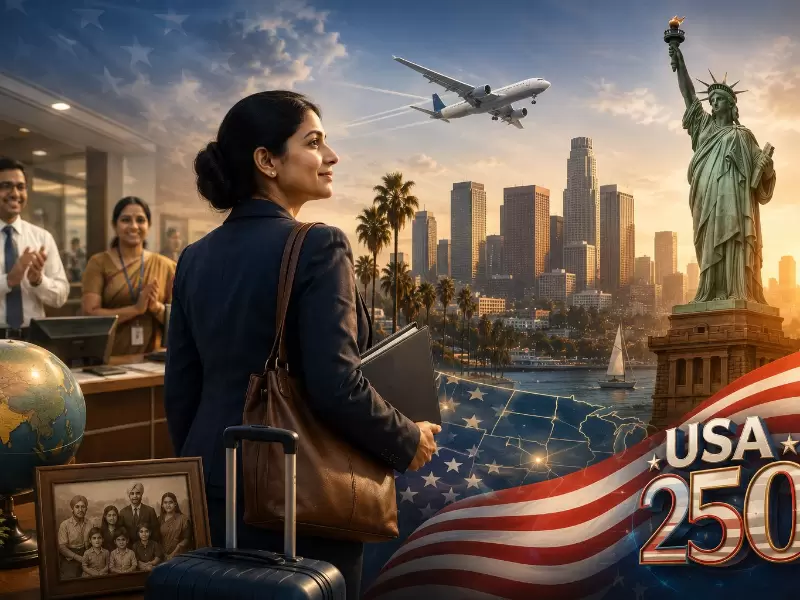
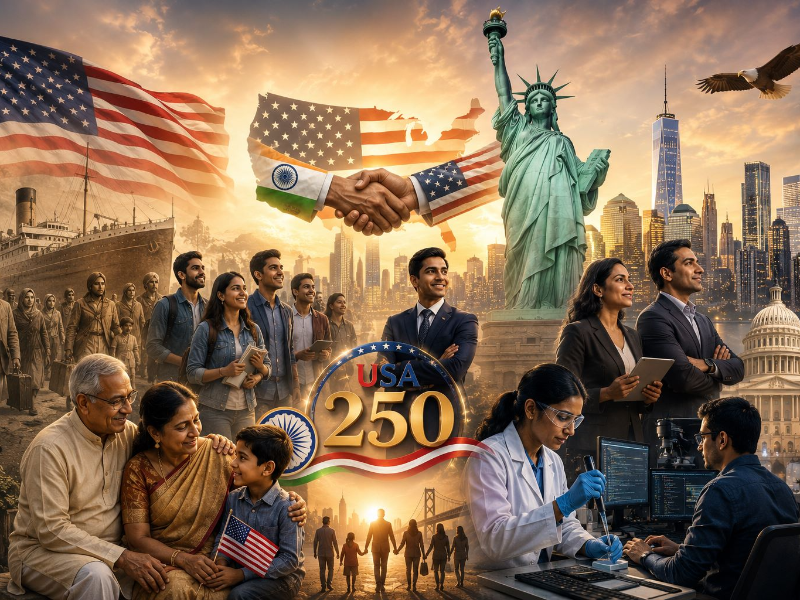
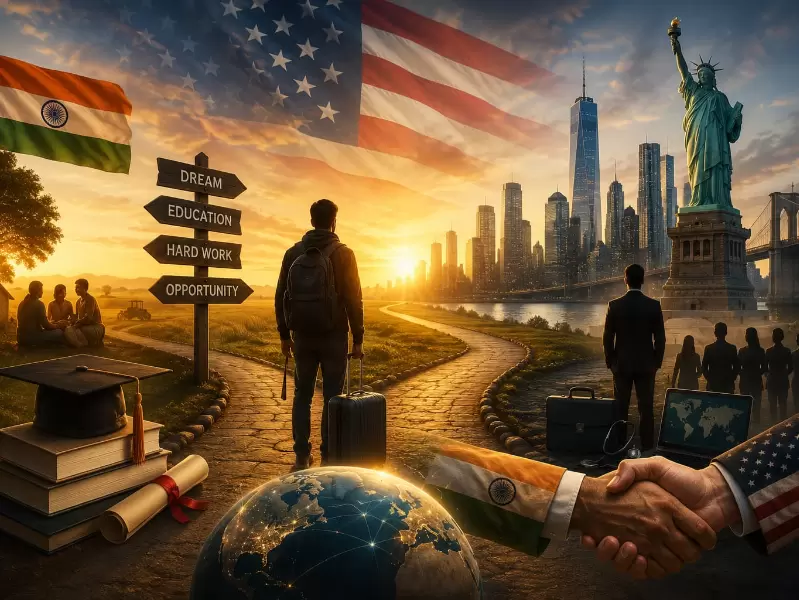 Representative Image / Generated using AI
As the United States stands on the cusp of its Semiquincentennial—celebrating 250 years of a grand experiment in liberty and self-governance—it is a profound moment of reflection for the more than five million strong Indian American community.
We look back at a journey marked by grit, look at a present defined by leadership, and look forward to a future where our two nations anchor the global democratic order.
Ours is a story woven tightly into the fabric of the American Dream. We are not just participants in America’s success; we are architects of its future.
Shared Values: The Foundation of the Modern Alliance
The bond between the world’s oldest democracy and the world’s largest democracy runs deeper than modern geopolitics. It is anchored in a long history of intellectual and spiritual exchange. More than a century ago, in 1893, Swami Vivekananda stepped onto a stage in Chicago and electrified the nation by opening his address with the words, "Sisters and Brothers of America." That historic milestone marked the beginning of a deep mutual respect grounded in pluralism and liberty.
Also Read: SPECIAL EDITION on America 250
Decades later, this philosophical bridge became a catalyst for profound social change. In 1959, when Dr. Martin Luther King Jr. traveled to India to study the non-violent resistance strategies of Mahatma Gandhi, he noted upon arrival:
“To other countries I may go as a tourist, but to India I come as a pilgrim."
Dr. King proved that Gandhi’s teachings of Satyagraha were "the only morally and practically sound method open to oppressed people in their struggle for freedom." This cross-pollination of ideals helped America live up to its founding promise of equality, proving that the moral compasses of India and America have long pointed in the same direction.
Today, that moral alignment has matured into what leadership on both sides recognizes as a cornerstone of global stability. As the bilateral relationship transitioned away from the old "hesitations of history," it realized a profound truth first articulated before the Indian Parliament: the relationship between the United States and India will be "one of the defining partnerships of the 21st century."
Guided today by deep defense cooperation, the Quad alliance, and critical technology initiatives, our two nations stand shoulder-to-shoulder to safeguard global democracy.
The Present: A Legacy of Massive Contribution
From the standard-bearers of Silicon Valley to the halls of political power, the Indian American diaspora has achieved unparalleled success, driven by a cultural reverence for education, resilience, and hard work.
Technology, AI, and Innovation: Indian American leaders guide the world's most valuable tech enterprises. As we enter the era of Intelligent Automation and Agentic AI, our community is at the absolute forefront—building the foundational models, infrastructure, and ethics that will define the next industrial revolution.
Healthcare and Medicine: From local clinics to pioneering research institutions, Indian American physicians and scientists represent a vital pillar of the U.S. healthcare system, driving breakthroughs in oncology, cardiology, and neurological health.
Startups and Job Creation: The spirit of Jugaad (frugal innovation) paired with American venture capital has made our community a powerhouse of entrepreneurship, founding a disproportionate share of America’s tech unicorns and creating millions of high-paying local jobs.
Space and Frontiers: From Kalpana Chawla’s inspiring legacy to current NASA missions exploring the cosmos and expanding satellite technologies, our minds are helping America lead the commercial and scientific space race.
Arts, Culture, and Music: Our influence has transcended business. Indian classical traditions, fusion music, cinema, and literature are enriching the American cultural tapestry, proving that heritage is a bridge, not a barrier.
Civic and Political Leadership: We have firmly moved from the sidelines of civic life to the center stage of American governance. With representation at the highest levels of federal administration, state-level appointments, and local judiciaries, Indian Americans are actively writing the policy that governs our communities.
The Future: Shaping a Better Tomorrow for Our Local Communities
As we celebrate 250 years of America, the question is no longer just what America can offer us, but how we can use our immense capital—intellectual, financial, and cultural—to make America the greatest nation it can possibly be for the *next* 250 years.
To shape a better future, our focus must deepen within our local communities:
Investing in Public Service and Youth Leadership: We must encourage the next generation—our students, Eagle Scouts, and youth commissioners—to view public service, public health, and local governance as noble, necessary callings.
Grassroots Philanthropy: True patriotism is local. It is found in volunteering at regional food banks, supporting community kitchens, and funding local public education. We must ensure our economic success directly lifts up the vulnerable in our immediate neighborhoods.
Democratizing Technology: As leaders in AI and tech, we bear the responsibility to ensure innovation creates a rising tide. We must champion tech literacy programs, bridge the digital divide, and use automation to solve real-world problems like supply chain efficiency, healthcare accessibility, and economic inequality.
Our Eternal Commitment
We are proud Indians by heritage, but we are fiercely, unconditionally American by choice and destiny. As this great nation celebrates 250 years of freedom, the Indian American community stands ready. Together, by fostering unparalleled innovation, serving our local neighborhoods, and defending our shared democratic ideals, we will keep America vibrant, resilient, and undeniably the greatest nation on earth.
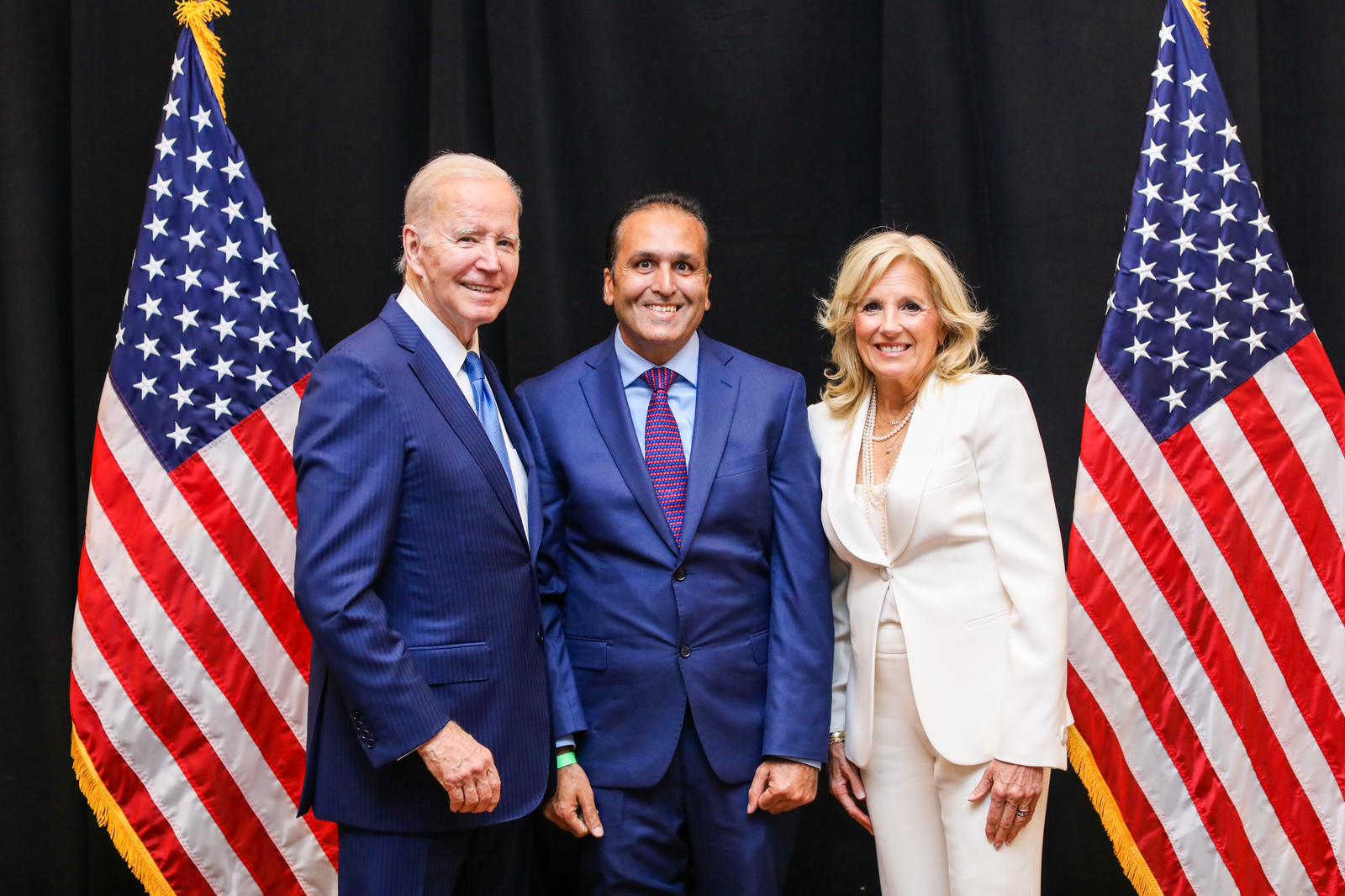
The writer is a Silicon Valley technology executive, immigration advocate, former Deputy National Finance Chair for the DNC, and former White House Advisor to President Biden for the President's Advisory Commission on Asian Americans, Native Hawaiians, and Pacific Islanders (AANHPI)
(The views and opinions expressed in this article are those of the author and do not necessarily reflect the official policy or position of New India Abroad.)
Discover more at New India Abroad
Leave A Comment
Related

ADVERTISEMENT

ADVERTISEMENT
E Paper
Video

Comments
Start the conversation
Become a member of New India Abroad to start commenting.
Sign Up Now
Already have an account? Login