ADVERTISEMENT

ADVERTISEMENT



24 U.S. states announce lawsuit to stop Trump’s latest global tariffs
The Democratic-led states argue the new tariffs, which Trump announced immediately after the high court ruling on Feb. 20, are also illegal.
-
 Reuters
 - Thu, 05, Mar 2026
- 16:40 EST
- 26
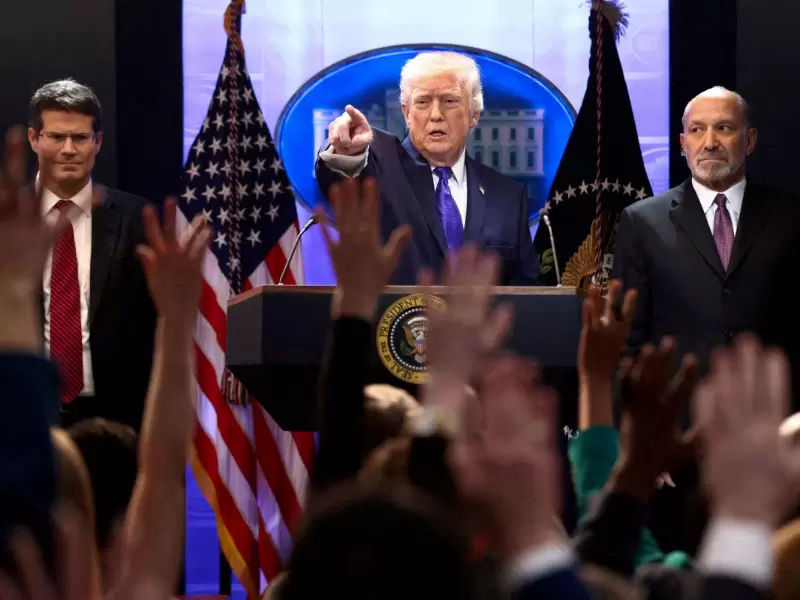 FILE PHOTO: U.S. President Donald Trump, flanked by Secretary of Commerce Howard Lutnick and Solicitor General D. John Sauer, holds a press briefing at the White House, following the Supreme Court's ruling that Trump had exceeded his authority when he imposed tariffs, in Washington, D.C., U.S., February 20, 2026. / REUTERS/Kevin Lamarque/File Photo
A group of 24 U.S. states will sue President Donald Trump's administration on March 5 in the first legal challenge to his newly imposed 10 percent global tariffs, alleging that the president cannot sidestep a recent U.S. Supreme Court ruling that invalidated most of his previous tariffs on imported goods by citing new legal authority, according to the states.
The Democratic-led states, including New York, California, and Oregon, argue the new tariffs, which Trump announced immediately after the high court ruling on Feb. 20, are also illegal.
The tariffs were imposed for 150 days under the Trade Act of 1974, which is meant to address short-term monetary emergencies, not routine trade deficits that arise when a wealthy nation like the United States imports more than it exports, according to the states' lawsuit, which will be filed in the New York-based U.S. Court of International Trade.
ALSO READ: Trump undertakes sweeping makeover of White House and Washington
“The focus right now should be on paying people back, not doubling down on illegal tariffs,” Oregon's Attorney General Dan Rayfield said.
Trump's Feb. 20 executive order imposed a 10 percent tariff on imports, but U.S. Treasury Secretary Scott Bessent said on March 4 that those rates would likely rise to 15 percent later this week.
Trump has made tariffs a central pillar of his foreign policy in his second term, claiming sweeping authority to issue tariffs without input from Congress. But the Supreme Court on Feb. 20 handed Trump a stinging defeat when it struck down a huge swath of tariffs he had imposed under the International Emergency Economic Powers Act, ruling that the law did not give him the power he claimed.
Trump responded by criticizing the justices who ruled against him and announcing new duties under Section 122 of the Trade Act of 1974, a law that—like IEEPA—had never before been used to impose tariffs in the U.S. Trump has also imposed other tariffs on imports like autos, steel, and aluminum under more traditional legal authority. Those tariffs are safer from legal challenges.
The states that sued argue that the Trade Act allows for tariffs only to address a “balance of payments” deficit, which last occurred in the presidency of Republican former President Richard Nixon as the U.S. was abandoning the gold standard.
The balance-of-payments deficit measures in the Trade Act are primarily meant to address monetary risks like a sudden and significant depreciation of the dollar in foreign exchange markets, according to the states. Trump, however, has misapplied that standard in an attempt to instead address U.S. "trade deficits," which occur when a nation imports more than it exports, according to the states.
The states are asking the court to issue an order that would block the new tariffs and order any tariff payments already made under Section 122 authority to be refunded.
Meanwhile, the court is grappling with about 2,000 lawsuits from businesses seeking refunds for more than US $130 billion in IEEPA tariff payments made by importers before the Supreme Court's Feb. 2026 ruling. On March 4, the court ordered U.S. Customs to begin processing tariff refunds.
Discover more at New India Abroad.
Related






ADVERTISEMENT

ADVERTISEMENT
E Paper
Video

Comments
Start the conversation
Become a member of New India Abroad to start commenting.
Sign Up Now
Already have an account? Login