ADVERTISEMENT
ADVERTISEMENT



Indian American leaders divided on Louisiana map ruling
The 6–3 ruling in Louisiana v. Callais narrowed the scope of the Voting Rights Act.
-
 Malvika Choudhary
 - Wed, 29, Apr 2026
- 16:53 EDT
- 53
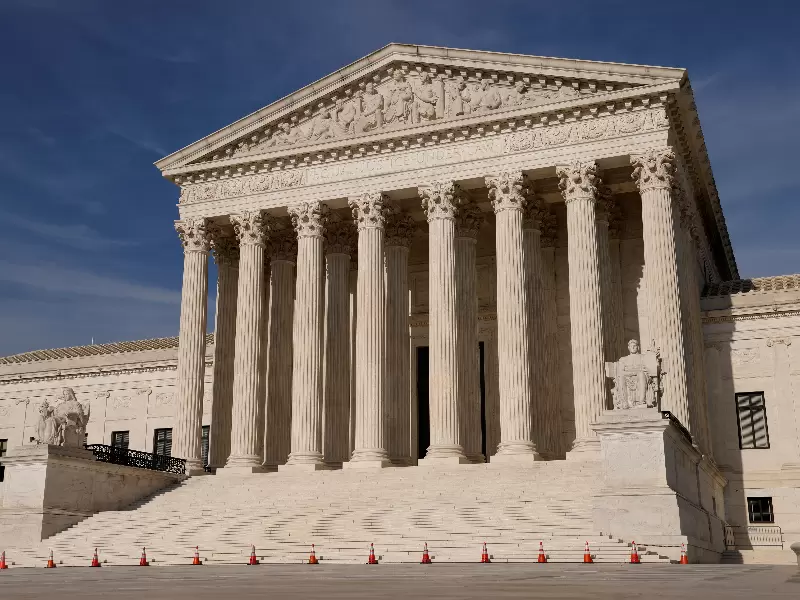 The U.S. Supreme Court building in Washington, U.S. May 17, 2021. / REUTERS/Jonathan Ernst
Indian American leaders on April 29 diverged in their response to a U.S. Supreme Court ruling on Louisiana’s congressional map, with some criticizing the decision as weakening voting rights and others backing it as a major legal development.
Former Vice President Kamala Harris said the ruling “guts the Voting Rights Act and turns back the clock on the foundational promise of equality and fairness in our election systems.”
“Section 2 of the Voting Rights Act was one of the last remaining federal protections for Black and brown voters against maps deliberately drawn to dilute their political power. That protection has been stripped away,” she said, calling the decision “an outrage” and part of a long-running political agenda.
Also Read: Birthright citizenship case tests stakes for Indian immigrants
Today’s Supreme Court ruling guts the Voting Rights Act and turns back the clock on the foundational promise of equality and fairness in our election systems.
— Kamala Harris (@KamalaHarris) April 29, 2026
Section 2 of the Voting Rights Act was one of the last remaining federal protections for Black and brown voters against…
New York City Mayor Zohran Mamdani said it “is a direct assault on the promise of the Voting Rights Act,” adding that it “risks disenfranchising millions of Americans along racial lines and weakening the very foundation of our democracy.”
“Democracy is not self-sustaining. We must build, preserve, and defend it together,” he said, adding that New York City would continue to “lead a government of, by, and for the people — all of the people.”
Although the Supreme Court technically upheld Section II of VRA, it will effectively dilute the voting power of Black Americans.
— Ro Khanna (@RoKhanna) April 29, 2026
Trump, Vance, Republican Justices, & Republicans in Congress are undermining multiracial democracy because they fear it.
They will not prevail
Representative Ro Khanna said the decision would “effectively dilute the voting power of Black Americans,” adding, “Trump, Vance, Republican Justices, & Republicans in Congress are undermining multiracial democracy because they fear it. They will not prevail.”
Today's Supreme Court decision is a direct assault on the promise of the Voting Rights Act. It risks disenfranchising millions of Americans along racial lines and weakening the very foundation of our democracy.
— Mayor Zohran Kwame Mamdani (@NYCMayor) April 29, 2026
Democracy is not self-sustaining. We must build, preserve, and… https://t.co/77tklBxBMh
New York City Council member Shekar Krishnan also criticized the decision. “As the first Indian American elected to the NYC Council, I know how important representation is,” he said, adding that the ruling “weakens the Voting Rights Act & equal access to the ballot for our communities.”
As the first Indian American elected to @NYCCouncil, I know how important representation is. It’s how we finally passed job protections for immigrant app drivers & street vendors.
— Shekar Krishnan (@voteshekar) April 29, 2026
Today’s decision weakens the Voting Rights Act & equal access to the ballot for our communities. https://t.co/KbZVpvCRpZ
In contrast, Assistant Attorney General Harmeet Dhillon welcomed the judgment. “Extremely gratified to see this decision we’ve been waiting for,” she said, calling it “one of the most important developments in decades in Voting Rights Act jurisprudence,” and noting her role in co-authoring an amicus brief for the United States.
Extremely gratified to see this decision we’ve been waiting for! I was proud to co-author the brief for the United States as amicus in this important case, perhaps one of the most important developments in decades in Voting Rights Act jurisprudence! https://t.co/AOwNwzCmYc
— AAGHarmeetDhillon (@AAGDhillon) April 29, 2026
The ruling in Louisiana v. Callais, decided 6–3 on April 29, held that Louisiana’s creation of a second majority-Black congressional district was an unconstitutional racial gerrymander and that compliance with the Voting Rights Act of 1965 did not justify race-based redistricting.
The decision is expected to reshape redistricting battles ahead of upcoming elections, particularly in southern states, with implications for minority representation and control of congressional seats.
Discover more at New India Abroad.
Related


ADVERTISEMENT

ADVERTISEMENT
E Paper
Video

Comments
Start the conversation
Become a member of New India Abroad to start commenting.
Sign Up Now
Already have an account? Login