ADVERTISEMENT
ADVERTISEMENT



California Assembly passes HR 100 recognizing Vaisakhi
The move is timely as it comes in time for this year’s observance on April 14 encouraging Californians to participate in celebrations.
-
 Malvika Choudhary
 - Tue, 14, Apr 2026
- 17:18 EDT
- 36
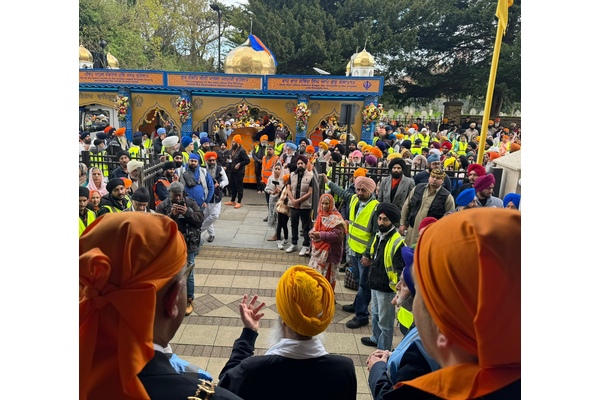 Vaisakhi celebrations / @DrAyshaRaza
The California State Assembly on April 13 passed House Resolution 100, formally recognizing Vaisakhi and its cultural and religious significance to Sikh and Hindu communities.
The resolution, introduced by Assembly Member Jasmeet Bains during the 2025–26 Regular Session, was backed by 76 sponsors and co-sponsors backing the measure.
Also Read: Two-day Vaisakhi event in Mexico City boosts cultural ties
The measure acknowledges that Vaisakhi, also spelled Baisakhi, is an ancient festival of significance to Sikhs, Hindus, and Buddhists, and is widely observed by Californians of South Asian heritage.
BREAKING| California Assembly passes HR 100 recognizing Vaisakhi, with a massive 76 sponsors & co-sponsors, a powerful bipartisan show of support for the Sikh American and Hindu American community and their contributions to the state.
— Hindu American Foundation (@HinduAmerican) April 14, 2026
A historic moment for representation,… pic.twitter.com/K4VqlUVPZd
It notes that for Sikhs, the festival commemorates the creation of the Khalsa in 1699 by Guru Gobind Singh, when the “Panj Piaray,” or “Beloved Five,” were initiated to defend religious freedom, forming the Khalsa Panth.
The resolution also references the establishment of the “Panj Kakkar,” or Five Ks—Kesh, Kanga, Kara, Kirpan, and Kachera—as central to Sikh identity.
In addition to its Sikh significance, the Assembly recognizes Vaisakhi as a long-standing harvest festival in northern India, particularly Punjab, predating Sikhism, and as a solar new year for Hindus, marked by temple visits, river rituals including in the Ganga, and community fairs.
The resolution further highlights Sikh practices associated with Vaisakhi, including worship, processions, and seva, or selfless service, such as providing free meals and welcoming visitors to gurdwaras. It notes that gurdwaras in California and worldwide hold celebrations, with some Sikhs choosing to be initiated into the Khalsa on the day.
Welcoming the move, the Hindu American Foundation described the passage as a “powerful bipartisan show of support” and “a historic moment for representation, recognition, and respect.”
Discover more at New India Abroad.
Related








ADVERTISEMENT

ADVERTISEMENT
E Paper
Video

Comments
Start the conversation
Become a member of New India Abroad to start commenting.
Sign Up Now
Already have an account? Login