ADVERTISEMENT

ADVERTISEMENT



AI policy choices in coming years will shape economic growth, global power: Romesh Wadhwani
Wadhwani projected that AI could add between $1 trillion and $1.5 trillion to India’s GDP over five years, while creating tens of millions of new jobs, even as automation displaces others.
-
 IANS
IANS - Sat, 31, Jan 2026
- 03:10 EST
- 26
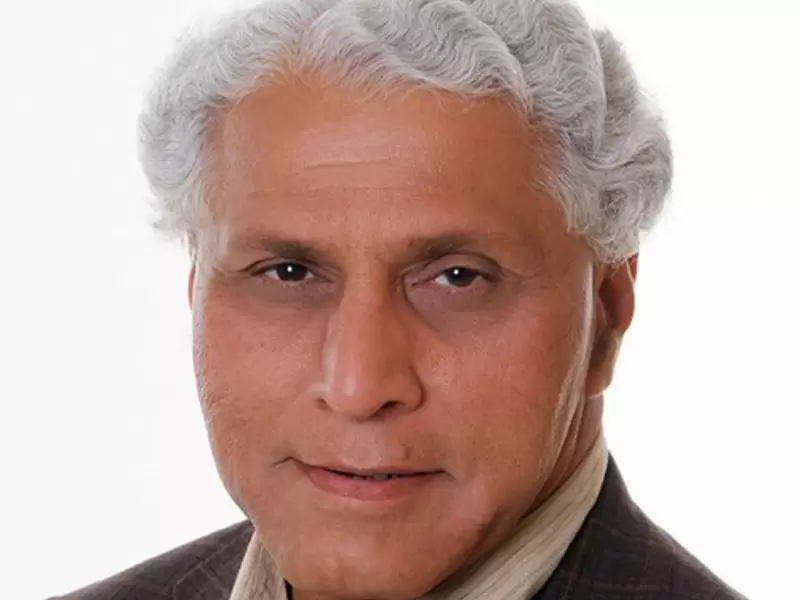 Romesh Wadhwani / CSIS
Artificial intelligence is advancing so rapidly that national policy choices made in the next few years will determine economic growth, geopolitical power, and social stability, technology entrepreneur Romesh Wadhwani said.
Delivering the keynote address at a major CSIS conference ahead of India’s upcoming AI Impact Summit, Wadhwani said AI is entering a new phase defined by autonomous “AI agents” capable of planning, executing, and learning with limited human oversight.
“What was breakthrough technology three years ago now seems quaint,” Wadhwani said, referring to early generative AI tools. He said the world is shifting toward AI agents that can augment, replace, and eventually surpass human workers.
Wadhwani said fewer than 5 million AI agents existed in 2025 but projected a compound annual growth of more than 200 percent over the next 5 years. He said AI agents will soon collaborate autonomously, replace humans in many tasks, and eventually operate entire business processes.
ALSO READ: U.S. sees India as key partner in Pax Silica AI push
“This is not a 50-year vision,” he said. “This is a five-year vision.”
He said the speed of AI development far exceeds the pace of government regulation, drawing parallels to how decades passed between the invention of the telephone and the creation of a coherent US telecommunications policy.
Wadhwani said AI policy will shape outcomes across five dimensions: geopolitics and national security, economic growth, business competitiveness, innovation speed, and social stability.
“AI policy will determine winners and losers,” he said.
Comparing global approaches, Wadhwani described the United States as favoring light-touch regulation and innovation leadership, Europe as prioritizing regulation through its AI Act, and China as pursuing mandatory AI adoption under political control.
He described India’s approach as focused on economic growth and large-scale deployment.
“I think of India as the land of practical innovation using AI,” Wadhwani said.
He said India is emphasizing applications rather than capital-intensive frontier models, combined with massive reskilling efforts and relatively limited regulation. He said India aims to become one of the top three AI powers globally, after the U.S. and China.
Wadhwani projected that AI could add between $1 trillion and $1.5 trillion to India’s GDP over five years, while creating tens of millions of new jobs, even as automation displaces others.
Wadhwani said the upcoming AI Impact Summit in India reflects a shift in global AI discussions toward implementation and development outcomes, particularly for the Global South.
Discover more at New India Abroad.
Related




.jpg)
.jpg)


ADVERTISEMENT

ADVERTISEMENT
E Paper
Video

Comments
Start the conversation
Become a member of New India Abroad to start commenting.
Sign Up Now
Already have an account? Login